Main Courses
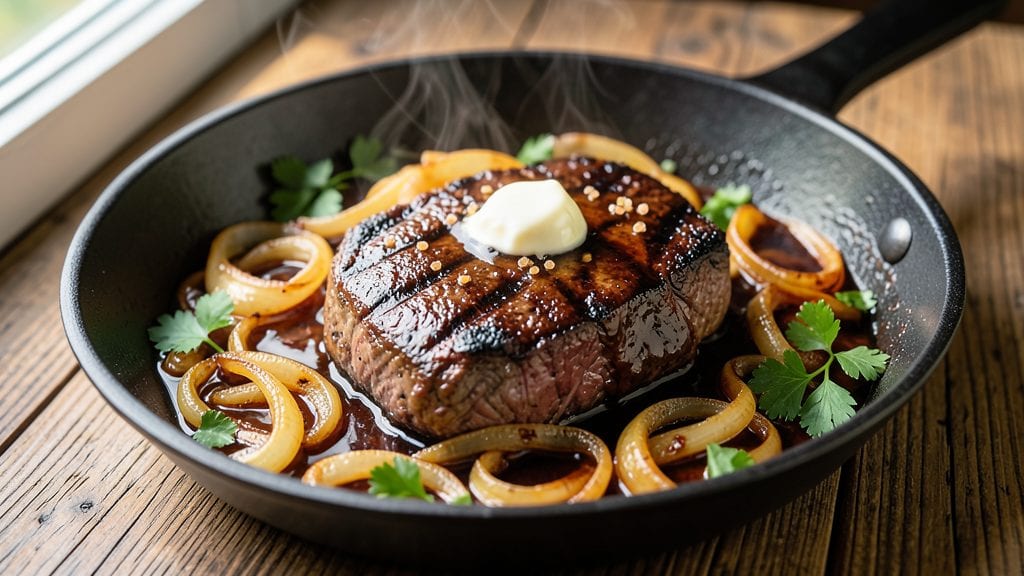
This Amish steak recipe brings the hearty, slow-cooked tradition of Pennsylvania Dutch country to your kitchen without needing a grill. The secret lies in tenderizing tough cuts over low heat, creating that signature smoky depth with vinegar and spices—just like Amish cooks have done for generations.
I’ve perfected this method to deliver restaurant-quality results using simple pantry staples and cast-iron techniques.
The beauty of this recipe is its simplicity: a 3-pound chuck roast transforms into melt-in-your-mouth steak when braised with onions, vinegar, and molasses for 3-4 hours in a cast-iron skillet.
The slow cooking breaks down tough fibers, while the vinegar adds that classic tangy brightness. No fancy equipment—just patience and a cast-iron skillet for authentic Amish flavor.
By the time you’re done, you’ll have tender, flavorful steak that practically falls apart at the touch, served with a rich gravy made from the pan drippings. The aroma alone will have everyone gathering at the table—just like in an Amish farmhouse kitchen.
Pair it with mashed potatoes or crusty bread for the full experience.
This recipe scales perfectly for family dinners or holiday gatherings, and leftovers reheat beautifully. Whether you’re celebrating heritage or just craving comfort food, this foolproof method delivers every time. Let’s get cooking!
Ingredients for amish steak
Simple pantry staples transform tough chuck into melt-in-your-mouth Amish-style steak.
| Ingredient | Amount | Notes |
|---|---|---|
| Chuck Roast 🥩 | 3 lb | Tough cut for maximum tenderness |
| Yellow Onions 🧅 | 2 whole | Medium size, sliced into half-moons |
| White Vinegar 💧 | ½ cup | Distilled preferred for tang |
| Unsalted Butter 🧈 | ½ cup | Cold, cubed for gravy |
| Dark Brown Sugar 🍯 | ¼ cup | Packed, for caramelized depth |
| Molasses 🍯 | ¼ cup | Unsulphured for authentic flavor |
| Garlic Cloves 🧄 | 4 cloves | Minced, for aromatic punch |
| Ground Black Pepper 🌶️ | 1 tbsp | Freshly cracked for heat |
| Diamond Crystal Kosher Salt 🧂 | 1 ½ tsp | Adjust to taste, don't skip |
| All-Purpose Flour 🌾 | 2 tbsp | For thickening gravy |
| Beef Broth 🍲 | 1 cup | Low-sodium preferred |
| Fresh Thyme Leaves 🌿 | ¼ cup | Or 1 tsp dried thyme |
| Bay Leaves 🍃 | 2 whole | Remove before serving |
| Vegetable Oil 🫒 | 2 tbsp | High smoke point for searing |
The chuck roast is non-negotiable here—look for good marbling at Whole Foods or your local butcher shop. If you're buying from the grocery store, Kroger's or Walmart usually carry it pre-cut, but check the label for 'chuck roast' specifically. Avoid anything labeled 'round roast'—that's tougher and won't tenderize the same way. For the vinegar, distilled white vinegar gives the cleanest tang, but apple cider vinegar works in a pinch if that's what you've got. The molasses should be unsulphured—check the label, or grab the fancy kind at Trader Joe's if you're unsure. Fresh thyme is ideal, but dried works at one-third the amount if you're in a hurry.
No molasses? Substitute equal parts dark brown sugar plus a splash of balsamic vinegar—it's not identical, but close. Running low on beef broth? Water plus a bouillon cube gets you there, though you might want to add a pinch more salt at the end. The bay leaves are just for flavor—skip them if you're out, but don't replace with anything else. For the onions, yellow or red work fine, but avoid sweet onions—they'll make the dish too mild. The vegetable oil is just for searing; once the pan gets hot, you'll switch to butter for that rich, caramelized flavor. And whatever you do, don't skip the pepper. That's what gives Amish steak its signature bite.
This steak tastes even better the next day—reheats beautifully in a skillet with a splash of broth. Store leftovers in the fridge for 4-5 days, or freeze for up to 3 months in an airtight container. I like to portion mine into individual servings before freezing so I can just grab and reheat. The gravy thickens as it sits, so if it's too thin when you're done, just whisk in another tablespoon of flour. And if you've got extra time, let the steak rest 15 minutes before slicing—it makes all the difference in keeping those juices inside.
Why You'll Love This Recipe
- One-Pot Magic: I swear, this dish lives in a single pot—no extra pans, no stress. Just brown the roast, toss in onions and vinegar, and let it slow down into something rich. My sink stays empty, and my patience stays intact.
- Sweet-Savory Bite: That dark brown sugar and vinegar combo? It’s like a hug for your taste buds—tangy, caramelized, and just a little sweet. The butter at the end seals the deal with a velvety finish that’ll have you licking the plate.
- Leftovers That Shine: This roast gets better the next day, honestly. I make a double batch on Sundays, and by Wednesday, it’s still the star of my lunch. Slice it thin, toss in mashed potatoes, or just eat it straight—no one complains.
- Budget-Friendly Feast: Chuck roast is cheap, and this recipe stretches it into meals for days. Between us, it’s my go-to when grocery money’s tight, but somehow it still feels like a treat. Plus, the onions and sugar are pantry staples—minimal extra cost.
Step-by-step instructions for Amish steak
Here's how to transform tough chuck roast into tender, smoky perfection using simple pantry staples.
Sear the Chuck Roast for Deep Flavor
Pat the 3 lb chuck roast dry with paper towels—this ensures a proper sear. Heat 2 tablespoons vegetable oil in a heavy Dutch oven over medium-high heat until shimmering. Place the roast fat-side down and sear for 5 minutes until a deep golden brown crust forms. Flip and sear the other side for another 5 minutes.
Don't rush this step—the crust locks in juices and builds complex flavors. You'll know it's ready when the roast releases easily from the pan. Remove and set aside on a plate. Here's the thing—this initial sear is what gives Amish steak its signature depth without needing a smoker.
Build the Sweet-Smoky Sauce Base
In the same Dutch oven, add 2 whole yellow onions sliced into half-moons and cook for 5 minutes until softened. Stir in 4 minced garlic cloves and cook for 30 seconds until fragrant. Add 0.25 cup dark brown sugar, 0.25 cup molasses, and 0.5 cup white vinegar, stirring to combine.
Bring to a simmer and let reduce for 8-10 minutes until the mixture thickens slightly and darkens. This reduction creates the signature caramelized flavor that defines Amish steak. The molasses adds depth while the vinegar cuts through the richness—don't skip this step or you'll miss the authentic taste.
Slow Cook Until Fork-Tender
Return the seared roast to the Dutch oven. Add 1 cup beef broth, 0.25 cup fresh thyme leaves, 2 whole bay leaves, 1.5 tsp diamond crystal kosher salt, and 1 tbsp ground black pepper. Bring to a gentle simmer, then reduce heat to low. Cover and cook for 3 hours, turning the roast occasionally.
After 3 hours, check for tenderness by inserting a fork—it should slide in easily. If not, continue cooking another 30 minutes. The slow cook transforms tough chuck into melt-in-your-mouth perfection. Real talk: this is where patience pays off. The roast should be falling apart when you test it, not just fork-tender.
Finish with Rich Butter Gravy
Remove the roast and set aside to rest. Skim any excess fat from the sauce, then stir in 2 tablespoons all-purpose flour to thicken. Cook for 2 minutes, then slowly whisk in 0.5 cup cold unsalted butter until fully incorporated. The butter adds luxurious mouthfeel and balances the sweet-savory flavors.
Return the roast to the Dutch oven and coat it thoroughly with the gravy. Let it sit for 5 minutes so all those juices soak back into the meat. This resting step ensures every bite is moist and flavorful. The finished dish should have a glossy, dark sauce clinging to the tender meat—this is the hallmark of great Amish steak.
Pro Tips For Making Amish Steak
- Sear the Roast Hard: Chuck roast needs a deep, dark crust to hold up through slow cooking—don’t be shy with the heat. After browning all sides, let it sit in the pan for 3-4 minutes while you prep the onions. That extra time locks in flavor and prevents the meat from steaming instead of caramelizing.
- Slice Onions Thin: I used to chop onions into big chunks, thinking they’d soften enough. Wrong. For Amish steak, slice them paper-thin—almost like for caramelizing. They’ll melt into the sauce faster and create that glossy, sweet-tangy layer instead of sitting as chewy bits.
- Deglaze with Vinegar First: Skip the water—drown those browned bits with white vinegar right after removing the roast. It cuts through the richness instantly and gives the sauce that signature tang. Let it bubble for 2 minutes before adding anything else, or you’ll dilute the flavor.
- Baste Early and Often: Don’t wait until the end to spoon that buttery onion-vinegar sauce over the roast. Start basting after the first hour, and do it every 20-30 minutes. The sugar in the sauce will caramelize faster when exposed to heat, and the roast stays juicier than if you let it dry out.
Essential equipment for this recipe
Cast-Iron Dutch Oven
This is the heart of your Amish steak—cast iron is non-negotiable for even heat distribution and that signature caramelized crust. I swear by a 10-quart Lodge Dutch oven (around $60 on Amazon) because its heavy weight maintains steady temperatures.
If you don’t own one, borrow a friend’s or invest—it’s worth it for this recipe and countless others. The deep sides prevent spills during the long cook, and it retains heat beautifully for that slow braising process. 🔥
Heavy-Duty Skillet
For the initial sear, a 12-inch cast-iron skillet (like the Lodge Pre-Seasoned Skillet, $30) gives you the high heat needed to develop that golden crust. If you’re short on time, a stainless steel skillet (such as All-Clad) works too, but cast iron is ideal for that Maillard reaction.
Avoid nonstick—it can’t handle the high heat required for proper searing. Preheat your skillet for 5 minutes before adding oil to ensure it’s ready for the roast.
Meat Thermometer
A digital instant-read thermometer (I use the ThermoWorks Thermapen Mk4, $60) takes the guesswork out of doneness. Chuck roast is forgiving, but aiming for an internal temp of 195-203°F ensures fork-tender perfection.
The probe slides right through when it’s ready—no more cutting into your masterpiece to check. For budget-friendly options, the OXO Good Grips (around $20) is reliable and easy to use. 🌡️
Wooden Spoon & Slotted Spoon
You’ll need both for this recipe. A heat-resistant wooden spoon (like the Oxo Good Grips, $10) helps deglaze the pan after searing, scraping up all those flavorful browned bits.
A slotted spoon (I prefer the Ozeri 12-inch, $15) lets you remove the roast without losing precious juices. Avoid metal spoons during the searing process—they can scratch your cast iron and release harmful chemicals when heated.
Fine-Mesh Strainer
This is your secret weapon for making smooth gravy. After skimming fat from the braising liquid, strain it through a fine-mesh sieve (like the OXO Good Grips, $12) to remove any stray onion bits or herbs. This ensures a velvety texture for your gravy.
If you’re in a pinch, a cheesecloth works too, but it’s messier. Pro tip: Line your strainer with a coffee filter for even finer results—it makes a noticeable difference in texture. 💫
Kitchen Scale (Optional)
While this recipe uses volume measurements, a digital kitchen scale (like the OXO Good Grips, $15) helps with precision, especially for the molasses and brown sugar. For example, 0.25 cup molasses weighs about 8 oz, but packing it properly ensures consistent flavor.
If you’re new to measuring by weight, start with a scale—it’s a game-changer for repeatable results. For the vinegar and broth, volume measurements are fine, but the dry ingredients benefit from accuracy.
Nutrition facts
Frequently asked questions about Amish-style steak
Why does this recipe use chuck roast instead of a steak cut?
Chuck roast is the traditional choice for Amish-style steak because it's an affordable, flavorful cut that becomes incredibly tender when slow-cooked. The long braising time breaks down the connective tissue, transforming tough muscle fibers into melt-in-your-mouth perfection. Regular steak cuts like ribeye or sirloin would dry out with this method.
Can I make this recipe in a slow cooker instead of a Dutch oven?
Transfer the seared roast and all ingredients to a 6-quart slow cooker and cook on low for 6-8 hours or high for 3-4 hours. The vinegar and molasses will still caramelize beautifully, though you may need to reduce the vinegar slightly (use 0.4 cup instead) since slow cookers don't concentrate flavors as much. The texture will be just as tender.
What's the best way to serve this Amish steak?
Traditional Amish meals pair this steak with creamy mashed potatoes (made with butter and milk), crusty homemade bread, and a simple green salad with vinegar dressing. For extra authenticity, serve with apple sauce or pickled vegetables on the side. The rich gravy makes it hearty enough to stand alone, but these classics complete the meal perfectly.
How do I fix stringy or dry Amish steak?
If your steak turns out stringy, it likely didn't cook long enough. Chuck roast needs to reach 195-203°F internal temperature for true tenderness. For dry steak, you may have overcooked it or didn't rest it properly. Next time, let the meat rest 15 minutes before slicing against the grain, and avoid cutting into it while cooking to check doneness. The juices need time to redistribute.
Can I substitute molasses in this recipe?
Yes, but with adjustments. For 0.25 cup molasses, use 0.25 cup dark brown sugar plus 1 tablespoon balsamic vinegar to replicate the depth and slight tang. If you're avoiding sugar entirely, try 0.25 cup honey plus an extra 1 tablespoon vinegar. The molasses adds a unique caramelized richness that's hard to replace, but these substitutes work in a pinch.