Soups & Stews
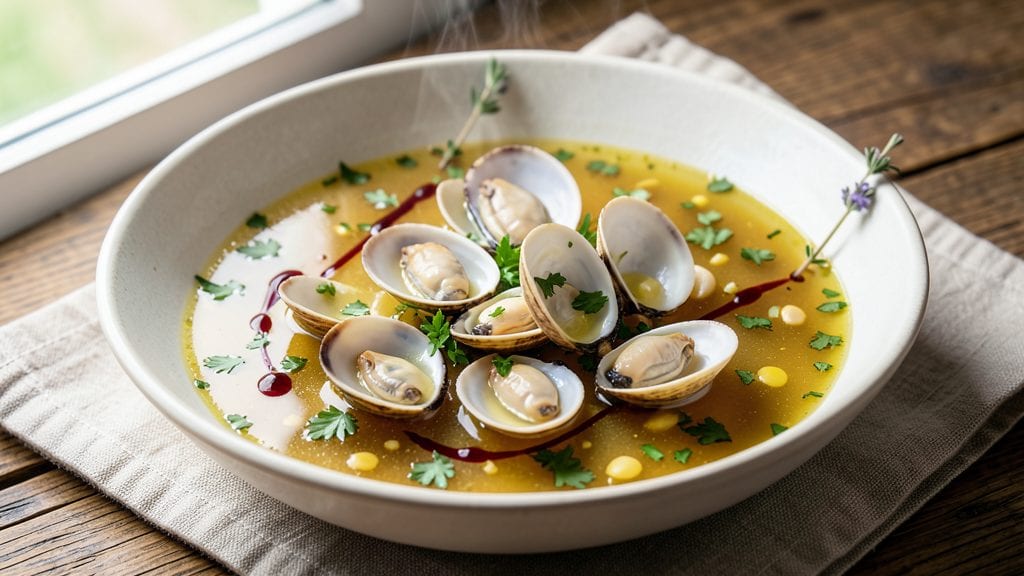
This clam broth recipe transforms humble clams into a deeply flavorful, umami-rich foundation that elevates any seafood dish. Standing on a step stool in my grandmother’s kitchen in Sicily, I learned how clam broth could turn simple meals into something extraordinary—just like she did with her famous spaghetti alle vongole.
The secret lies in extracting every ounce of flavor from the clams while keeping the broth crystal-clear and brimming with depth.
The process begins with meticulous preparation: cleaning the clams, steaming them just until they open, then straining the broth through cheesecloth for a silky texture. No shortcuts here—this is where the magic happens, and where the broth develops that signature intense umami that makes it worth the effort.
What you’ll end up with is a golden, aromatic liquid that’s rich enough to stand alone but versatile enough to serve as the backbone for risottos, bisques, or even as a briny, flavorful base for cocktails.
This isn’t just a broth—it’s a flavor multiplier, turning basic seafood into a restaurant-worthy experience. Whether you’re making a classic French-style bisque or a quick weeknight pasta, this broth delivers layers of complexity that store-bought versions simply can’t match.
The key is patience: letting the flavors meld and the broth reduce to concentrate its essence. Trust me, once you taste the difference, you’ll never go back to anything less.
Pair it with saffron rice, grilled shrimp, or even a crisp white wine for a meal that feels like a coastal escape. Here’s how to make it—step by step, just like Nonna taught me.
Ingredients for clam broth
Golden liquid magic starts with these twelve ingredients—each playing its part in Nonna’s umami masterpiece.
| Ingredient | Amount | Notes |
|---|---|---|
| Fresh Clams 🦪 | 2 lbs | Live, cleaned, medium-sized |
| Yellow Onion 🧅 | 1 whole | Medium, finely chopped |
| Garlic Cloves 🧄 | 6 cloves | Fresh, peeled, smashed |
| Extra-Virgin Olive Oil 🫒 | ½ cup | High-quality, fruity |
| Dry White Wine 🍷 | 1 cup | Sauvignon Blanc preferred |
| Fresh Parsley 🌿 | ½ cup | Stems removed, chopped |
| Fresh Thyme 🌿 | 2 sprigs | Stems intact for steeping |
| Bay Leaves 🍃 | 2 whole | Fresh if available |
| Sea Salt 🧂 | 1 ½ tsp | Diamond Crystal preferred |
| Black Peppercorns 🌶️ | 10 whole | Freshly cracked |
| Lemon Juice 🍋 | 2 tbsp | Freshly squeezed |
| Cheesecloth 🧵 | 1 sheet | For straining broth |
The clams are non-negotiable—live, medium-sized ones from Whole Foods or your local fishmonger (look for vibrant, tightly closed shells). If you can’t find fresh, frozen clams in the shell work too, just thaw them overnight in the fridge. The onion and garlic are the flavor anchors here, so don’t skimp on freshness. I always grab Italian-grown garlic from the specialty section at Trader Joe’s—it’s sweeter and more aromatic. The olive oil? Use something you’d drizzle over pasta—California extra-virgin has that fruity punch that translates beautifully into the broth. And the wine—any dry white will do, but I default to Sauvignon Blanc because its crisp acidity cuts through the richness.
No white wine? Substitute with clam juice or fish stock—just add a splash of lemon to brighten it up. Fresh herbs are ideal, but dried thyme at one-third the amount works in a pinch (though nothing beats the fresh stuff). The cheesecloth is worth hunting down—Amazon or kitchen supply stores sell it in rolls, and it makes all the difference for that silky texture. If you can’t find it, a double layer of paper towels or a fine-mesh strainer will do, but you’ll lose some of that delicate cloudiness. The lemon juice is key for brightness—don’t use bottled, as the flavor falls flat compared to freshly squeezed.
This broth keeps beautifully—3-4 days in the fridge sealed tightly, or 3 months frozen in ice cube trays for single-serving portions. I always make extra because it’s the perfect base for everything from risotto to seafood stews. The flavor actually deepens overnight, so if you can wait, do it. For freezing, portion it into glass jars with an inch of headspace—liquids expand when frozen, and you don’t want to end up with a broken jar. Label them with the date so you can rotate your stock.
Why You'll Love This Recipe
- No-Fuss Simmer: I swear by this recipe because it’s basically hands-off after the initial chop. Sauté onions and garlic in olive oil until golden, deglaze with white wine, then toss in the clams and let them steam open—minimal stirring, maximum flavor.
- Wine-Infused Depth: That splash of dry white wine isn’t just for show—it brightens the broth with a citrusy kick while cutting through the richness of the clams. Honestly, it’s the secret weapon that makes this taste like a restaurant dish, not a weeknight shortcut.
- Double-Duty Broth: Make a big batch and use it for everything: slurp it straight as a quick soup, toss it with linguine, or reduce it into a glossy sauce for grilled fish. Between us, I’ve even used the leftovers to poach eggs—because why waste that good flavor?
- Budget-Friendly Luxury: Fresh clams might sound fancy, but they’re often cheaper than shrimp or scallops, and this recipe stretches them far. A pound of clams and a few pantry staples feed four for under $20—feels like a splurge, costs like a steal.
Step-by-step instructions for clam broth
This umami-rich broth transforms simple clams into a flavor-packed foundation for seafood dishes.
Sweat the Aromatics in Olive Oil
Heat the 0.5 cup extra-virgin olive oil in a large pot over medium-low heat. Add the 1 whole finely chopped yellow onion and cook for 8-10 minutes until translucent and slightly caramelized. This gentle cooking prevents burning while developing deep sweetness.
Add the 6 cloves smashed garlic cloves and continue cooking for another 2 minutes until fragrant but not browned. The garlic should perfume the oil without releasing bitterness. Keep the heat low—garlic burns quickly and turns acrid.
Toast the Spices and Deglaze with Wine
Add the 2 sprigs fresh thyme, 2 whole bay leaves, 10 whole cracked black peppercorns, and 1.5 teaspoons sea salt to the pot. Toast for 1 minute until the spices release their essential oils and fill the kitchen with aroma.
Pour in the 1 cup dry white wine and scrape up any browned bits from the bottom of the pot. Let it simmer for 3-4 minutes until reduced by half. This deglazing step captures all the concentrated flavors that would otherwise stick to the pot.
Steam the Clams and Extract Their Juices
Add the 2 lbs fresh clams to the pot, along with 2 tablespoons lemon juice. Cover tightly with a lid and cook over medium-high heat for 8-10 minutes until all clams have opened. Discard any that remain closed—they won't cook properly.
Remove the clams with a slotted spoon and set aside. The broth should now have a deep, briny character with visible sediment from the clams. This is where the umami magic happens—don't strain yet. The clam juices will infuse the broth as it simmers.
Strain and Finish the Broth
Strain the broth through the 1 sheet cheesecloth lined over a fine-mesh strainer or colander. This creates a silky texture while removing any fine particles. Discard the solids in the cheesecloth.
Return the strained broth to the pot and simmer gently for 10-12 minutes to reduce slightly and concentrate the flavors. Taste and adjust seasoning with additional sea salt or lemon juice if needed. The finished broth should have a clean, briny depth with no metallic or fishy aftertaste.
Incorporate the Parsley and Rest
Remove the pot from heat and stir in the 0.5 cup chopped fresh parsley. Let the broth steep for 5 minutes to infuse with the parsley's bright, fresh notes. This final step balances the richness with a touch of brightness.
Use the broth immediately or store it in the refrigerator for up to 3 days or freeze for up to 3 months. The flavor will only deepen as it sits. This aromatic, umami-packed base transforms simple seafood dishes into restaurant-quality creations.
Pro Tips For Making Clam Broth
- Steam, Don’t Boil: Clams release their briny goodness when steamed, not boiled—think of it like whispering instead of shouting. Use a tight lid and medium-high heat until the broth starts to simmer gently; if it’s roaring, you’re losing flavor and risking tough clams. I learned this the hard way when my first batch tasted more like a sad seafood stock than a rich broth.
- Scrape, Don’t Slice: Onions and garlic here aren’t for show—they’re flavor anchors. Mince the garlic finely (almost a paste) and slice the onion paper-thin so they dissolve into the broth instead of sitting like stubborn chunks. Sounds tedious, but it’s the difference between a background note and the star of the show.
- Deglaze Immediately: As soon as you pull the pan off heat after searing the clams, pour in that white wine right away—don’t let the fond dry out. A dry pan means scraping instead of dissolving, and scraping means losing the caramelized bits that make this broth sing. I used to walk away for "just a second," and the fond would turn to glue.
- Use the Clam Liquids: Drain the clams, but save the juice from the steamer or colander—it’s packed with flavor. Pour it into the broth at the end; it’ll deepen the umami without overpowering. I was skeptical until I tried it—now I’d call it the lazy cook’s secret weapon.
Perfect pairings for clam broth
Seafood Pairings
This clam broth is the ultimate partner for delicate seafood like shrimp or scallops. Toss ½ lb shrimp in a pinch of salt, then sauté in 1 tbsp olive oil for 1-2 minutes per side before adding to the hot broth.
The briny depth of the broth enhances the natural sweetness of the shrimp—trust me, it’s a match made in coastal heaven. 🦐
Italian Risotto
Transform this broth into a luxurious clam risotto by using it to cook 1.5 cups Arborio rice with 4 cups broth (added gradually). Stir in ½ cup grated Parmigiano-Reggiano and a handful of the reserved clams at the end.
The creamy texture of the risotto contrasts beautifully with the broth’s bright acidity. Nonna always made this for special Sundays—it’s a family tradition. 🍚
White Wine Cocktails
Use the broth as a non-alcoholic base for a refreshing clam broth spritz. Mix 1 cup broth with ½ cup sparkling water, 1 tbsp lemon juice, and a splash of dry vermouth.
Garnish with a lemon twist and ice—it’s like a seafood-infused Aperol spritz. For a boozy twist, add 2 oz gin and top with soda water. 🍸
Grilled Fish
Brush firm white fish like cod or halibut with 1 tbsp olive oil, season with salt, and grill until flaky. Serve with the clam broth reduced by half and drizzled over the fish.
The smoky char of the grill pairs perfectly with the broth’s briny depth—it’s a restaurant-worthy combo. I love this with roasted fingerling potatoes on the side. 🐟
Pasta Dishes
Toss linguine or spaghetti with the broth, a splash of pasta water, and a handful of the reserved clams. Finish with 2 tbsp butter, ¼ cup chopped parsley, and a crack of black pepper.
The broth’s umami transforms simple pasta into something extraordinary—just like Nonna’s spaghetti alle vongole. 🍝
Bread Dipping
Warm crusty ciabatta or focaccia and dip it into the broth like a seafood consommé. The bread soaks up the rich flavors while adding a satisfying texture contrast. I love serving this as an appetizer with a glass of Pinot Grigio—it’s effortless but feels fancy. 🥖
Nutrition facts
Frequently asked questions
Can I use frozen clams instead of fresh for this broth?
Thaw frozen clams overnight in the fridge first. Rinse them thoroughly to remove any ice crystals, then scrub shells under cold water to remove debris. The texture and flavor will be just as rich—just follow the same cooking time of 8-10 minutes until they open.
What should I do with clams that don't open while cooking?
Discard any clams that remain closed after 8-10 minutes of cooking—they're unsafe to eat. This usually means they were already dead before cooking. Always buy from reputable sources and check for tightly closed shells before purchasing. A good rule: if it smells fishy or the shell is cracked, skip it!
How can I make this broth more flavorful if I don't have white wine?
Use clam juice or fish stock instead, then add 1 extra tablespoon of lemon juice for brightness. For depth, toast 1 extra teaspoon of fennel seeds with the spices or add a pinch of seaweed flakes—both add that briny, oceanic quality. The wine's acidity helps cut through richness, so don't skip the lemon entirely.
Can I make this broth in a slow cooker?
Yes, but with adjustments. Sauté the aromatics first in a skillet, then transfer everything (including clams) to the slow cooker. Cook on low for 3-4 hours instead of simmering. The low heat will prevent the broth from reducing too much, so you may need to simmer it uncovered on the stove for 10-15 extra minutes afterward to concentrate the flavors.
What's the best way to store leftover broth?
Let it cool completely, then store in glass jars with at least 1-inch headspace to prevent cracking when frozen. It keeps 3-4 days refrigerated or 3 months frozen. For single servings, freeze in ice cube trays—perfect for adding to pasta or risotto later! The flavor actually improves over time, especially when frozen.