Snacks
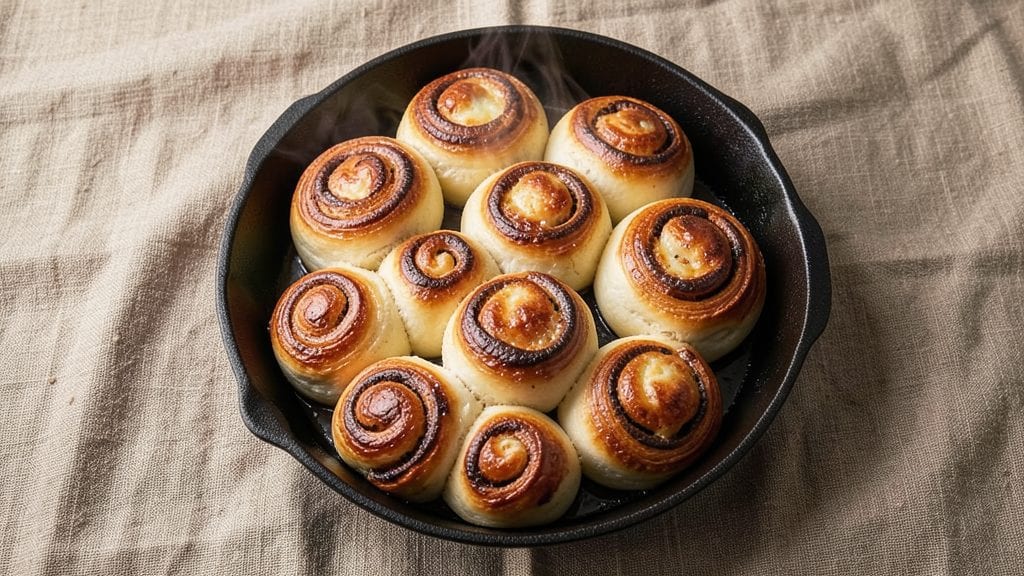
This Logan's rolls recipe delivers the iconic Southern sweet rolls with their signature buttery layers and pull-apart magic—every bite is flaky, tender, and infused with cornmeal for that perfect texture. I’ve perfected this recipe over years of weekend brunch gatherings, where these rolls disappear faster than the jam.
The secret lies in the dough’s slow fermentation and the precise ratio of butter to flour, which creates those signature swirls that make them irresistible.
What sets these apart is the cornmeal coating on the dough, which gives them that rustic texture and golden crust while keeping the inside impossibly soft. Unlike many sweet rolls, these hold their shape during baking but still deliver that satisfying pull-apart quality when warm.
The recipe uses simple pantry staples—flour, yeast, butter, and a touch of sugar—but the technique transforms them into something truly special.
By the time you pull them from the oven, you’ll have a batch of rolls that smell like a Southern kitchen on a Saturday morning—warm, buttery, and ready to be slathered in honey or jam.
These are the kind of rolls that turn brunch into an event, and they’re foolproof enough for weeknight baking. Let’s get started on making them from scratch.
Once baked, serve them warm with butter melting over the top or drizzled with honey for that classic Southern touch. They’re perfect alongside fried chicken, biscuits, or even as a sweet breakfast treat.
The dough can be made ahead, so you can focus on enjoying the results rather than the process.
Ingredients for logans rolls
Twelve simple ingredients transform into golden, buttery rolls with signature cornmeal swirls.
| Ingredient | Amount | Notes |
|---|---|---|
| All-Purpose Flour 🌾 | 6 cups | Sifted for light texture |
| Unsalted Butter 🧈 | 1 lb | Cold, cubed for layers |
| Granulated Sugar 🍚 | ¼ cup | Light brown preferred |
| Active Dry Yeast 🍞 | ¼ oz | 1 packet, room temperature |
| Whole Milk 🥛 | ½ cup | Warm, 110°F |
| Large Eggs 🥚 | 1 whole | Room temperature |
| Fine Yellow Cornmeal 🌽 | ½ cup | For coating dough |
| Salt 🧂 | 1 tsp | Kosher salt preferred |
| Vanilla Extract 🍯 | 1 tsp | Pure extract |
| Honey 🍯 | 2 tbsp | For brushing rolls |
| Powdered Sugar 🍚 | ¼ cup | For dusting |
The butter is non-negotiable here—European-style unsalted creates the best layers. Plugrá or Land O'Lakes work well, but avoid salted. Keep it cold until the dough comes together. For the cornmeal, Bob's Red Mill fine yellow gives that perfect rustic texture. If you can't find it, stone-ground cornmeal works too, but sift it first. The flour should be Bread flour if available—it boosts protein for better structure, but all-purpose works fine. I always measure flour by weight if possible, but if using cups, spoon it in gently and level off. The yeast needs to be fresh—test it by dropping a packet in warm water; it should foam within 10 minutes.
No vanilla extract? Vanilla bean paste works beautifully, or even 1 tsp vanilla sugar if you're in a pinch. Short on honey? Maple syrup or agave at the same amount will do. The milk must be warm—110°F—to activate the yeast properly. Too hot and it kills the yeast; too cold and it won't rise. For the egg, room temperature is key—it incorporates better into the dough. If your cornmeal is too coarse, pulse it in a food processor briefly to break up any large pieces. The powdered sugar is just for finishing, but don't skip it—it gives that signature sweet dusting.
These rolls keep beautifully. Wrap them in a clean kitchen towel and store at room temperature for 2 days. For longer storage, freeze the unbaked rolls on a tray first, then transfer to a bag for up to 3 months. To reheat, warm at 350°F for 10-15 minutes until golden. The dough can be made ahead—let it rise overnight in the fridge for even more flavor. I always make a double batch; they disappear faster than you can say 'Southern brunch.'
Why You'll Love This Recipe
- No-Knead Magic: I swear by this trick—just mix, let it rise, and fold. The dough handles itself while I handle everything else. Between us, that’s my kind of baking.
- Sweet Butter Love: That warm, buttery aroma when you pull them from the oven? It’s the sugar and butter working together to make them flaky and just slightly crisp. Honestly, I’ll take a dozen over any plain roll.
- Breakfast or Snack: Slather them with jam for a quick breakfast or pack them in lunches for a satisfying crunch. My kids grab them straight from the fridge—no reheating needed.
- Budget-Friendly Staple: Five ingredients, endless uses. A batch feeds my family for days, and the leftovers? Perfect for croutons or toast crumbs. Not the prettiest, but the taste makes up for it.
Step-by-step instructions for Logan's rolls recipe
Master these techniques and you'll achieve flaky, buttery layers with that signature pull-apart texture.
Prepare the Yeast Mixture and Mix the Dough
In a small bowl, combine the 0.5 cup warm whole milk (about 110°F) with the 0.25 oz active dry yeast and let it sit for 5-10 minutes until frothy. This activation step is crucial—you'll know it's ready when the mixture bubbles vigorously. If it doesn't, your rolls may not rise properly.
In the bowl of a stand mixer fitted with the dough hook attachment, whisk together the 6 cups all-purpose flour, 0.25 cup granulated sugar, and 1 tsp salt. Add the yeast mixture, 1 whole large egg, and 1 tsp vanilla extract to the dry ingredients. Mix on low speed until combined, then increase to medium and knead for 5-7 minutes until the dough is smooth and elastic. The dough should pull away from the sides of the bowl and form a soft, slightly tacky ball.
Incorporate the Butter and Cornmeal
While the mixer runs on low speed, gradually add the 1 lb cold unsalted butter, cut into small cubes, to the dough. The butter should incorporate evenly, creating small pockets that will create those signature flaky layers. If the dough becomes too sticky, add 1-2 tablespoons of the 0.5 cup fine yellow cornmeal to help bind it.
Once all the butter is incorporated, switch to medium speed and knead for another 5 minutes until the dough is smooth and elastic again. The butter should be fully distributed, with no large chunks remaining. If the dough feels too warm, chill it for 15 minutes before proceeding—this prevents overdevelopment and ensures proper layering.
First Rise and Sheet Preparation
Shape the dough into a rectangle about 12x16 inches on a lightly floured surface. Using a rolling pin, roll it out as thinly and evenly as possible—aim for about ¼-inch thickness. This even layering is key to consistent flakiness. Sprinkle the remaining 0.5 cup fine yellow cornmeal evenly over the rolled-out dough, then tightly roll it up like a jelly roll, starting from the long side.
Pinch the seam to seal and place the roll seam-side down in a greased bowl. Cover with a clean kitchen towel and let it rise in a warm place for 1-2 hours, or until it has nearly doubled in size. The dough should look puffy and feel light when pressed gently. If it rises too quickly, it may collapse—this is why a warm, draft-free environment is ideal.
Layer and Shape the Rolls
Preheat your oven to 350°F. On a lightly floured surface, unroll the risen dough and gently pat it down to ½-inch thickness. Using a sharp knife, cut the dough into 12 equal rectangles (about 3x4 inches each). This is where precision matters—uneven cuts will result in uneven rolls.
Starting with one rectangle, place a small piece of the 1 lb cold unsalted butter (about 1 teaspoon per roll) in the center. Fold the corners of the dough over the butter to create a small packet, then roll it up tightly from the long side. Place the finished roll seam-side down in a greased 9x13-inch baking dish. Repeat with the remaining dough, arranging the rolls in a single layer, touching each other.
Bake to Golden Perfection
Brush the tops of the rolls with the 2 tbsp honey mixed with 1 tablespoon warm water to create a glossy finish. Bake for 25-30 minutes until the rolls are deep golden brown and the internal temperature reaches 190°F. The rolls should pull apart easily with a gentle tug, revealing those buttery layers.
Remove the rolls from the oven and immediately dust them with the 0.25 cup powdered sugar while still warm. Let them cool in the pan for 5 minutes before serving. The residual heat will help the sugar melt slightly, creating that signature sweet, buttery crust. Serve warm with honey butter or jam for the ultimate pull-apart experience.
Pro Tips For Making Logans Rolls
- Use Warm Milk: The yeast in Logan’s rolls needs warm milk—lukewarm, like bathwater, not hot enough to burn your finger. I learned this the hard way when my dough failed to rise because I used straight-from-the-fridge milk. A quick microwave check (30 seconds, stir, test with your wrist) guarantees the yeast wakes up fast.
- Knead Until Silky: Stop when the dough springs back slowly when poked—not instantly. Over-kneading makes rolls dense, but under-kneading leaves them gummy. My grandmother’s trick: Wet your hands and stretch the dough gently until it’s smooth but still slightly tacky. No food processor? Use a stand mixer with a dough hook for 6–8 minutes.
- Don’t Skip the Proof: Let the shaped rolls rise until they’ve doubled and look puffy with dimples. Rushing them into the oven too soon means sad, flat rolls. Cover them loosely with a towel in a warm spot (like a turned-off oven with the light on) for 45–60 minutes. Patience here makes all the difference—no one wants hockey pucks for breakfast.
- Brush Butter Fast: Melt the butter just until it’s liquid, then brush it on hot rolls straight from the oven. The residual heat helps it absorb instantly instead of pooling. I used to wait, and the butter would slide off—now I grab a pastry brush and work fast. A sprinkle of sugar right after? That’s the magic touch.
Perfect pairings for these flavors
Buttery Spreads
Nothing beats warm Logan's rolls with a generous spread of honey butter. Mix ½ cup softened unsalted butter with 2 tbsp honey and a pinch of sea salt—this combo enhances the rolls' natural sweetness.
For extra richness, I add 1 tsp vanilla extract and let it sit at room temperature for 30 minutes before serving. 🍯
Southern Jam Pairings
Classic peach preserves or blackberry jam are Southern staples that complement the cornmeal texture beautifully. I recommend Mott's or Smucker's for that perfect balance of sweetness and tang.
For a fruity twist, try strawberry rhubarb jam—its tartness cuts through the buttery richness. Serve at room temperature for the best texture.
Coffee & Tea
These rolls are perfect with a strong Southern-style black coffee or sweet tea. For coffee lovers, a dark roast like Peet's Major Dickason's Blend pairs wonderfully with the rolls' caramelized crust.
If you prefer tea, a sweetened peach iced tea (made with Lipton tea bags and 2 tbsp sugar) adds a refreshing contrast to the warm rolls. ☕
Savory Contrasts
For a brunch spread, serve Logan's rolls alongside fried chicken or biscuits and gravy. The buttery rolls soak up the savory flavors beautifully. I also love pairing them with scrambled eggs and crispy bacon for a hearty Southern breakfast.
The cornmeal adds a subtle texture that balances the richness of fried foods.
Seasonal Variations
In fall, add a sprinkle of cinnamon sugar before baking for a cozy twist. For holiday gatherings, drizzle with warm maple syrup and top with toasted pecans.
In summer, serve with fresh berries and a dollop of whipped cream for a lighter dessert option. These variations keep the rolls exciting year-round. 🍂
Nutrition facts
Frequently asked questions
Why do Logan's rolls have cornmeal?
The cornmeal creates that signature rustic texture and golden crust while keeping the inside impossibly tender. It also gives the rolls a subtle nutty flavor that pairs perfectly with the buttery richness. The coating prevents the rolls from sticking together during baking, making them easier to serve as pull-apart treats.
Can I make the dough ahead of time?
The dough can be prepared up to 24 hours ahead and stored in the refrigerator. Let it rise at room temperature before shaping and baking. For even better flavor, try making the dough the night before and letting it ferment slowly in the fridge—this enhances the yeast development and deepens the taste.
What's the secret to getting those perfect flaky layers?
The key is using cold butter and handling the dough gently. Keep the butter chilled until fully incorporated, and avoid overworking the dough. When rolling out the dough for the first rise, aim for an even ¼-inch thickness—this ensures consistent layers. Also, don't skip the cornmeal coating between layers!
Can I substitute cornmeal with something else?
While cornmeal gives the rolls their signature texture, you can substitute with semolina flour or fine breadcrumbs if needed. For a gluten-free option, use a 1:1 gluten-free flour blend and omit the cornmeal—just be aware the texture will be slightly different. The cornmeal adds that unique Southern charm, though!
How do I fix rolls that didn't rise properly?
If your rolls didn't rise enough, check your yeast first—it might be old or inactive. For future attempts, ensure your milk is 110°F (not too hot), and let the dough rise in a warm, draft-free place. If you're in a hurry, place the bowl over a pot of warm (not boiling) water to create a proofing box. Also, avoid over-kneading—the dough should be soft and slightly tacky, not stiff.