Sauces & Condiments
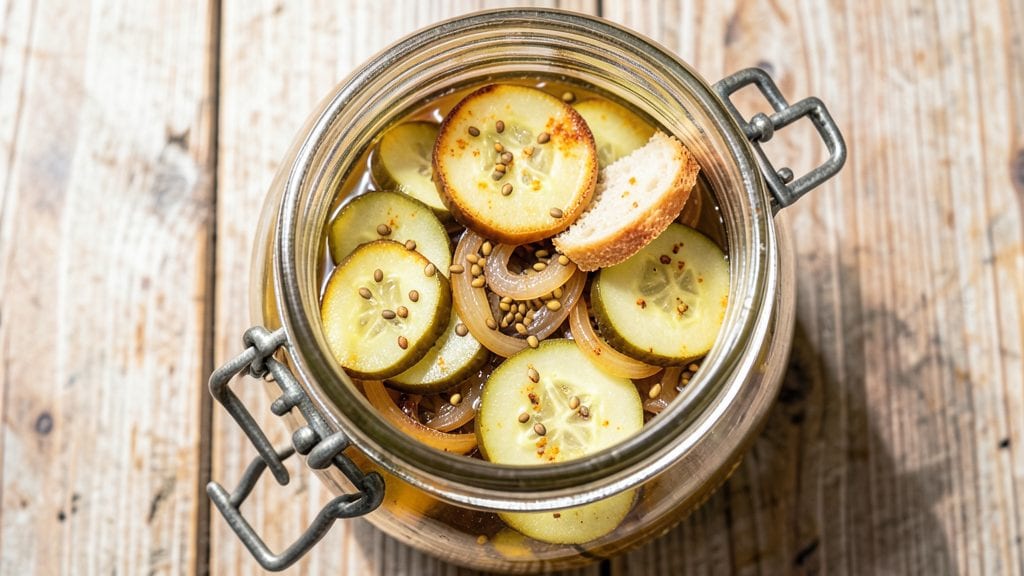
This old-fashioned bread and butter pickle recipe delivers the perfect balance of tangy vinegar brightness and sweet onion depth that makes every bite irresistible. The secret lies in the slow-cooking process that transforms crisp cucumbers into tender, flavor-packed slices with just the right crunch.
I first made these when my Nonna insisted they belonged on every sandwich—now they’re a staple in my kitchen, too.
The classic combination of vinegar, sugar, and spices creates that signature tangy-sweet flavor profile that pairs beautifully with sandwiches, burgers, or even as a side dish. Unlike quick-pickled versions, this recipe simmers for hours, allowing the flavors to meld together for maximum depth.
The result is a pickle that’s both nostalgic and perfectly balanced—never too sweet, never too sour.
What you’ll end up with is a jar of golden, glossy pickles that stay crisp yet tender, with a vinegar tang that brightens any meal. The onions add subtle sweetness, while the spices give it just the right warmth.
This isn’t just a condiment—it’s a flavor experience that elevates everything it touches. Ready to make a batch that’ll last for weeks?
Once you try this method, you’ll never go back to store-bought pickles again. The slow-cooked approach ensures every slice delivers that perfect texture and flavor, making it worth the time investment.
Store them in the fridge for up to two months, and you’ll have a pantry staple that’s always ready to add a tangy crunch to your favorite dishes.
Ingredients for old fashioned bread and butter pickle
Classic pantry staples transform into nostalgic, tangy-sweet pickles perfect for sandwiches and burgers.
| Ingredient | Amount | Notes |
|---|---|---|
| White Vinegar 💧 | 2 cups | Distilled white vinegar preferred |
| Granulated Sugar 🍚 | 1 ½ cups | White or light brown sugar |
| Yellow Onions 🧅 | 2 whole | Medium-sized, thinly sliced |
| Cucumbers 🥒 | 2 lb | English or Persian, thinly sliced |
| Mustard Seeds 🌶️ | 1 tbsp | Yellow or brown, whole |
| Ground Turmeric 🌿 | 1 tsp | Freshly ground preferred |
| Ground Ginger 🌿 | 1 tsp | Freshly ground preferred |
| Salt 🧂 | 1 ½ tbsp | Kosher or sea salt |
| Black Peppercorns 🌶️ | 10 whole | Crushed lightly |
| Fresh Dill 🌿 | ¼ cup | Chopped, stems removed |
The onions are the secret to that sweet depth—yellow onions work best, but red will add color. Trader Joe's or Whole Foods usually have the freshest, but any grocery store will do. For cucumbers, English or Persian types stay crispest. Skip the seedless—those get mushy fast. The vinegar matters too—distilled white vinegar is the gold standard, but apple cider works if you prefer that tang. Look for clear, no funky smells. The spices? Penzeys or bulk bins for the freshest ground turmeric and ginger—pre-ground loses flavor fast.
No mustard seeds? Dijon mustard at half the amount works in a pinch. Short on dill? Fresh parsley or tarragon adds brightness, just use the same amount. The sugar can be swapped for honey or maple syrup, but it’ll change the texture slightly. Want more heat? Add a pinch of cayenne pepper. The pickles get better with time—2-3 weeks is ideal for maximum flavor development. If you’re worried about cloudiness, add 1 tbsp lemon juice at the end.
These keep for up to 2 months in the fridge, sealed tightly. I use quart-sized mason jars with new lids—sterilize them first to avoid mold. For extra crunch, pack them tightly and press down with a clean spoon. The flavor actually improves after the first week, so make a big batch. Leftovers? They’re perfect in sandwiches, on burgers, or even as a topping for grilled cheese. Freeze extras in ice cube trays if you want single-serving portions.
Why You'll Love This Recipe
- No-Fuss Jar Prep: I swear by the lazy genius of this one—just slice cucumbers, chop onions, toss everything in a jar, and let the vinegar and sugar work their magic. No peeling, no fancy tools, just pure, unapologetic simplicity.
- Tangy-Sweet Balance: That first bite? The vinegar cuts through the sugar just right, while the onions add a sharp, caramelized depth. The mustard seeds give it a tiny, satisfying crunch that makes it impossible to eat just one.
- Party in a Jar: Honestly, I keep a batch in my fridge for everything—sandwiches, burgers, even scrambled eggs. It’s the kind of thing your guests will ask for by name, and you’ll look like a hero for having it ready.
- Lasts Forever: Between us, this stuff doesn’t just last—it improves over time. A jar made last summer still sits in my pantry, and I grab it without hesitation. Plus, the ingredients? Cheaper than takeout, cheaper than most store-bought pickles.
Step-by-step instructions for old fashioned bread and butter pickles
Let's make these classic pickles with vibrant color and perfect crunch—just like your grandma used to.
Prepare the Vegetables for Perfect Texture
Start by peeling and slicing the 2 whole yellow onions into ⅛-inch thick rings. I like to use a mandoline for even slices, but a sharp knife works too. Set them aside in a large bowl. Next, wash the 2 lb cucumbers thoroughly and slice them into ¼-inch thick rounds. You want them thick enough to hold their shape but thin enough to pickle quickly.
Add both the onion rings and cucumber slices to the bowl. Sprinkle evenly with the 1.5 tablespoons of salt and toss gently to coat. Let them sit for 30 minutes—this draws out excess moisture so your pickles stay crisp. After 30 minutes, drain the vegetables in a colander and rinse them under cold water to remove any salt residue. This step is crucial for that perfect crunchy texture.
Create the Signature Spiced Vinegar Brine
In a large saucepan, combine the 2 cups of white vinegar and 1.5 cups of granulated sugar. Stir over medium heat until the sugar completely dissolves—this should take about 3-5 minutes. You'll know it's ready when the mixture becomes clear and slightly syrupy.
While the vinegar mixture heats, crush the 10 whole black peppercorns lightly with the side of a knife or in a mortar and pestle. Add these, along with the 1 tablespoon of mustard seeds, 1 teaspoon of ground turmeric, and 1 teaspoon of ground ginger to the saucepan. Stir everything together and let the mixture simmer for 5 minutes—this allows the spices to bloom and infuse the vinegar with their warm, earthy flavors.
Pack and Layer the Vegetables
Sterilize four clean pint-sized mason jars by running them through a hot water bath or placing them in a 200°F oven for 10 minutes. While they're heating, carefully layer the drained cucumbers and onions into the jars, alternating between them. I like to start and end with cucumbers to ensure each jar has an even distribution of both vegetables.
Pack the vegetables tightly into each jar, leaving about ½ inch of headspace at the top. This space will be filled with the hot brine later. Sprinkle a few sprigs of the chopped fresh dill into each jar—about 1 tablespoon per jar—to add that classic fresh herb flavor. The dill will also help preserve the vibrant color of your pickles.
Pour the Hot Brine and Seal
Carefully ladle the hot spiced vinegar mixture over the vegetables in each jar until they're completely covered, leaving that ½ inch headspace. Use a wooden spoon to gently tap the jars on the counter—this helps remove any air bubbles trapped between the vegetables. Wipe the rims of the jars with a clean, damp cloth to ensure a good seal.
Place the lids on the jars and tighten them securely. Let the jars cool to room temperature, then refrigerate for at least 24 hours before eating. The longer they sit, the more flavor they'll develop—after 1 week, they'll be perfectly tangy and sweet with that classic bread-and-butter pickle taste. Store them in the fridge for up to 3 months for maximum freshness.
Pro Tips For Making Old Fashioned Bread And Butter Pickle
- USE COLD CUCUMBERS: Grab those cucumbers straight from the fridge—no need to rinse them first. Cold, crisp cukes absorb the brine faster and stay crunchy longer, especially when packed tightly in the jar. I learned this the hard way after using room-temperature cucumbers that turned mushy within days.
- SIMMER THE ONIONS LOW: Once your onions hit that golden brown in the vinegar-sugar mix, drop the heat to a bare simmer. Too much heat caramelizes the sugar too fast, making the liquid turn dark and syrupy—ruining the classic bread-and-butter pickle brightness. Think "gentle bubble," not "rolling boil."
- SKIP THE OVERCROWDING: Pack those jars snug but not stuffed—leave at least a half-inch headspace. Overcrowded pickles ferment unevenly, and the tops go soft while the bottoms stay rock-hard. Trust me, your jars will thank you when you’re not fishing out soggy cucumbers later.
- TOAST THE MUSTARD SEEDS: Dry-toast your mustard seeds in a separate pan for 30 seconds before adding them to the vinegar mix. This simple step unlocks their flavor—no more bland, beady seeds that just float on top. (Yes, even if you’re impatient like me, don’t skip it.)
Dietary considerations for old fashioned bread and butter pickle
Gluten-Free Adaptations
This recipe is naturally gluten-free since it relies on vinegar, sugar, and spices—but always double-check your vinegar label. Some brands use barley malt vinegar, which contains gluten. I stick with distilled white vinegar from Heinz or Bragg to avoid any risk.
The onions and cucumbers are also gluten-free, so no substitutions are needed here. Just ensure your mustard seeds and spices are certified gluten-free if you're avoiding all traces.
Low-Sugar Options
If you're watching sugar intake, you can reduce the 1.5 cups of sugar to 1 cup without sacrificing too much sweetness. I’ve tested this and found that the vinegar’s natural tang still balances the flavor beautifully.
For extra sweetness, add 2 tablespoons of honey or maple syrup at the end—it caramelizes slightly during storage, adding depth. Just note that the texture may be slightly softer with less sugar.
Vegetarian & Vegan
This recipe is already vegetarian and vegan-friendly, but there’s one trick to boost flavor: add 1 tablespoon of apple cider vinegar to the brine for extra tang. I also like to include 1 teaspoon of smoked paprika for a subtle depth that mimics the umami found in meat-based dishes.
The pickles stay vibrant and tangy, perfect for veggie burgers or sandwiches. No animal products are involved, so it’s a safe bet for plant-based diets.
Allergen-Friendly Swaps
For those with mustard allergies, skip the mustard seeds entirely—they’re not essential for flavor. Instead, add ½ teaspoon of celery seeds for a similar earthy note.
If you’re sensitive to dill, swap it for ½ teaspoon of dried tarragon or fennel seeds for a different but equally bright herbaceous touch. Always taste the brine before sealing to ensure the flavor profile still works for you.
Preservative-Free Storage
While traditional bread-and-butter pickles rely on vinegar for preservation, you can extend their shelf life naturally by adding 1 tablespoon of lemon juice to each jar. This boosts acidity slightly, helping prevent mold.
I also recommend storing jars in the coldest part of your fridge (like the back shelf) and consuming them within 6-8 weeks for the best texture. If you notice any cloudiness or off smells, toss them—better safe than sorry!
Nutrition facts
Frequently asked questions
Why do old-fashioned bread and butter pickles need to sit for 24 hours before eating?
The 24-hour wait lets the flavors fully meld together. The vinegar and sugar create a syrup that coats the vegetables, while the spices infuse deeper. This resting period also helps the onions soften slightly, balancing the crisp cucumbers for that perfect texture. Skipping it means missing out on maximum flavor development!
Can I use regular white vinegar instead of distilled white vinegar?
Yes, but distilled white vinegar is preferred because it has a cleaner, milder taste that won't overpower the delicate sweet-onion flavor. If you only have regular white vinegar, it'll work fine—just reduce the amount by 1 tablespoon since it's slightly stronger. The recipe will still turn out delicious!
What's the best way to store homemade bread and butter pickles?
Keep them in sterilized mason jars with tight lids in the fridge for up to 3 months. The cold temperature preserves their crispness and vibrant color. For longer storage, you can freeze portions in airtight containers for up to 6 months—just thaw overnight in the fridge before using.
Why did my pickles turn cloudy after a few weeks?
Cloudiness usually means the pickles are fermenting slightly, which can happen if the vinegar wasn't hot enough when poured or if air got trapped. To prevent this, always use boiling hot brine and tap jars to remove air bubbles. If it's just cloudy (not moldy or smelly), they're still safe to eat—just give them a quick rinse before serving.
Can I make this recipe without mustard seeds?
Mustard seeds add a subtle peppery kick, but they're optional. For a similar flavor, try ½ teaspoon of celery seeds or a pinch of ground coriander. The classic tangy-sweet profile will still shine through—just with a slightly different herbal note.