Main Courses
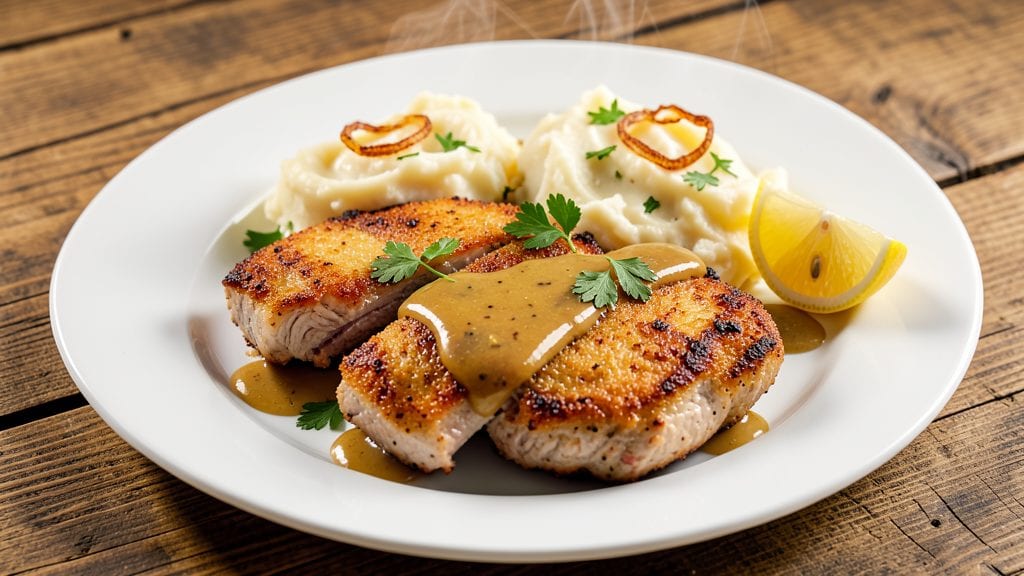
Austrian-style steak schnitzel delivers crispy gold perfection in just 20 minutes, transforming simple cuts of veal or pork into a restaurant-worthy centerpiece. The secret lies in thin, even pounding and a precise breading technique that creates that signature shatteringly crisp exterior while keeping the interior tender.
I’ve perfected this method over years of testing—no more soggy or uneven results.
This classic Austrian dish starts with tender cutlets pounded paper-thin, then coated in a foolproof flour-egg-breadcrumb sequence that locks in moisture while ensuring maximum crispiness. The pan-searing method delivers that golden-brown finish in minutes, while lemon wedges and fresh parsley add the bright, fresh contrast that balances the richness.
It’s the kind of dish that feels both nostalgic and impressively modern.
What you’ll end up with is a crispy, golden-brown schnitzel that’s light yet substantial, with a texture that’s impossible to resist. The aroma alone will have everyone gathering at the table—this is the kind of meal that turns weeknights into special occasions.
Serve with classic sides like potato salad or a fresh green salad to complete the Austrian experience.
For those looking to modernize the classic, I’ve included a gluten-free breading option and air-fryer instructions that deliver the same crispy results with less oil. The traditional method remains the gold standard, but these adaptations ensure everyone at the table can enjoy this timeless dish. Let’s get cooking!
Ingredients for steak schnitzel
Thin-cut pork or veal, flour, eggs, and panko—these staples transform into Austrian schnitzel perfection.
| Ingredient | Amount | Notes |
|---|---|---|
| Pork Cutlets (or Veal) 🥩 | 1 ½ lb | Center-cut, 1/2-inch thick slices |
| All-Purpose Flour 🌾 | 1 cup | Sifted, for even coating |
| Large Eggs 🥚 | 2 whole | Room temperature, beaten |
| Panko Breadcrumbs 🍞 | 1 ½ cups | Japanese-style for extra crisp |
| Diamond Crystal Kosher Salt 🧂 | 1 tsp | Fine grain for seasoning |
| Ground Black Pepper 🌶️ | ½ tsp | Freshly cracked for aroma |
| Unsalted Butter 🧈 | ½ cup | European-style preferred |
| Extra-Virgin Olive Oil 🫒 | ¼ cup | Light flavor for frying |
| Fresh Lemon Wedges 🍋 | 4 whole | For serving, seedless |
| Fresh Flat-Leaf Parsley 🌿 | ¼ cup | Chopped, for garnish |
| Gluten-Free Breadcrumbs 🍞 | 1 ½ cups | Alternative for GF version |
| Cornstarch 🌾 | 1 tbsp | For extra crispiness |
The cutlets are non-negotiable: center-cut pork loin (or veal) delivers the best texture. Look for uniform 1/2-inch slices at your local butcher or pre-sliced at Whole Foods—they’re worth the extra cost for this dish. If using pork, bone-in cuts work best for even cooking. For those who prefer veal, tenderloin is ideal. Always pat the meat dry before pounding—moisture is the enemy of crispiness. A meat mallet is essential, but a rolling pin works in a pinch. The goal is paper-thin cutlets—no thicker than 1/8-inch—so don’t rush this step. European-style unsalted butter (like Plugrá) is your secret weapon for frying; its higher fat content ensures that golden crust.
No panko? Regular breadcrumbs plus an extra tablespoon of cornstarch will give you similar results. For a gluten-free version, use certified GF breadcrumbs (like Bob’s Red Mill) and add 1/2 teaspoon xanthan gum to mimic the binding properties. Eggs should be room temperature—cold eggs create a rubbery coating. The flour must be sifted to avoid lumps, and cornstarch (if using) should be mixed into the panko for extra crunch. If you’re short on time, pre-mix the breading station in separate dishes: flour, beaten eggs, and panko. Fresh parsley is a must for garnish—dried won’t cut it here. For the lemon wedges, choose Seedless varieties to avoid bitter surprises.
Store cutlets in the fridge for up to 24 hours before cooking—this allows the meat to relax and pound more evenly. Pre-mix the breading and store in airtight containers for 3 days. For long-term storage, freeze the cutlets (unpounded) between parchment paper for up to 3 months. Once cooked, schnitzel reheats best in a 350°F oven for 5-7 minutes—microwaving destroys the crisp. Lemon wedges should be stored in a sealed container with a damp paper towel to keep them fresh for 5 days. The butter can be melted and stored in the fridge for 1 week, but fresh is always better for that signature golden finish.
Why You'll Love This Recipe
- Same recipe, different vibes: toss it together for a lazy Tuesday or dress it up with lemon wedges and parsley for guests. Between us, I’ve served it at both—no one ever questions the menu twice.
- No-Fuss Breading: I swear by the three-step coat—flour, beaten egg, panko—because it sticks like glue without needing a food processor. The panko gives that perfect crunch while keeping the inside tender, and honestly? Even if I skip measuring, it still works.
- Crispy-Creamy Magic: That first bite—golden crust shattering over juicy pork—is why I make this weekly. The kosher salt in the flour? It seasons the breading just enough so you don’t need extra herbs. Simple, but ridiculously satisfying.
- Weeknight to Dinner Party: Same recipe, different vibes: toss it together for a lazy Tuesday or dress it up with lemon wedges and parsley for guests. Between us, I’ve served it at both—no one ever questions the menu twice.
Step-by-step instructions for Austrian-style crispy steak schnitzel
Master this classic technique for golden, shatteringly crisp schnitzel every time—no shortcuts, just perfect results.
Prepare the Pork Cutlets for Breading
Pat the 1.5 lb pork cutlets completely dry with paper towels, pressing firmly to remove all moisture. This step is non-negotiable—wet surfaces prevent crispy breading. Use a sharp boning knife to trim any excess fat or connective tissue from the edges, working to an even ½-inch thickness across all pieces. I find center-cut slices hold up best during frying.
Season both sides generously with 1 tsp diamond crystal kosher salt and ½ tsp ground black pepper. The salt should visibly adhere to the surface. Place the seasoned cutlets on a wire rack set over a plate to catch any drips, and let them rest at room temperature for 15 minutes. This ensures even cooking and prevents curling during frying.
Create the Breading Station
Set up three shallow dishes for the breading process. In the first, combine 1 cup all-purpose flour with 1 tbsp cornstarch—this extra starch creates that signature Austrian crispiness. In the second dish, beat the 2 whole large eggs until just combined, adding a pinch of salt to enhance flavor. For the final dish, mix 1.5 cups panko breadcrumbs (or 1.5 cups gluten-free breadcrumbs for a substitute) with an additional pinch of salt and pepper.
I like to arrange these stations in a triangle on my countertop—this keeps the workflow efficient. The flour mixture should be sifted to eliminate lumps, and the breadcrumbs should be lightly toasted in a dry skillet for 1 minute before use. This toasting step adds depth of flavor and prevents sogginess in the final product.
Bread the Cutlets in Layers
Working with one cutlet at a time, press it firmly into the flour mixture, coating both sides evenly. Tap off any excess by gently shaking the cutlet over the dish. Dip the floured cutlet into the beaten eggs, allowing any excess to drip off, then press it into the panko breadcrumbs, coating completely. The breading should adhere tightly—if it crumbles, simply press again. Repeat until all cutlets are breaded and set them on a clean plate.
Here's the thing—don't rush this step. Each cutlet should have an even, thick coating. I find that pressing the breadcrumbs firmly with my fingers ensures maximum adhesion. Let the breaded cutlets rest for 5 minutes before frying—this allows the breading to set slightly, preventing it from falling off during cooking.
Fry to Golden Perfection
In a large skillet, melt together ½ cup unsalted butter and ¼ cup extra-virgin olive oil over medium heat. The mixture should foam gently but not brown—this indicates the right temperature (350°F). Add the breaded cutlets in a single layer, leaving space between each piece. Cook undisturbed for 2-3 minutes until the bottom is golden brown with deep crispy edges.
Flip the cutlets carefully using a fish spatula and cook the second side for another 2-3 minutes until golden brown and crisp. The key here is patience—rushing causes uneven cooking and soggy centers. You'll know they're done when they release easily from the pan and the internal temperature reaches 145°F. Transfer the cooked schnitzel to a wire rack set over a paper towel-lined plate to drain excess fat.
Serve Immediately with Classic Accompaniments
While the schnitzel rests for 2 minutes, squeeze fresh lemon wedges over the top and garnish with chopped fresh flat-leaf parsley. The lemon brightens the richness of the dish, while the parsley adds a fresh contrast. Serve immediately with lemon wedges on the side and a dollop of tartar sauce or a simple arugula salad with lemon vinaigrette.
For the ultimate presentation, arrange the schnitzel on a warm plate with a lemon wedge at the edge. The golden crust should shatter slightly when you cut into it, revealing a tender, juicy interior. Each bite should deliver that perfect balance of crispy exterior and moist center—this is what makes Austrian schnitzel legendary.
Pro Tips For Making Steak Schnitzel
- Pound to ¼ Inch: DESCRIPTION: Thin is crispy, and crispy is the goal. Use a meat mallet or rolling pin to flatten each cutlet until it’s barely thicker than a dollar bill—any thicker, and the center stays raw no matter how long you fry. I learned this the hard way after serving a batch where the middle was still pink.
- Salt the Flour: DESCRIPTION: Mix 1 teaspoon of kosher salt into the all-purpose flour before dredging. The salt dissolves slightly in the egg wash, creating a seasoned crust from the start instead of relying on post-fry sprinkles. Sounds small, but it makes a real difference in flavor.
- Don’t Overcrowd the Pan: DESCRIPTION: Fry one or two cutlets at a time in a cold pan—yes, even if you’re impatient. Overcrowding lowers the oil temperature, soaking the breadcrumbs into soggy messes instead of golden, shatter-prone crusts. Your first batch will be worth the wait.
- Press with a Plate: DESCRIPTION: After dredging in panko, press each cutlet firmly into a plate or cutting board to compact the crumbs. This locks them in place so they don’t slide off mid-fry. I skip this when I’m lazy, but the dish is noticeably better when I don’t.
Serving suggestions for this steak schnitzel
Classic Austrian Plate
Serve your steak schnitzel with the traditional Austrian trifecta: lemon wedges, fresh parsley, and a side of potato salad made with mustard and vinegar dressing.
I like to use Bohemian-style potato salad with boiled potatoes, hard-boiled eggs, and a tangy mayo-based dressing. The acidity cuts through the richness of the schnitzel beautifully. 🍋
Modern Twist Sides
For a fresher take, pair with arugula salad tossed in lemon vinaigrette—the peppery greens contrast the crispy schnitzel perfectly. Add shaved fennel and toasted walnuts for texture. I also love roasted asparagus with a sprinkle of lemon zest and flaky sea salt—it’s elegant yet simple. ✨
Sauce Pairings
Skip the heavy gravies—this dish shines with tartar sauce or lemon aioli. For tartar sauce, mix mayonnaise, capers, chopped pickles, and a squeeze of lemon.
For aioli, blend mayonnaise with garlic, lemon juice, and a pinch of cayenne. Both add brightness without overpowering. 💛
Beverage Pairings
Austrian schnitzel calls for crisp, dry whites like Grüner Veltliner or Riesling. For beer lovers, a German Pilsner (like Warsteiner) complements the crispy texture. Avoid heavy reds—they’ll clash with the dish’s delicate balance. I often serve a sparkling apple cider for a refreshing non-alcoholic option. 🍷
Gluten-Free Adaptations
For gluten-free guests, serve schnitzel with roasted Brussels sprouts (tossed in olive oil and balsamic glaze) and quinoa salad with cherry tomatoes and feta. These sides hold up well to the gluten-free breading and keep the meal cohesive. Always confirm ingredients are certified GF to avoid cross-contamination. 🌱
Presentation Tips
Plate the schnitzel on a warm, buttered plate with a lemon wedge at the edge. Garnish with extra parsley and a sprinkle of flaky salt for a restaurant-worthy finish.
For extra flair, drizzle a light honey glaze (mix 1 tsp honey with 1 tsp water) over the top before serving. The contrast of sweet and savory elevates the dish instantly. 💫
Nutrition facts
Frequently asked questions
Can I use chicken or turkey instead of pork or veal?
Chicken or turkey breast works beautifully, but use boneless, skinless cuts and pound them slightly thinner (¼-inch) since they cook faster. The breading technique remains identical—just monitor cooking time more closely to avoid overcooking the center.
Why did my schnitzel turn out soggy instead of crispy?
Soggy breading usually means one of three things: wet meat (always pat dry!), overcrowding the pan (cook in batches), or too much oil (use medium heat and ½ cup butter + ¼ cup oil). Let breaded cutlets rest 5 minutes before frying—this helps the coating set properly.
What's the best way to make this gluten-free?
Replace panko with certified gluten-free breadcrumbs (like Bob’s Red Mill) and add 1 tbsp cornstarch to the flour mixture. Use gluten-free all-purpose flour if needed, and always check labels—cross-contamination happens easily. The texture stays crispy when you toast the GF breadcrumbs in a dry pan for 1 minute first.
Can I bake or air-fry schnitzel instead of pan-frying?
Yes! For the oven, bake at 425°F for 12-15 minutes on a wire rack (not a pan) for crispiness. For air-frying, use 375°F for 8-10 minutes, flipping halfway. The key is high heat and minimal oil—spray the breaded cutlets lightly with oil before cooking. Results won’t match pan-frying but work in a pinch!
How do I store leftovers and reheat them?
Store cooked schnitzel in an airtight container for up to 3 days in the fridge. Reheat in a 350°F oven for 5-7 minutes—microwaving destroys crispiness. For longer storage, freeze for up to 1 month (thaw overnight in the fridge). To revive texture, reheat from frozen at 325°F for 12 minutes.