
Soups & Stews
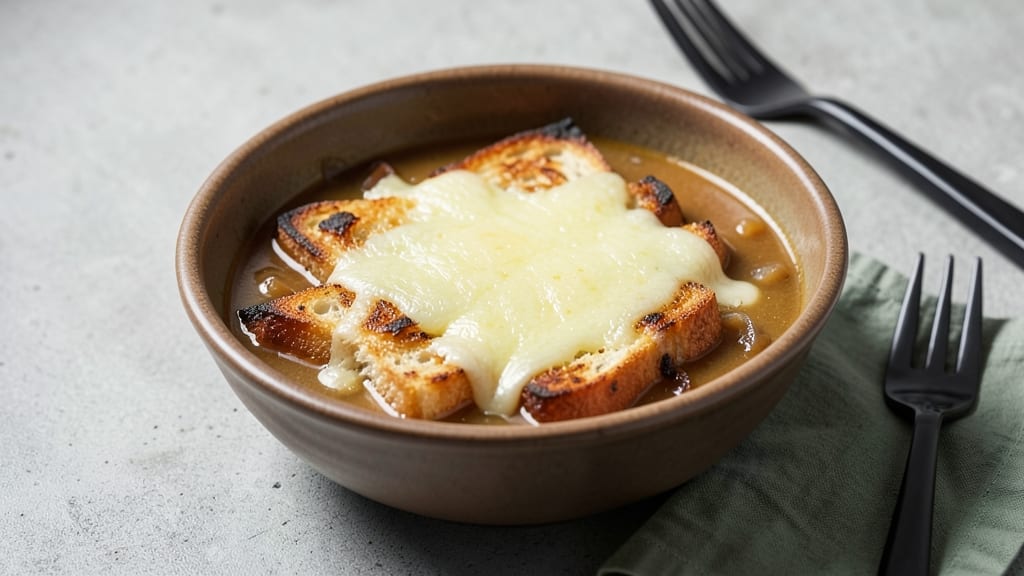
This Applebee’s French onion soup copycat recipe brings that beloved caramelized onion richness and Gruyère-topped perfection straight to your kitchen. The secret lies in slow-cooking onions until they're sweet and jammy, then building a rich broth that turns into a velvety base for the soup.
I've perfected this technique over years of testing—no shortcuts, just restaurant-quality results in your own kitchen.
This copycat recipe starts with layers of caramelized onions that develop complex sweetness over 90 minutes of cooking. The beef broth simmers with aromatics to create a deep, savory foundation, while the bread topping gets toasted to a golden crisp before melting into gooey Gruyère.
Every spoonful delivers that perfect balance of rich, sweet onions and creamy cheese—just like Applebee's, but with the confidence of homemade.
The baking step transforms the soup into a showstopper—crispy bread crust on top, bubbling cheese underneath, and that irresistible aroma filling your kitchen. The slow cooking ensures the onions stay tender while developing maximum flavor, and the cheese topping achieves that perfect crispy-yet-melty texture.
This is comfort food at its finest, ready to impress even the most discerning diners.
Whether you're serving a crowd or treating yourself to a cozy meal, this recipe delivers restaurant-quality French onion soup with the flexibility to use beef or vegetable broth. The techniques are approachable, but the results are undeniably sophisticated. Let's get started on creating your own version of this classic dish.
Ingredients for applebee's french onion soup copycat
Six pounds of onions and a few key ingredients transform into restaurant-quality French onion soup.
| Ingredient | Amount | Notes |
|---|---|---|
| Yellow Onions 🧅 | 4 lb | Sweet or yellow variety preferred |
| Beef Broth 🍲 | 6 cups | High-quality, low-sodium preferred |
| Unsalted Butter 🧈 | ½ cup | Cold, cut into small cubes |
| All-Purpose Flour 🌾 | ¼ cup | For thickening broth |
| Gruyère Cheese 🧀 | 1 ½ cups | Freshly grated, aged variety |
| Baguette 🍞 | 1 whole | Day-old, crust removed |
| Garlic Cloves 🧄 | 6 cloves | Minced for depth of flavor |
| Shallots 🧅 | 1 whole | Minced for aromatic base |
| Dry White Wine 🍷 | ½ cup | Sauvignon Blanc preferred |
| Thyme Sprigs 🌿 | 2 whole | Fresh, for aromatic depth |
| Bay Leaves 🍃 | 2 whole | Dried, for subtle flavor |
| Salt 🧂 | 2 tsp | Diamond Crystal kosher preferred |
| Black Pepper 🌶️ | ½ tsp | Freshly ground for best flavor |
| Heavy Cream 🥛 | ½ cup | Full-fat for richness |
| Olive Oil 🫒 | 2 tbsp | For sautéing onions |
The onions are the soul of this soup—yellow or sweet onions caramelize beautifully, developing that signature jammy sweetness. Costco or Trader Joe's usually carry them in bulk, saving you money and hassle. Fresh thyme and bay leaves add depth, so don't skip them. The Gruyère? Look for aged, not pre-shredded—it melts like a dream. I always grab mine from specialty cheese shops, but Whole Foods carries a solid option. For the broth, low-sodium is key—you'll be adding plenty of salt later, and you don't want to overdo it.
No beef broth? Vegetable broth works beautifully—just add a bouillon cube for umami. Short on white wine? Dry vermouth or even apple juice in a pinch. The flour should be all-purpose, not cake flour—it thickens better. Gruyère hard to find? Comté or Emmental are solid substitutes, though Gruyère's nutty flavor is ideal. The baguette? Day-old is perfect—it's softer and toasts better. If you can't find one, French bread from the bakery section works too. Just make sure it's not too fresh or it'll get gummy.
This soup tastes even better the next day—the flavors meld beautifully after resting. Store leftovers in an airtight container for up to 5 days in the fridge. For the bread topping, toast it just before baking—that crispy crust is everything. Freeze portions without the bread topping—3 months max. When reheating, cover the bread with foil to prevent burning. And trust me, the extra 30 minutes of caramelizing is worth it—don't rush the onions!
Why You'll Love This Recipe
- Here’s what sold me: the onions. Slow-cooked until deep amber, they melt into the broth like buttery silk, then crisp up under the cheese. That contrast? It’s the reason I make this instead of takeout every time.
- One-Pot Magic: I swear by this—just onions, butter, and a quick roux, then broth. No extra pans, no fuss, and the rich aroma fills my kitchen while I’m still chopping. That golden crust on the cheese? Zero effort, all reward.
- Caramelized Crunch: Here’s what sold me: the onions. Slow-cooked until deep amber, they melt into the broth like buttery silk, then crisp up under the cheese. That contrast? It’s the reason I make this instead of takeout every time.
- Weeknight to Dinner Party: Between us, this feeds six for under $15. Serve it with crusty bread and a simple salad for a meal that feels fancy without the stress. My in-laws think I slaved over it—nope, just 30 minutes of my life.
Step-by-step instructions for Applebee's French onion soup copycat recipe
Here's how to recreate that iconic restaurant version at home with rich, caramelized onions and gooey Gruyère.
Caramelize the Onions to Perfection
Begin by slicing the 4 lb yellow onions into ¼-inch thick rounds. You'll need a large, heavy-bottomed pot for this step—it prevents burning. Heat 2 tablespoons olive oil over medium-low heat until shimmering but not smoking.
Add the onions in batches, stirring occasionally to prevent sticking. The key here is patience—caramelizing takes 45-60 minutes total. You'll know it's ready when the onions turn deep golden brown with a rich, sweet aroma. If they start to brown too quickly, reduce the heat immediately to prevent burning. This slow process develops the deep, complex flavors that make this soup special.
Build the Rich Broth Base
Once the onions are beautifully caramelized, push them to the side of the pot and add ½ cup unsalted butter. Let it melt completely, then stir in the 6 cloves minced garlic and 1 whole minced shallot, cooking for 1-2 minutes until fragrant but not browned.
Sprinkle in the ½ cup all-purpose flour and stir vigorously for 1 minute to cook out the raw flour taste. Slowly pour in the 6 cups beef broth while whisking continuously to prevent lumps. Add the 2 whole thyme sprigs, 2 whole bay leaves, 2 teaspoons salt, and ½ teaspoon black pepper. Bring the mixture to a gentle simmer and let it cook uncovered for 20 minutes to allow the flavors to meld together. The broth should now have a velvety texture with the onions fully incorporated.
Finish with Wine and Cream
Remove the pot from heat and stir in the ½ cup dry white wine, scraping up any browned bits from the bottom of the pot. Return to medium-low heat and simmer for 5 minutes to reduce slightly and deepen the flavors. Reduce the heat to low and stir in the ½ cup heavy cream, letting it warm through for 2-3 minutes without boiling. The soup should now be rich, velvety, and full of complex onion flavor.
Taste and adjust seasoning if needed—this is your chance to perfect the balance between sweet caramelized onions, savory broth, and the subtle acidity of the wine. The soup should be well-seasoned but not overpowering.
Prepare and Assemble the Baguette Topping
While the soup simmers, slice the 1 whole baguette into ½-inch thick rounds. Brush both sides of each slice with a little olive oil and toast them in a 400°F oven for 5-7 minutes until golden and crisp. Keep them warm while you finish the soup.
Just before serving, ladle the hot soup into oven-safe bowls, placing 2-3 baguette slices on top of each portion. Sprinkle each bowl generously with 1½ cups freshly grated Gruyère cheese, covering the bread completely. The cheese should melt beautifully from the residual heat of the soup.
Broil for Golden, Bubbly Cheese
Transfer the bowls to a broiler-safe tray and place them under the broiler for 2-4 minutes, watching carefully. You want the cheese to turn deep golden brown and bubbly on top, but not burn. The broiler should be on high for this step—keep the oven door slightly ajar to prevent overheating.
Once the cheese is perfectly melted and golden, remove from the broiler and let sit for 1-2 minutes before serving. The contrast of the crispy baguette topping with the rich, velvety soup creates that signature Applebee's experience. Serve immediately while the cheese is still bubbly and the bread is crisp.
Pro Tips For Making Applebee'S French Onion Soup Copycat
- Sear the Onions Slow: I learned this the hard way—rushing the caramelization turns your soup into onion mush. Cook the sliced onions in butter on medium-low heat for at least 30 minutes, stirring occasionally, until they’re deep golden and jammy. Yes, it’s tedious, but that’s where the real flavor lives.
- Use Cold Butter: Dump that butter straight from the fridge into the pot when making the roux. Cold butter emulsifies better with the flour, giving you a smoother, thicker base that won’t clump like a gluey mess. Trust me, your future self will thank you when the soup isn’t grainy.
- Don’t Skimp on Broth: The recipe might call for 4 cups, but I double it—8 cups total—for a richer, less concentrated flavor. Applebee’s version isn’t watery, and neither should yours be. Use a high-quality beef broth, or even better, a mix of homemade and store-bought to cut costs without sacrificing depth.
- Toast the Gruyère: Before melting it on top, sprinkle the Gruyère over a dry skillet and toast it for 2-3 minutes until it’s fragrant and just starting to brown. The nutty aroma alone makes the soup taste more restaurant-worthy. (Yes, even if you’re impatient like me.)
Troubleshooting perfect results
Onions Burned Too Quickly
If your onions brown too fast and burn before reaching that perfect jammy sweetness, you're likely cooking them over too high heat. I’ve found that medium-low heat is critical—it takes 45-60 minutes for the onions to caramelize properly.
If they start darkening too quickly, immediately reduce the heat to low and stir gently. A heavy-bottomed pot (like a Le Creuset Dutch oven) helps distribute heat evenly, preventing hot spots that cause burning. 🌡️
Another trick? Add a splash of ½ cup water or broth halfway through cooking if the onions stick or darken too fast. This creates steam, which slows the browning process while keeping them tender. Just be sure to simmer off the liquid before moving to the next step.
Broth Too Thin or Watery
If your broth ends up too thin after simmering, it’s likely because the onions released too much liquid or the flour wasn’t cooked long enough to thicken properly. Always cook the flour in the butter for at least 1 minute to eliminate the raw taste and activate its thickening power.
For extra richness, I sometimes add 1 tablespoon cornstarch mixed with 2 tablespoons cold water at the end and simmer for 2-3 minutes to achieve a velvety consistency. 🥄
Pro tip: If your broth is still too thin after cooking, remove the pot from heat and let it sit for 5 minutes—the starch in the onions will naturally thicken it as it cools slightly.
Avoid boiling vigorously, as this can break down the onions and make the soup watery.
Cheese Not Melting Properly
Gruyère should melt into a creamy, bubbly blanket over your soup, but if it stays clumpy or doesn’t melt at all, it’s often because the cheese wasn’t fresh or the soup wasn’t hot enough. Always use freshly grated Gruyère (pre-shredded cheese has anti-caking agents that prevent proper melting).
Before broiling, ensure the soup is steaming hot—the residual heat is what melts the cheese. If the cheese still resists, sprinkle a dash of heavy cream over it before broiling to help it emulsify. 🧀
Another common issue? Over-broiling. Watch the cheese closely—it should turn golden brown in 2-4 minutes, not char. If it browns too fast, move the bowls farther from the heat source or lower the broiler temperature to medium-high.
A light-colored metal tray reflects heat better than dark pans, so use that if your broiler runs hot.
Bread Topping Gets Soggy
Nothing ruins the texture like a soggy bread topping, and this usually happens if the baguette isn’t toasted enough before assembly. Toast your slices in a 400°F oven for 5-7 minutes until they’re golden and crisp—they should hold their shape when touched.
For extra insurance, brush the toasted slices with a light coat of olive oil before assembling the soup. This creates a barrier that keeps the bread from absorbing too much moisture from the hot soup. 🍞
If you’re prepping ahead, toast the bread just before baking the soup. The residual heat from the broiler will crisp it up again, but toasting it fresh ensures the best texture.
Avoid using stale bread—it absorbs too much liquid and turns mushy. A day-old baguette is ideal because it’s soft enough to toast well but not so fresh that it turns gummy.
Flavor Too Mild or Bland
If your soup tastes flat or lacks depth, it’s usually because the onions weren’t caramelized long enough or the broth wasn’t seasoned properly. The key to rich, complex flavor is slow cooking the onions—don’t rush this step.
For extra umami, add 1 teaspoon Worcestershire sauce or ½ teaspoon fish sauce to the broth while simmering. A pinch of sugar (about ½ teaspoon) can also help balance the flavors by enhancing the caramelization. 💡
Taste your broth before adding the cream—it should be well-seasoned with salt and pepper. If it’s bland, add a bouillon cube or a splash of soy sauce for depth.
The wine should add acidity, but if it tastes too sharp, reduce it slightly and add a splash of lemon juice at the end for brightness. Remember, you can always adjust seasoning, but you can’t un-cook bland flavors!
Nutrition facts
Frequently asked questions
Can I make this recipe with vegetable broth instead of beef?
For a vegetarian version, use 6 cups vegetable broth and add 1 beef bouillon cube or 1 tablespoon soy sauce to mimic the umami depth of beef. The caramelized onions and Gruyère will still shine, creating a rich, satisfying dish. Just be sure to taste and adjust seasoning—vegetarian broths can be milder.
How far ahead can I prepare the caramelized onions?
Caramelized onions keep beautifully in the fridge for up to 5 days in an airtight container. They actually taste even better the next day as the flavors deepen! Reheat gently in a skillet with a splash of broth or water to restore their jammy texture before adding to the soup. For longer storage, freeze them for up to 3 months.
What's the best way to reheat leftovers without making the bread soggy?
Reheat only the soup portion (without the bread topping) in a saucepan over medium-low heat until steaming. Just before serving, toast fresh baguette slices and assemble the bowls fresh. If you must reheat with bread, cover the bread with foil while warming to protect it, then broil for 1-2 minutes to crisp it back up.
Can I substitute Gruyère with another cheese?
Gruyère is ideal for its nutty flavor and perfect melt, but you can use Comté, Emmental, or Swiss cheese in a pinch. Avoid pre-shredded cheeses—they contain anti-caking agents that prevent proper melting. For extra richness, mix with ½ cup sharp cheddar. The key is freshly grating for the best texture.
Why does my soup taste different from Applebee's version?
Restaurant versions often use proprietary techniques like pressure cooking the onions or adding hidden ingredients (like a splash of Worcestershire). The key differences are typically longer caramelization time and extra umami boosters like fish sauce or beef bouillon. Focus on slow cooking and seasoning adjustments—your homemade version will still be delicious!