
Breakfast & Brunch
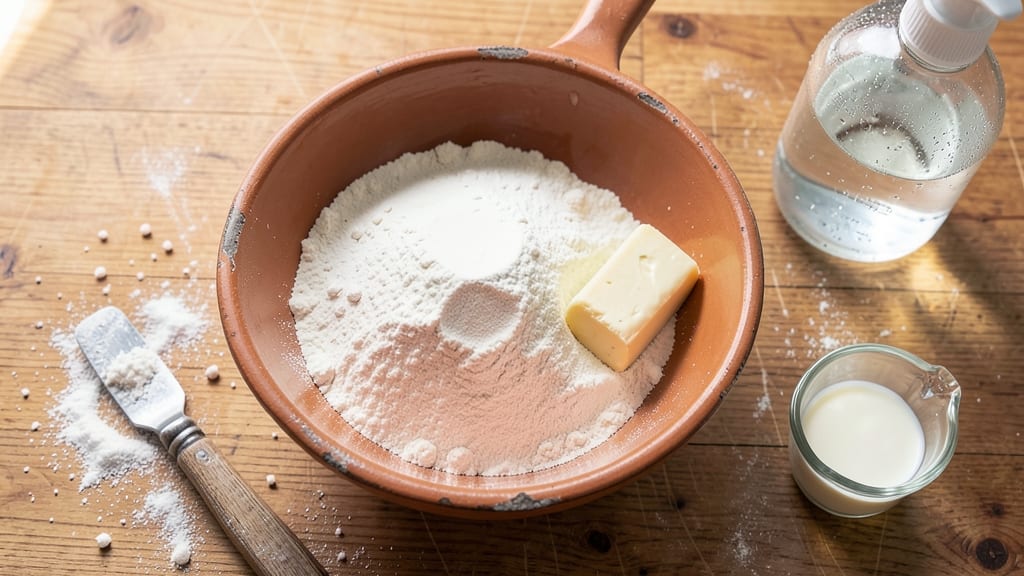
Creating a basic biscuit mix recipe from scratch transforms simple pantry staples into golden, flaky layers that rival store-bought results. The secret lies in balancing flour, baking powder, and salt—each playing a precise role in texture and rise.
I’ve perfected this mix over years of baking, ensuring it works every time without fail.
This recipe delivers foolproof biscuits in just 15 minutes of prep and 12-15 minutes of baking. All you need are five basic dry ingredients and a few wet components—no fancy equipment required.
The mix stays fresh in an airtight container for up to 3 months, making it ideal for quick breakfasts or last-minute gatherings.
Once baked, you’ll have tender, buttery flakes with a crisp exterior and a soft, melt-in-your-mouth center. These biscuits pair perfectly with gravy, honey, or jam, and even hold up to savory toppings like cheese or bacon. The versatility makes them a breakfast staple or a side dish for any meal.
Ready to master this technique? The instructions walk you through combining the mix with butter, milk, and water, shaping, and baking for restaurant-quality results at home. Let’s get started with a method that’s both simple and impressive.
Ingredients for basic biscuit mix
Five pantry staples yield restaurant-quality biscuits with perfect flaky layers.
| Ingredient | Amount | Notes |
|---|---|---|
| All-Purpose Flour 🌾 | 2 ½ cups | Sifted for even distribution |
| Baking Powder 🍞 | 1 ½ tbsp | Aluminum-free for best rise |
| Diamond Crystal Kosher Salt 🧂 | ½ tsp | Fine grain preferred |
| Unsalted Butter 🧈 | ½ cup | Cold, cubed for flakiness |
| Whole Milk 🥛 | ½ cup | Room temperature preferred |
| Water 💧 | ½ cup | Cold for optimal texture |
| Granulated Sugar 🍚 | 1 tbsp | Optional for slight sweetness |
The flour is non-negotiable—King Arthur or Gold Medal deliver consistent results. Baking powder quality matters: check the expiration date, as old powder loses its lift. For the salt, Diamond Crystal kosher dissolves evenly without altering flavor balance. The butter must be cold—cut into small cubes and chilled for 30 minutes before mixing. Room-temperature milk and water ensure smooth dough without gluten development. If you're using whole milk from the fridge, let it sit out for 10 minutes to warm slightly.
Substitutions are possible but require adjustments. Cake flour can replace all-purpose at a 1:1 ratio, but the texture will be slightly less sturdy. Baking soda plus 1/4 tsp acid (vinegar or lemon juice) can replace baking powder in a pinch, though the flavor profile shifts. For dairy-free options, unsweetened almond milk works but may yield slightly denser biscuits. The sugar is truly optional—omit entirely for a neutral flavor, or use brown sugar for caramel notes. If your butter softens during mixing, place the bowl in the freezer for 10 minutes to restore firmness.
Store the dry mix in an airtight container with parchment paper between uses to prevent moisture absorption. The mix remains fresh for up to 3 months at room temperature. For wet components, keep the butter wrapped in parchment and refrigerated, while milk and water can be stored in sealed containers for 5-7 days. Once baked, biscuits freeze beautifully—wrap individually in foil and freeze for up to 3 months. Reheat in a 350°F oven for 5-10 minutes to restore crispness.
Why You'll Love This Recipe
- Five-Ingredient Magic: I swear, if you’ve got flour, butter, and milk in your pantry, you’ve got a biscuit. No fancy tools, no measuring cups that don’t fit—just a bowl and a pinch of salt. That’s it. The kosher salt here? It dissolves cleanly so every bite has that just-right tang without grit.
- Butter So Good: Cold butter cut into the flour until it’s the size of peas? That’s the secret. The flakes melt into those layers while baking, giving you a biscuit with a crispy edge and a melt-in-your-mouth center. Honestly, I’ll take this over store-bought any day.
- Breakfast to Brunch: These biscuits are my weeknight breakfast staple—drizzled with honey or slathered in jam—but they’re also the star of Sunday brunch when I toss them in the oven with sausage gravy. Same dough, endless possibilities. (Yes, even on a Tuesday night.)
- Pantry Goldmine: A batch keeps for days in the fridge, freezes like a dream, and costs pennies to make. I double the mix and stash half for lazy mornings or last-minute guests. Between us, this is the kind of recipe that makes grocery bills feel less scary.
Step-by-step instructions for basic biscuit mix recipe
Transform simple pantry staples into flaky, golden biscuits with this foolproof method.
Combine Dry Ingredients for Even Distribution
In a large mixing bowl, sift together the 2.5 cups all-purpose flour and 1.5 tablespoons baking powder. This ensures an even distribution of leavening agent throughout the dough, which is critical for consistent rise. I like to use a fine-mesh sieve for this step—it prevents lumps and guarantees the baking powder activates uniformly when moistened.
Next, whisk in the 0.5 teaspoon diamond crystal kosher salt and 1 tablespoon granulated sugar (if using). The salt enhances flavor while the sugar adds just a hint of sweetness that balances the richness of the butter. Mix these dry ingredients thoroughly with a whisk or fork until no white streaks remain—this ensures every bite has the same texture and taste.
Cut in Cold Butter for Flaky Layers
Add the 0.5 cup unsalted butter, cut into small cubes, to the dry ingredients. Using a pastry cutter or two forks, work the butter into the flour mixture until the texture resembles coarse crumbs with pea-sized butter pieces scattered throughout. The butter should be cold—this prevents it from melting into the flour and ensures those signature flaky layers when baked.
Here's the thing—don't overwork the mixture. Once the butter is evenly distributed and the largest pieces are about the size of peas, stop mixing. Overmixing develops gluten, which leads to tough biscuits instead of tender, melt-in-your-mouth results. The ideal texture should be shaggy and slightly uneven, with visible butter pieces.
Gradually Add Liquids for Perfect Dough Consistency
Create a well in the center of the dry mixture and pour in the 0.5 cup whole milk and 0.5 cup cold water. The milk adds richness while the water helps create the right moisture balance for a tender crumb. Using a fork or rubber spatula, gently stir the liquids into the dry ingredients just until combined—you should have a soft, slightly sticky dough that pulls away from the sides of the bowl.
Real talk: The dough shouldn't be too wet or too dry. If it feels too sticky to handle, add 1 tablespoon more flour; if it's too crumbly, add 1 teaspoon more milk or water. The goal is a dough that holds together when pressed but still feels tender. This consistency ensures biscuits that rise properly without spreading too much in the oven.
Knead and Shape for Uniform Biscuits
Turn the dough out onto a lightly floured surface and gently knead it 4-5 times just to bring it together. Avoid overworking—this is a delicate dough that doesn't need much handling. Pat the dough into a 1-inch thick rectangle, then fold it in thirds like a letter. This folding technique creates additional layers for extra flakiness.
Using a 2.5-inch biscuit cutter (or a round glass of that size), cut out biscuits and place them on a parchment-lined baking sheet, spacing them about 1 inch apart. Press down gently on each biscuit to ensure even contact with the baking surface—this prevents them from puffing up unevenly. If you have leftover dough scraps, gently rework them and cut out additional biscuits.
Bake Until Golden and Crisp
Preheat your oven to 425°F and bake the biscuits for 12-15 minutes until they're golden brown on top and the undersides are a deep golden color. The edges should pull away from the parchment paper slightly, indicating they've risen properly. Don't overbake—they'll continue cooking as they cool, and overbaking leads to dry biscuits.
I know it's tempting to peek, but resist the urge to open the oven door during baking. Every time you do, you lose heat and steam, which can cause the biscuits to spread or develop a less crispy crust. Once baked, transfer the biscuits to a wire rack to cool for 2-3 minutes before serving. This resting period allows them to set slightly, making them easier to handle and ensuring that buttery flavor is fully developed.
Pro Tips For Making Basic Biscuit Mix
- Cut Butter Cold: Take that butter straight from the fridge—no thawing, no softening. I learned this the hard way when I used room-temperature butter and ended up with dense, greasy biscuits instead of flaky layers. Cold butter behaves, and that’s what you want here.
- Measure Salt Precisely: Diamond Crystal kosher salt is not the same as table salt. Use the 1 teaspoon called for in the recipe—no eyeballing. Too little and your biscuits taste bland; too much and they’ll taste like a salt lick. A kitchen scale solves this forever.
- Handle Dough Gently: Fold the dough just enough to combine—overworking it turns biscuits into tough, rubbery hockey pucks. Light pressure, minimal turns. Think "tenderize, don’t beat." If the dough feels sticky, add just enough flour to coat your hands, not the whole batch.
- Use Warm Milk: Cold milk makes butter behave like it’s still fighting the freezer. Warm it slightly—just until it’s comfortable to touch—so it melts into the butter faster. No waiting for it to come to room temp; just a quick microwave zap (10-15 seconds) does the trick.
Troubleshooting this recipe
Dough Too Sticky
If your dough feels overly sticky after adding liquids, resist the urge to add more flour—this can make your biscuits dense. Instead, chill the dough for 15-20 minutes in the fridge before shaping. The cold temperature firms up the gluten, making it easier to handle.
I also recommend using King Arthur unbleached flour—it absorbs moisture better than some brands. If you must add flour, use just 1 tablespoon at a time. 🧊
Biscuits Spread Flat
Flat, spread-out biscuits usually mean overmixing or insufficient chilling. First, ensure your butter is cold—if it melts during mixing, your biscuits will lose structure. Second, don’t skip the 15-minute chill before cutting.
If this happens mid-bake, try pressing down on the tops of the biscuits gently with a spatula to encourage upward rise. For future batches, fold the dough in thirds after shaping to create more layers. 🔄
Dense or Tough Texture
Overworking the dough is the #1 cause of tough biscuits. Once you’ve incorporated the butter, stop mixing when pea-sized pieces remain—they’ll melt into flaky layers during baking. If your biscuits still turn out dense, check your baking powder: old powder loses lift.
Replace it with fresh aluminum-free baking powder (like Bob’s Red Mill) and avoid substituting baking soda. Also, ensure your oven is fully preheated to 425°F—a cool oven slows rise and leads to dense crumbs. ⚡
Pale or Uneven Color
Pale biscuits often result from underbaking or insufficient butter distribution. First, verify your oven temperature with an oven thermometer—many run 25°F cooler than set. If your biscuits look pale but firm, broil them for 1-2 minutes at the end for color.
For even browning, rotate the baking sheet halfway through baking. If your butter melted completely during mixing, the biscuits won’t develop that golden crust. 🌟
Baking Powder Issues
Baking powder is your biscuit’s secret weapon, but it loses potency over time. Test yours by mixing 1 teaspoon with ¼ cup hot water—it should foam immediately. If not, replace it. For a quick fix, add ¼ teaspoon cream of tartar to your dry mix to reactivate old powder.
Never substitute baking soda alone—it creates a metallic taste and requires an acid (like buttermilk) for proper rise. Store baking powder in an airtight container away from moisture. 🍞
Butter Melting Mid-Mix
Soft butter is the enemy of flaky layers. If your butter starts melting during mixing, place the bowl in the freezer for 10 minutes to firm it up. Work quickly with cold hands—warm fingers transfer heat to the dough.
For extra insurance, use European-style butter (like Plugrá), which has a higher fat content and stays solid longer. If all else fails, swap butter for cold shortening (like Crisco) for a neutral flavor and better heat resistance. ❄️
Nutrition facts
Frequently asked questions
Can I make this biscuit mix ahead of time?
Store the dry mix in an airtight container with parchment paper between uses to keep it fresh for up to 3 months at room temperature. The wet ingredients (butter, milk, water) should be mixed and shaped just before baking for best results. For extra convenience, you can even freeze the shaped biscuits on a tray before transferring to a bag for 1 month of storage.
How do I adjust this recipe for a larger batch?
Double or triple the dry ingredients (flour, baking powder, salt, sugar) while maintaining the same ratios. For wet ingredients, scale up the butter to 1 cup and liquids to 1 cup milk + 1 cup water per 5 cups flour. Use a stand mixer with the paddle attachment for larger batches to avoid overworking. Keep individual biscuits at 2.5 inches in diameter for even baking.
Can I substitute milk or butter in this recipe?
For milk, use unsweetened almond milk or buttermilk (add 1 teaspoon vinegar to regular milk and let sit for 5 minutes). For butter, cold shortening (like Crisco) works well for flakiness, though it lacks butter flavor. If using dairy-free butter, ensure it's solid when cutting into the flour. For a richer taste, try European-style butter like Plugrá for extra fat content.
Why do my biscuits turn out dense?
Overmixing is the #1 cause—stop mixing when pea-sized butter pieces remain. Also check your baking powder (test it with hot water—it should foam). Old powder or insufficient oven heat (425°F) can prevent proper rise. For extra flakiness, chill the dough for 15 minutes before cutting. If all else fails, fold the dough in thirds after shaping to create more layers.
What are the best ways to serve these biscuits?
Classic pairings include warm sausage gravy, fresh berry jam, or melted cheddar cheese. For brunch, top with whipped cream and sliced bananas. Savory options work too—try adding garlic powder to the dry mix and serving with bacon or chili. Keep them warm in a 200°F oven for up to 30 minutes to maintain freshness.