
Main Courses
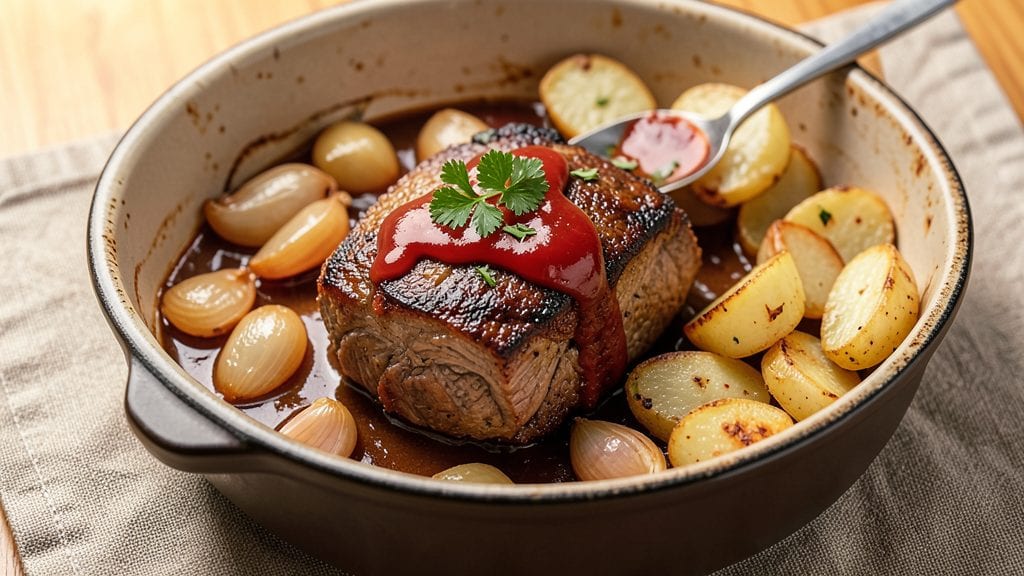
This copycat pot roast recipe delivers restaurant-quality beef that practically melts in your mouth after hours of slow braising. The secret lies in searing the beef first to lock in flavors, then letting it simmer low and slow until tender.
I’ve perfected this method to replicate the rich, caramelized depth you’d expect from a classic diner dish—without the wait time of traditional recipes.
The beauty of this recipe is its simplicity: just a few pantry staples and one pot to manage.
You’ll start with a well-seasoned chuck roast, sear it until deeply browned, then braise it in a rich blend of onions, garlic, and beef broth until the meat falls apart at the touch of a fork.
The result is a dish so tender and flavorful, it becomes the star of any meal.
By the time you’re done, you’ll have a pot of deeply aromatic, melt-in-your-mouth beef with a sauce thick enough to coat every bite. The flavors develop as it cooks, transforming tough cuts into something luxurious. This is the kind of dish that tastes like comfort—warm, hearty, and impossible to resist.
Serve it with crusty bread to soak up the sauce or pair it with roasted vegetables for a complete meal. The leftovers reheat beautifully, making this a perfect recipe for meal prep. Let’s get started on creating your own slow-braised masterpiece.
Ingredients for copycat pot roast
Just a few simple ingredients transform into restaurant-style pot roast that melts in your mouth.
| Ingredient | Amount | Notes |
|---|---|---|
| Chuck Roast 🥩 | 3 lb | Well-marbled for tenderness |
| Yellow Onions 🧅 | 2 whole | Sliced into half-moons |
| Garlic Cloves 🧄 | 6 cloves | Smashed for deeper flavor |
| Beef Broth 💧 | 3 cups | Low-sodium preferred |
| Tomato Paste 🍅 | 2 tbsp | Squeeze tube works |
| Worcestershire Sauce 🍶 | 2 tbsp | Classic umami boost |
| Dry Red Wine 🍷 | 1 cup | Cabernet or Merlot |
| Fresh Thyme 🌿 | 2 sprigs | Or 1 tsp dried thyme |
| Fresh Rosemary 🌿 | 1 sprig | Woodsy depth |
| Bay Leaves 🍃 | 2 whole | Remove before serving |
| Salt 🧂 | 1 ½ tsp | Kosher or sea salt |
| Black Peppercorns 🌶️ | 1 tsp | Coarsely cracked |
| Extra-Virgin Olive Oil 🫒 | 2 tbsp | For searing |
| All-Purpose Flour 🌾 | 2 tbsp | For dredging |
The chuck roast is your secret weapon here—look for good marbling at the store, which means little white fat specks throughout the meat. Costco or Whole Foods usually carry the best cuts, but your regular grocery store will have it too. If it smells funky or has a grayish tint, skip it. The onions and garlic? Fresh is best, but if you're in a pinch, frozen chopped onions work fine (just thaw them first). For the wine, any bold red like Cabernet or Merlot does the trick—whatever you've got open. The beef broth should be low-sodium unless you're adding extra salt later.
No red wine? Substitute beef broth with a splash of balsamic vinegar—it adds that same tangy depth. Fresh thyme and rosemary are ideal, but dried works at one-third the amount. If you're missing tomato paste, a handful of sun-dried tomatoes chopped up will give you that concentrated flavor. The flour is just for dredging the meat before searing—don't skip this step, it creates that beautiful crust that locks in all those rich flavors. For the Worcestershire, Lea & Perrins is the classic choice, but any good brand will do.
This dish tastes even better the next day as all the flavors meld together. Store leftovers in the fridge for up to 5 days, or freeze portions for 3 months. I like to portion it into containers so I can grab a serving straight from the fridge for lunches. The sauce thickens as it cools, so you might want to add a splash of broth when reheating if it seems too thick. Trust me, the first bite out of the fridge is worth the wait.
Why You'll Love This Recipe
- I swear by this trick: just dice the onions and garlic roughly—no need for perfect cubes. The beef broth and tomato paste do most of the work, so you’re basically tossing in ingredients while the pot does the heavy lifting. (Yes, even on a Tuesday night.)
- Minimal Chopping Required: I swear by this trick: just dice the onions and garlic roughly—no need for perfect cubes. The beef broth and tomato paste do most of the work, so you’re basically tossing in ingredients while the pot does the heavy lifting. (Yes, even on a Tuesday night.)
- That Deep, Caramelized Crust: Here’s what sold me—the garlic and onions brown in the pot before the broth comes in, locking in that rich, sticky flavor. The chuck roast? It practically falls apart, but in the best way—juicy, tender, and packed with layers of taste.
- Leftovers for Days: Between us, this recipe makes way more than we’ll eat in one sitting. The broth thickens into a glossy sauce that clings to every bite, so reheating is a total win—perfect for lunches or freezing for when you’re too tired to cook.
Step-by-step instructions for slow-braised pot roast
This method delivers melt-in-your-mouth beef every time—just follow along closely.
Sear the Chuck Roast to Lock in Flavor
Pat the 3 lb chuck roast dry with paper towels—this ensures a proper sear. Heat the 2 tbsp extra-virgin olive oil in a heavy Dutch oven over medium-high heat until shimmering. Place the roast in the pot and sear on all sides for about 5 minutes total, turning occasionally. You're looking for deep brown coloration, which builds rich flavor through the Maillard reaction.
Once browned, remove the roast and set it aside. Don't wipe out the pan—those browned bits are flavor gold. Here's the thing—if you rush this step, you'll miss out on the deep, caramelized foundation for your sauce. Take your time and let the meat develop that perfect crust.
Build the Flavor Base with Aromatics
In the same Dutch oven, add the sliced 2 whole yellow onions and cook for 5 minutes until softened. Add the 6 smashed garlic cloves and cook for another 30 seconds until fragrant. Stir in the 2 tbsp tomato paste and cook for 1 minute, stirring constantly to prevent burning.
Now add the 2 tbsp Worcestershire sauce and 1 cup dry red wine, scraping up all those browned bits from the bottom. Let this mixture simmer for 3 minutes until the wine reduces by about half. You'll smell that incredible umami building—this is where the magic happens. If the wine reduces too quickly, just reduce the heat slightly to let it work.
Create the Perfect Dredge for Rich Sauce
In a small bowl, mix together the 2 tbsp all-purpose flour, 1.5 tsp salt, and 1 tsp coarsely cracked black peppercorns. Return the seared chuck roast to the Dutch oven and coat it thoroughly with this flour mixture, pressing gently to adhere. This creates a light crust that will thicken your sauce beautifully as it braises.
Don't skip this step—it makes all the difference in sauce consistency. The flour will create a velvety coating on the meat while thickening the braising liquid. If you're worried about the flour getting gummy, just make sure your roast is completely dry before dredging.
Slow Braise Until Fork-Tender
Pour in the 3 cups beef broth, making sure to deglaze any remaining browned bits. Add the 2 sprigs fresh thyme, 1 sprig fresh rosemary, and 2 whole bay leaves. Bring the liquid to a gentle simmer, then cover the Dutch oven and transfer it to a preheated 325°F oven. Here's where patience pays off—braise for 3 to 3.5 hours until the meat is fork-tender.
Check the meat after 3 hours by inserting a fork—it should slide in easily with no resistance. If it's not quite tender, return it to the oven for another 30 minutes. The liquid should reduce to about 1.5 cups, creating a rich, concentrated sauce. Real talk: this is the step where people usually rush, but slow cooking is what makes this dish exceptional.
Rest and Serve with Perfect Sauce
Remove the pot roast from the oven and let it rest for 15 minutes before serving. This resting time allows the juices to redistribute throughout the meat, ensuring each bite is moist and flavorful. Remove and discard the thyme sprigs, rosemary sprig, and bay leaves before serving.
Slice the chuck roast against the grain into ½-inch thick slices and spoon the rich braising sauce over the top. The meat should fall apart easily, and the sauce should coat each bite beautifully. Serve with crusty bread or your favorite vegetables to soak up every last drop of that delicious sauce. You'll love how this copycat version delivers restaurant-quality results right in your own kitchen.
Pro Tips For Making Copycat Pot Roast
- SEAR THE ROAST FIRST: Don’t skip browning that chuck roast—high heat for 3-4 minutes per side builds flavor crust that dissolves into the sauce later. I learned this the hard way after making a bland pot roast; the Maillard reaction is your friend here.
- CHOP ONIONS SMALL AND UNIFORM: Dice those yellow onions into ¼-inch pieces so they soften evenly without turning to mush. Big chunks stay tough; tiny pieces melt into the broth like they’re supposed to. (Yes, it takes 5 minutes—do it.)
- DEGLAZE WITH BROTH IMMEDIATELY: As soon as you remove the roast, pour in that beef broth right away while the pan’s still hot. Scrape up every browned bit—those bits are pure flavor. Skipping this means losing half the taste.
- USE FULL-STRENGTH TOMATO PASTE: Don’t water it down—scoop out 2-3 tablespoons of undiluted tomato paste straight from the tube. It thickens the sauce and adds depth; thinning it first weakens the whole dish. (Trust me, it’s not as gloopy as it sounds.)
Serving suggestions for this recipe
Crusty Bread
Nothing beats a warm, crusty loaf of bread for soaking up that rich pot roast sauce. I always reach for a baguette or sourdough—the crisp exterior contrasts perfectly with the tender meat. Toast it lightly in the oven for 5 minutes at 375°F to enhance the crunch.
For extra indulgence, brush the toasted bread with garlic butter (just mix 2 tbsp softened butter with 1 minced garlic clove and a pinch of salt). 🥖
Roasted Root Vegetables
Roasted vegetables add color and texture to balance the hearty pot roast. Toss carrots, parsnips, and potatoes in 2 tbsp olive oil, 1 tsp dried thyme, and ½ tsp salt, then roast at 400°F for 35-40 minutes until caramelized.
The natural sweetness of the vegetables complements the savory beef beautifully. I like to add 1 tsp smoked paprika for a subtle smoky depth.
Classic Mashed Potatoes
Creamy mashed potatoes are a timeless pairing that lets the pot roast shine. Use 2 lbs Yukon Gold potatoes boiled until tender, then mash with 4 tbsp butter, ½ cup warm milk, 1 tsp salt, and a splash of sour cream for richness.
For extra flavor, fold in 2 tbsp roasted garlic. The smooth texture contrasts perfectly with the shredded beef. 🥔
Green Salad with Vinaigrette
A bright green salad cuts through the richness of the pot roast. Toss 4 cups mixed greens (like spinach and arugula) with 2 tbsp olive oil, 1 tbsp red wine vinegar, 1 tsp Dijon mustard, and ½ tsp honey.
Add sliced cherry tomatoes and crumbled blue cheese for contrast. The acidity in the dressing helps cleanse your palate between bites.
Warm Dinner Rolls
Soft, buttery dinner rolls are a crowd-pleaser for serving pot roast. I love using store-bought biscuit dough (like Pillsbury) or homemade rolls brushed with melted butter. Warm them in the oven for 8-10 minutes at 350°F to keep them fresh.
These rolls are perfect for sopping up every last drop of sauce—no one will leave any behind! 🍞
Garnish Like a Pro
Elevate your pot roast presentation with simple garnishes. Sprinkle fresh parsley over the sliced beef for a pop of color, or add crispy fried onions for texture. A drizzle of reduced red wine sauce (simmer ½ cup red wine with 1 tsp butter until syrupy) adds an elegant touch.
These finishing details make your dish look and taste restaurant-worthy. ✨
Nutrition facts
Frequently asked questions
Can I use a different cut of beef instead of chuck roast?
Chuck roast is ideal because of its marbling and flavor, but you can substitute with bottom round or brisket. These cuts require slightly longer braising—aim for 4-5 hours at 325°F until tender. Avoid lean cuts like sirloin, as they won’t become as fork-tender. The key is choosing a well-marbled piece for juiciness.
What if I don’t have red wine for the recipe?
No problem! Replace the 1 cup red wine with 1 cup beef broth plus 1 tbsp balsamic vinegar or 1 tsp soy sauce for depth. The balsamic adds a tangy note similar to wine, while soy sauce boosts umami. If you’re avoiding alcohol entirely, use 1 cup apple cider or grape juice for a sweeter alternative. The dish will still turn out rich and flavorful.
Why does my pot roast turn out tough instead of tender?
Tough pot roast usually means the meat wasn’t cooked long enough or the heat was too high. Always braise at 325°F (not boiling) for at least 3 hours, and check doneness by inserting a fork—it should slide in easily. Another common mistake is not searing the meat first, which builds flavor. If your roast is still tough, return it to the oven for another 30-60 minutes covered with extra broth.
Can I make this pot roast in a slow cooker instead of the oven?
Follow the same steps for searing and building the flavor base, then transfer everything (including the roast) to a 6-quart slow cooker. Cook on LOW for 8 hours or HIGH for 5-6 hours until tender. The slow cooker’s gentle heat mimics oven braising, and the sauce will thicken beautifully. Just skip the flour dredge—it’s not needed in a slow cooker.
How do I reheat leftovers without drying out the meat?
Reheat leftovers in the same Dutch oven or a heavy skillet over medium-low heat with 2-3 tbsp beef broth or water. Cover and simmer for 10-15 minutes until heated through. Avoid microwaving, as it can make the meat rubbery. For extra richness, add a splash of red wine or a pat of butter to the pan while reheating. The sauce will thicken again, making every bite just as delicious as the first.