Side Dishes
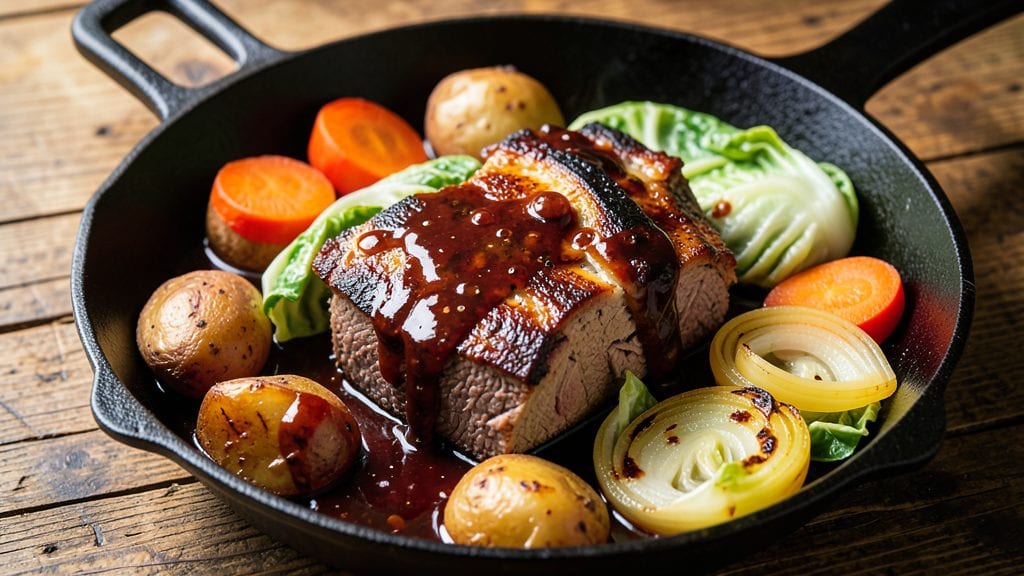
This corned beef and cabbage recipe with Guinness beer transforms a classic into something unexpectedly rich and complex—where the deep maltiness of Guinness tenderizes the beef while infusing every bite with layers of flavor.
After years of testing braising techniques, I’ve perfected a method that delivers fall-apart tender meat and perfectly cooked cabbage, all simmered in a sauce so flavorful it deserves its own bowl.
The secret lies in the slow cook, where Guinness works its magic over time, creating a depth you won’t find in traditional recipes.
The beauty of this recipe is its simplicity paired with professional results. You’ll start with a thick-cut corned beef brisket, simmered low and slow until fork-tender, while the cabbage cooks alongside it, absorbing the Guinness-infused broth.
A handful of complementary vegetables—like carrots and potatoes—round out the meal, turning what could be a heavy dish into a balanced, hearty feast. This is the kind of recipe that feels like a hug on a cold day, with every ingredient playing its part.
By the time you serve this dish, you’ll have perfectly tender beef with a glossy, caramelized crust, cabbage that’s just soft enough to hold its shape, and a sauce rich enough to drizzle over every bite.
The Guinness adds a subtle bitterness that cuts through the saltiness of the corned beef, creating harmony where there might otherwise be imbalance. It’s the kind of meal that makes your kitchen smell like a cozy pub and leaves everyone at the table asking for seconds.
Whether you’re cooking for St. Patrick’s Day or a Sunday family dinner, this recipe delivers restaurant-quality results with minimal effort. The slow braising means you can prep ahead and let the flavors develop while you tend to other tasks—ideal for home cooks who want impressive meals without the fuss.
Let’s get started on creating a dish that’s as comforting as it is delicious.
Ingredients for corned beef and cabbage recipe with guinness beer
Six ingredients transform simple beef and cabbage into a Guinness-infused pub-style masterpiece.
| Ingredient | Amount | Notes |
|---|---|---|
| Corned Beef Brisket 🥩 | 3 lb | Thick-cut, pre-cured preferred |
| Green Cabbage 🥬 | 1 small head | Green or purple, cored |
| Guinness Beer 🍺 | 1 ½ cups | Fresh, not flat |
| Carrots 🥕 | 4 medium | Whole, peeled, cut into chunks |
| Russet Potatoes 🥔 | 4 medium | Peeled, cut into chunks |
| Yellow Onion 🧅 | 1 large | Quartered |
| Garlic Cloves 🧄 | 4 cloves | Smashed for deeper flavor |
| Bay Leaves 🌿 | 2 whole | Fresh if possible |
| Fresh Thyme 🌿 | 2 sprigs | Or 1 tsp dried thyme |
| Salt 🧂 | 1 tsp | Kosher or sea salt |
| Black Peppercorns 🌶️ | ½ tsp | Freshly cracked |
| Olive Oil 🫒 | 2 tbsp | For searing |
| Fresh Parsley 🌿 | ¼ cup | Chopped, for garnish |
The corned beef is the star here—thick-cut brisket holds up best to slow braising. Costco or Whole Foods usually carry the best pre-cured options, but check the label for 'brisket' specifically. Guinness matters too—fresh, not flat, and the darker the better. Avoid light beers or anything with a funny aftertaste. For cabbage, green or purple heads work equally well, but avoid wilted leaves. The potatoes and carrots can be any variety you like—Russets or Yukon Golds are my go-to for this dish, but red potatoes add a nice contrast if you're feeling fancy.
No Guinness? Dry stout or even beef broth with a splash of balsamic works in a pinch. Fresh thyme is ideal, but dried works at half the amount. The bay leaves can be skipped if you're short, but they add that subtle herbal depth that makes this dish sing. For the vegetables, baby carrots or pre-cut potatoes save time, though they won't look as pretty. And if you're worried about the meat being too salty? Don't be—the Guinness balances it perfectly. Trust me on this one.
This braise tastes even better the next day, so make extra. Store in the fridge for 4-5 days or freeze for 3 months. I like to portion it into containers so I can reheat just what I need. The cabbage and potatoes reheat beautifully—just add a splash of broth if they seem dry. And if you have leftovers, use them for sandwiches or hash. Nothing goes to waste in this kitchen.
Why You'll Love This Recipe
- One-Pot Magic: I swear by this recipe because it’s literally one pot—no chopping boards, no extra pans, just the brisket, cabbage, and potatoes simmering together with that rich Guinness. The beer does half the work, breaking down the meat while the potatoes soak up every last drop of flavor.
- Guinness Magic: Between us, the dark maltiness of Guinness turns this into something special—deep, smoky, and just a little sweet. The cabbage gets tender but still holds its shape, and the carrots? They melt into the sauce like caramelized candy. It’s the kind of dish that makes you pour another glass of beer just to taste it again.
- Leftovers for Days: Honestly, I make this on Sundays because the leftovers are chef’s kiss—even better the next day. The meat gets more tender, the potatoes stay fluffy, and the Guinness flavor deepens. Pack it for lunches or freeze half for lazy nights when you don’t want to cook.
- Budget Feast: This feeds four for under $15, and the ingredients stretch far. A big brisket, a head of cabbage, a few potatoes—it’s the kind of meal that makes you feel like you’re eating at a pub without the price tag. Plus, Guinness is cheaper than you think, and it makes everything taste like you spent hours cooking.
Step-by-step instructions for corned beef and cabbage with Guinness beer
This hearty braise delivers deep, rich flavors that come together beautifully with minimal fuss.
Sear the Corned Beef Brisket for Maximum Flavor
Pat the 3 lb corned beef brisket completely dry with paper towels—this ensures a good sear. Heat a large Dutch oven over medium-high heat and add 2 tbsp olive oil. Once the oil shimmers, place the brisket in the pot, fat-side down, and let it sear undisturbed for 5 minutes. You'll see the fat render and the meat develop a deep golden crust.
Flip the brisket and sear the other side for another 4 minutes. The goal here is to create a flavorful crust that will infuse into the braising liquid. Remove the brisket and set it aside on a plate—it will continue cooking in the braise later.
Build the Braising Base with Vegetables and Aromatics
In the same Dutch oven, add the 1 large yellow onion (quartered) and 4 medium carrots (cut into chunks). Cook for 4-5 minutes, stirring occasionally, until the onions soften slightly and the carrots begin to color. Add the 4 cloves garlic cloves (smashed) and cook for 30 seconds until fragrant—this prevents them from burning in the next step.
Add the 4 medium russet potatoes (cut into chunks) and toss to coat in the rendered fat. Pour in the 1.5 cups Guinness beer, scraping up any browned bits from the bottom of the pot. This deglazing step captures all the flavor you just built. Stir in the 2 whole bay leaves, 2 sprigs fresh thyme, 1 tsp salt, and 0.5 tsp black peppercorns. Bring the mixture to a gentle simmer.
Braise the Corned Beef Until Tender
Return the corned beef brisket to the Dutch oven, fat-side up, and add enough water to just barely cover the vegetables (about 1 cup). The liquid should come about halfway up the brisket. Bring the mixture to a gentle boil, then reduce the heat to low, cover the pot, and let it simmer for 2 hours. This slow cooking breaks down the tough fibers in the brisket, transforming it into tender, melt-in-your-mouth perfection.
After 2 hours, check the brisket for tenderness. It should slide off the bone with minimal resistance when pierced with a fork. If it’s not quite there, continue simmering for another 30 minutes to 1 hour, covered, until fully tender. The potatoes and carrots should also be fork-tender by this point.
Add the Cabbage and Finish Cooking
Remove the lid and add the 1 small head green cabbage, cut into wedges. Stir gently to combine with the braising liquid. Return the pot to a gentle simmer (not boiling) and cook uncovered for 30-45 minutes, stirring occasionally. The cabbage should soften and absorb the rich flavors of the braise. You’ll know it’s done when the leaves are tender and the edges begin to caramelize slightly.
Taste the braising liquid and adjust the seasoning if needed—add a pinch more salt or a crack of black peppercorns if desired. The cabbage should be bright green and tender-crisp, not mushy.
Rest and Serve with Fresh Parsley
Once everything is tender and the flavors have melded, remove the brisket from the pot and let it rest on a cutting board for 10 minutes. This resting period allows the juices to redistribute, ensuring every slice is moist and flavorful. While it rests, stir the 0.25 cup fresh parsley into the braising liquid for a fresh, bright finish.
Slice the corned beef brisket against the grain into ¼-inch thick slices. Serve the beef and vegetables over a bed of the braised cabbage, spooning the rich Guinness-infused liquid over the top. The result is a deeply flavorful, comforting dish that’s perfect for a cozy meal with family or friends. Enjoy immediately while everything is warm and the flavors are at their peak!
Pro Tips For Making Corned Beef And Cabbage Recipe With Guinness Beer
- Brown the Brisket First: Don’t skip this step—it’s the thing that matters most for flavor. Sear the corned beef brisket in a hot Dutch oven for 3-4 minutes per side until deep brown. I used to rush this, and the Guinness just tasted like beer instead of rich, caramelized depth.
- Core the Potatoes: Cut the Russet potatoes into even 1.5-inch chunks, then poke a hole in each with a knife. This keeps them from exploding in the Guinness broth while cooking evenly—no one wants to dig out half-cooked potato centers.
- Don’t Overcrowd the Cabbage: Shred the green cabbage into thin, even strips and add it in batches if needed. Too much at once steams instead of caramelizing, and you’ll end up with sad, limp leaves instead of crisp-tender edges.
- Deglaze with Cold Beer: After browning the brisket, pour in the Guinness cold straight from the fridge. The temperature shock stops the cooking process while dissolving all those fond bits—your future self will thank you for the extra depth of flavor.
Troubleshooting this recipe
Tough Beef Problem
If your corned beef isn’t tender after the full 2-3 hours of braising, don’t panic—this happens more often than you’d think. The issue is usually either insufficient cooking time or starting with a thinner cut.
I’ve found that thick-cut brisket (at least 1.5 inches thick) from Costco or Whole Foods handles braising best. For extra insurance, add ½ cup beef broth to the pot after the initial 2 hours and simmer another 30-45 minutes covered. The broth helps break down collagen faster. 🔥
Mushy Cabbage Fix
Overcooked cabbage turns into a sad, watery mess, but this is easily prevented. The key is timing—add cabbage wedges only after the beef and potatoes are tender.
If yours turns out too soft, try this trick: Remove the cabbage after 20 minutes of simmering, then return it to the pot just before serving. This keeps it bright green and crisp-tender.
For extra crunch, add 1 tbsp apple cider vinegar to the braising liquid when you add the cabbage.
Flat Guinness Flavor
If your Guinness-infused sauce tastes weak or flat, it’s usually because the beer wasn’t fresh or the braise didn’t reduce enough. Always use fresh, cold Guinness straight from the fridge—never warm or flat beer. For deeper flavor, let the braise reduce uncovered for the last 15-20 minutes of cooking.
This concentrates the maltiness. I also recommend adding 1 tsp brown sugar when you pour in the beer to enhance caramelization. 🍺
Potatoes Too Starchy
When potatoes turn out gummy or gluey, it’s a sign they absorbed too much liquid or were cut too small. For perfect texture, use Yukon Gold or Russet potatoes cut into 1.5-inch chunks.
Add them to the pot after the onions and carrots have softened slightly (about 5 minutes into Step 2). If your potatoes still seem dry, add ¼ cup water or broth during the last 30 minutes of cooking.
The key is balance—just enough liquid to keep them moist without turning them mushy.
Browning Too Fast
If your beef or vegetables brown too quickly and burn before everything’s cooked, you’re likely working with too high heat. For corned beef, maintain a gentle simmer (190-200°F) after the initial sear. Use a meat thermometer to monitor temperature—it should never boil vigorously.
For vegetables, reduce heat to medium-low once they’re added. A heavy-bottomed Dutch oven (like All-Clad or Le Creuset) helps distribute heat evenly and prevents hot spots. 🌡️
Leftover Sauce Too Thin
When the braising liquid ends up watery, it’s usually because the pot wasn’t tight enough or too much liquid was added. For future batches, use a tight-fitting lid and reduce liquid by ¼ cup. To thicken leftovers, simmer uncovered for 10-15 minutes until reduced.
For immediate fixes, mix 1 tbsp cornstarch with 2 tbsp cold water, stir into the sauce, and simmer for 2 minutes until thickened. This works wonders for reheating portions too.
Nutrition facts
Frequently asked questions
Why does Guinness beer make the corned beef taste different?
The dark maltiness of Guinness adds depth and balance to the dish. It tenderizes the beef while cutting through the saltiness of the corned meat, creating a rich, complex flavor that's more sophisticated than traditional recipes. The beer's caramel notes also caramelize beautifully during braising, adding a subtle sweetness that rounds out the dish.
Can I use a different beer if I don't have Guinness?
Any dark stout or porter will work, though Guinness's specific malt profile gives it that signature depth. For a non-alcoholic option, use beef broth with 1 tbsp balsamic vinegar and 1 tsp brown sugar to mimic the flavor. Just avoid light beers—they won't provide the same rich, malty base.
How do I know when the corned beef is fully cooked?
The beef should reach an internal temperature of 203°F for perfect tenderness. Use a meat thermometer to check the thickest part—it should slide off the bone with minimal resistance when pierced. If it's still tough after 3 hours, add ½ cup beef broth and simmer another 30 minutes covered. Patience is key!
Can I make this recipe in a slow cooker?
Yes! Sear the beef first, then transfer everything to a 6-quart slow cooker with the same ingredients. Cook on low for 8 hours or high for 5 hours. Add the cabbage during the last 1 hour of cooking to prevent mushiness. The slow cooker's gentle heat works perfectly for this tender, flavorful dish.
What's the best way to reheat leftovers?
Reheat in the same Dutch oven over low heat with 2 tbsp water or broth to prevent drying. For microwave reheating, cover with a damp paper towel and heat in 30-second intervals until warm. The cabbage reheats beautifully—just add a splash of broth if it seems dry. Leftovers taste even better the next day!