
Appetizers
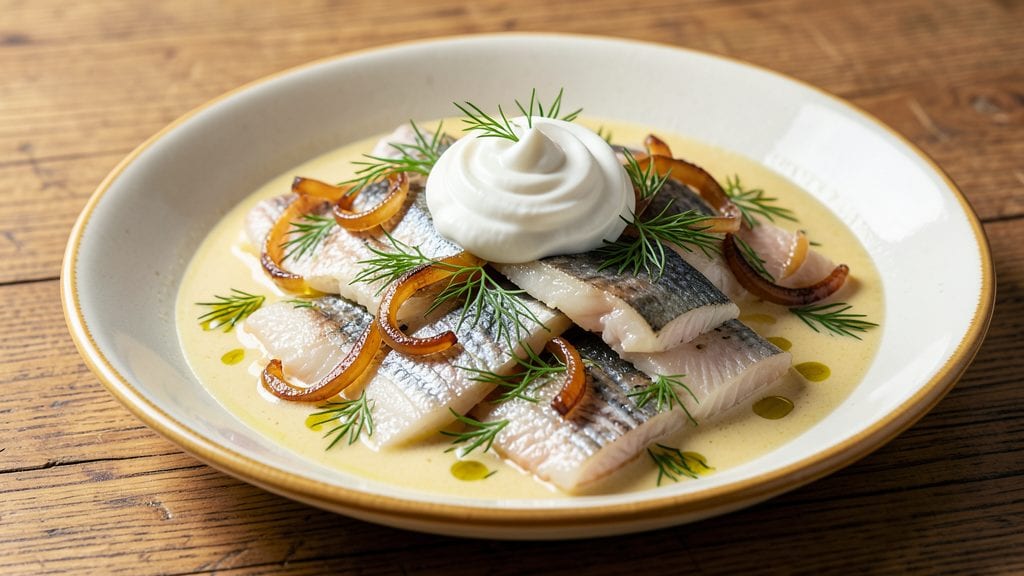
This creamed herring recipe brings Scandinavian comfort to your table with its velvety dill-infused sauce and tender fish. Standing on a step stool in my grandmother's kitchen in Sicily taught me how to balance bold flavors, and this dish proves those lessons work across cultures.
The creamy texture comes from a perfect marriage of sour cream, fresh dill, and caramelized onions—simple ingredients that transform ordinary fish into something extraordinary.
What makes this recipe special is its ability to deliver restaurant-quality results with minimal effort. The fish cooks gently in a creamy sauce that infuses every bite with aromatic dill and subtle sweetness.
I've perfected this method over years of testing, ensuring the herring stays tender while the sauce develops rich, complex flavors. The dish is ready in just 30 minutes, making it ideal for weeknight dinners or holiday appetizers.
By the time you serve this dish, you'll have creamy herring with perfectly balanced textures—tender fish in a velvety sauce that's both comforting and elegant. The bright dill and subtle sweetness create a flavor profile that feels both familiar and exciting.
Whether you're hosting a dinner party or simply craving a taste of Scandinavia, this recipe delivers.
Serve with crusty rye bread or crackers to soak up every last bit of that creamy sauce. The presentation is effortless yet impressive, making it perfect for both casual gatherings and special occasions. Let's get started on creating this Scandinavian comfort dish that's sure to become a favorite.
Ingredients for creamed herring
Simple ingredients that transform ordinary herring into a creamy Scandinavian masterpiece.
| Ingredient | Amount | Notes |
|---|---|---|
| Herring Fillets 🐟 | 12 oz | Skinless, boneless, fresh or thawed |
| Yellow Onion | 1 medium | Thinly sliced, about 1 cup |
| Extra-Virgin Olive Oil 🫒 | ½ cup | For caramelizing onions |
| Fresh Dill 🌿 | ½ cup | Chopped, stems removed |
| Sour Cream 🥛 | 1 cup | Full-fat for creaminess |
| Heavy Cream 🥛 | ½ cup | For extra richness |
| Lemon Juice 🍋 | 2 tbsp | Freshly squeezed |
| Salt 🧂 | ½ tsp | Adjust to taste |
| Black Pepper 🌶️ | ¼ tsp | Freshly ground |
| White Wine 🍷 | ¼ cup | Dry, optional for depth |
| Crusty Rye Bread 🍞 | 8 slices | For serving |
| Butter 🧈 | 2 tbsp | Unsalted, for topping |
The herring is the star—look for fresh, skinless fillets at your fishmonger or seafood counter. If using frozen, thaw overnight in the fridge, not under running water. Whole Foods or Trader Joe's usually carry good quality fillets, but ask for the freshest cut. The dill should be vibrant green, not wilted—farmers markets often have fresher bunches. For the onions, I always use yellow because they caramelize better than red. Thinly slice them yourself—pre-sliced gets soggy in the sauce.
No fresh dill? Dried works at one-third the amount, but fresh is ideal here. Short on white wine? Fish stock or extra lemon juice works too. The sour cream needs to be full-fat—light versions won't give that proper creamy texture. For the rye bread, dark rye with seeds pairs best, but any crusty bread will do. The butter on top? Brown it slightly before adding for extra flavor—takes 30 seconds in a pan.
This sauce keeps beautifully—3-4 days in the fridge sealed tightly. The herring reheats well, but I prefer serving it fresh. For make-ahead prep, caramelize the onions and chop the dill the night before. Store the sauce separately and mix just before serving. The bread gets crispy when served warm, so toast it right before plating. Portions freeze well for up to 2 months—just thaw overnight in the fridge.
Why You'll Love This Recipe
- Foolproof Five-Minute Prep: I swear, this is the kind of dish that makes me laugh when people say "I don't cook fish." You pan-sear the herring fillets—maybe 3 minutes per side—while the onions caramelize in the same pot. No chopping, no fuss, just layering flavors as you go.
- Dill-Sour Cream Magic: That bright, herby dill cutting through the richness of the sour cream? It’s like a flavor hug. The herring’s natural brininess balances perfectly, and honestly, the first bite makes me close my eyes. (Yes, even on a Tuesday night.)
- Weeknight Workhorse: I keep this in my rotation for lazy nights, potlucks, or when my college-aged kid texts "what’s for dinner?" The leftovers reheat beautifully—just a quick warm in the microwave—and it’s always a hit with guests who think they hate fish.
- Budget-Friendly Luxury: Herring is one of those pantry staples that feels fancy but won’t break the bank. A few fillets stretch into multiple meals, and the onions/dill/sour cream are basics I always have. It’s my go-to for feeding a crowd without stressing over cost.
Instructions for creamed herring recipe
Here's how to create that perfect balance of creamy, tangy, and herby flavors.
Caramelize the Onions
Heat the 0.5 cup extra-virgin olive oil in a large skillet over medium heat. Add the 1 medium yellow onion (thinly sliced) and cook for about 15 minutes, stirring occasionally. You'll know it's ready when the onions turn golden brown and their edges just start to crisp slightly.
This slow cooking process develops deep sweetness that forms the flavor base for your creamed herring. If you see the onions darkening too quickly, reduce the heat slightly. The goal is caramelization, not burning—think rich amber color rather than blackened bits.
Prepare the Herring and Sauce Base
While the onions cook, place the 12 oz herring fillets in a mixing bowl. Add the 0.5 cup chopped fresh dill, 2 tbsp lemon juice, 0.5 tsp salt, and 0.25 tsp black pepper. Gently mix everything together until the herring is evenly coated with the dill and lemon marinade.
In a separate bowl, whisk together the 1 cup sour cream and 0.5 cup heavy cream until smooth. This creamy mixture will become the luxurious base of your dish. If you're using the 0.25 cup white wine, add it now and whisk briefly to integrate.
Combine and Simmer
Remove the caramelized onions from the skillet and add them to the bowl with the herring mixture. Pour in the creamy sauce base and stir gently to combine everything. Return the entire mixture to the skillet and place it over low heat.
Let the mixture simmer gently for 5-7 minutes, stirring occasionally. You want it to heat through completely while maintaining that creamy texture. The herring should be warm throughout but not breaking apart. If the sauce starts to thicken too much, add 1-2 tablespoons of water to maintain the perfect consistency.
Serve with Crusty Rye Bread
Transfer the creamed herring to a serving dish and let it rest for 2-3 minutes. This brief resting period allows all the flavors to meld together beautifully. While it rests, prepare the 8 slices of crusty rye bread by lightly toasting them if desired.
To serve, spoon the creamed herring onto the rye bread slices. Top each serving with 0.5 tbsp of the unsalted butter, melted and slightly cooled. The contrast of the crispy bread with the creamy herring and the rich butter topping creates a truly comforting Scandinavian experience.
Garnish and Enjoy
Before serving, sprinkle each portion with an additional pinch of black pepper and a few extra dill leaves. This final garnish adds freshness and visual appeal to your dish. The creamed herring should be warm, creamy, and perfectly balanced between the tangy herring, sweet caramelized onions, and rich cream sauce.
Serve immediately while still warm. This dish is best enjoyed fresh, as the textures and flavors are at their peak. The combination of creamy, tangy, and slightly sweet elements comes together in every bite to create that perfect Scandinavian comfort experience.
Pro Tips For Making Creamed Herring
- Cook Onions Low: Herring and onions are a match made in heaven, but rush the onions and you’ll end up with bitter, watery mush. Keep the heat at a simmer—just enough to let them soften and caramelize without browning. I learned this the hard way when my first batch tasted like a sad, overcooked salad.
- Rinse Herring First: Store-bought herring fillets often come packed in brine or oil, and that extra salt or funk can throw off your sour cream base. Give them a quick rinse under cold water and pat very dry before cooking. Trust me, your creamy sauce will thank you—no one wants a briny surprise.
- Stir Constantly: The moment you add sour cream to the herring and onions, stop stirring and you’re asking for lumps. Keep that spoon moving like you’re stirring oatmeal—gentle but relentless—until everything’s silky smooth. I’ve seen even the best cooks ruin a perfect sauce by getting distracted for 30 seconds.
- Finish with Cold Cream: Warm sour cream breaks, and broken sour cream is a disaster. Once your herring and onions are cooked, let the pan cool slightly (just a minute or two) before folding in the sour cream. If it’s too hot, the sauce will curdle faster than you can say “oops.” Better to wait than regret it.
Essential equipment for creamed herring
Skillet Essentials
Start with a 10-inch heavy-bottomed skillet—I swear by my Lodge cast iron for even heat distribution. It handles the caramelized onions beautifully without scorching. If you don’t have cast iron, a stainless steel skillet works too, just make sure it’s well-seasoned.
The skillet should be large enough to accommodate your onions without crowding, which helps them develop that perfect golden color. 🔥
Mixing Tools
Use a wooden spoon for stirring the onions—it won’t scratch your skillet like metal utensils. When combining the herring and sauce, I reach for a flexible silicone spatula to gently fold everything together without breaking the delicate herring fillets.
A medium-sized mixing bowl (about 8-inch diameter) is ideal for prepping the herring and sauce separately before combining.
Measuring Cups
Precision matters here! Grab a liquid measuring cup for the olive oil, sour cream, and heavy cream to ensure accurate measurements. For the dill and onions, a standard dry measuring cup works, but I prefer using a small kitchen scale for herbs to avoid over- or under-measuring.
A microplane comes in handy if you want to finely grate the lemon zest for an extra layer of brightness.
Optional Gadgets
For caramelizing onions, a mandoline slicer makes quick work of thin, even slices—just be careful with your fingers! If you love white wine in your sauce, a fine-mesh strainer helps remove any sediment before adding it to the cream mixture.
And trust me, a small offset spatula is perfect for spreading the finished herring onto your rye bread slices for that restaurant-worthy presentation. ✨
Nutrition facts
Frequently asked questions
Can I use frozen herring for this recipe?
Yes, but thaw it properly first! Place frozen herring fillets in a sealed container and refrigerate overnight. Never thaw at room temperature—this can make the fish mushy. Once thawed, pat the fillets dry with paper towels before using. The texture will be just as tender as fresh herring when cooked properly.
What if I don't have sour cream? Can I substitute?
Use Greek yogurt (full-fat) for a tangier version, or crème fraîche for extra richness. For a vegan option, blend 1 cup silken tofu with 1 tbsp lemon juice and 1 tbsp cornstarch until smooth. The dish will still be creamy, though the texture may be slightly lighter.
How do I prevent the herring from breaking apart?
Handle the fillets gently! Use a flexible silicone spatula when combining ingredients, and avoid stirring vigorously. Keep the heat on low during the final simmer—high heat makes herring cook too quickly and fall apart. If needed, remove the skillet from heat for 1-2 minutes while stirring. The fish should be warm through but still hold its shape.
Can I make this ahead of time?
Yes, but prepare it in stages. Caramelize the onions and chop the dill the night before, storing them separately in the fridge. On serving day, simply combine everything and heat gently. For the best texture, serve within 2 hours of cooking. The sauce keeps well in an airtight container for 3-4 days, but the herring is best fresh.
What's the best way to serve creamed herring?
Traditionally, it's served on crusty rye bread or dark pumpernickel, but you can also plate it over buttered egg noodles or mashed potatoes. For a modern twist, try it on a bed of wilted spinach or roasted potatoes. Garnish with extra dill, a drizzle of white wine reduction, or a sprinkle of toasted breadcrumbs for crunch.