
Main Courses
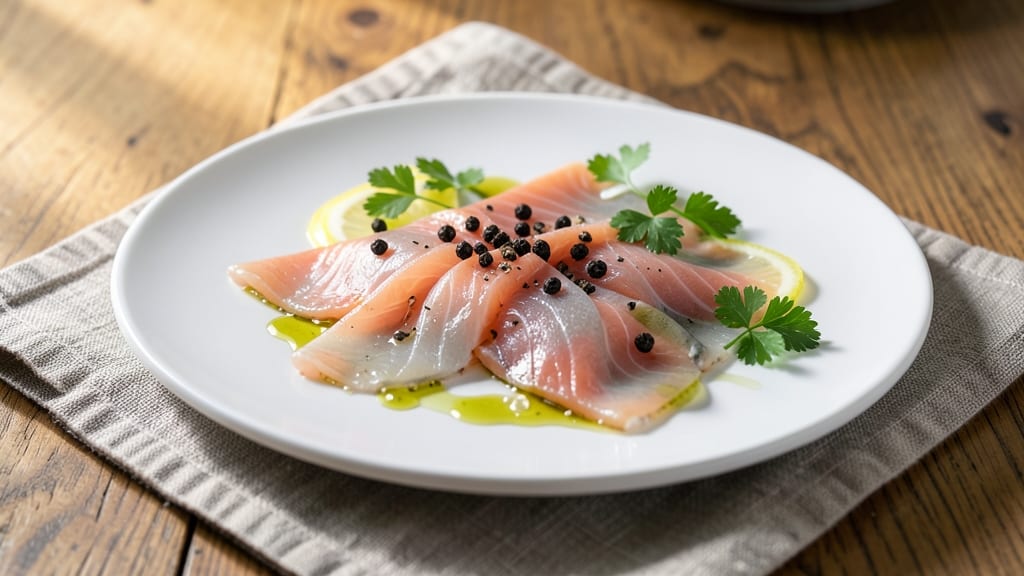
This fish carpaccio recipe transforms simple ingredients into an elegant, restaurant-worthy dish that requires no cooking at all. The secret lies in slicing sushi-grade fish paper-thin and balancing its delicate flavor with bright citrus, aromatic olive oil, and a touch of salt.
I first discovered carpaccio during a trip to Italy, where I learned how freshness and precision turn basic ingredients into something extraordinary.
The process begins with selecting the freshest fish possible—preferably sushi-grade—and slicing it against the grain into uniform, ultra-thin slices. A light dressing of olive oil, lemon juice, and cracked black pepper enhances the natural sweetness of the fish without overpowering it.
The key to success is working quickly to maintain texture and presentation, ensuring each slice remains tender and visually appealing.
What you'll end up with is a dish that's as beautiful as it is delicious—delicate slices of fish fanned across the plate, glistening with citrus-infused oil, and garnished with optional toppings like capers, parsley, or avocado.
This recipe proves that even the most refined dishes can be achieved in a home kitchen with the right technique and fresh ingredients.
Perfect for impressing guests or treating yourself to a special meal, this carpaccio requires just 20 minutes of active time and no heat. The presentation is as important as the taste, so take your time arranging the slices artistically. Here's everything you need to create this showstopping dish.
Ingredients for fish carpaccio
Elegance meets simplicity with these ultra-fresh ingredients designed for perfect carpaccio presentation.
| Ingredient | Amount | Notes |
|---|---|---|
| Sushi-Grade Salmon Fillet 🐟 | 1 lb | Skin removed, sliced against grain |
| Extra-Virgin Olive Oil 🫒 | ¼ cup | High-quality, fruity variety |
| Fresh Lemon Juice 🍋 | 2 tbsp | From organic lemons, freshly squeezed |
| Diamond Crystal Kosher Salt 🧂 | ½ tsp | Fine grain, for delicate seasoning |
| Freshly Cracked Black Peppercorns 🌶️ | ¼ tsp | Coarsely cracked, not powdered |
| Fresh Flat-Leaf Parsley 🌿 | ¼ cup | Finely chopped, for garnish |
| Capers 🫒 | 1 tbsp | Nonpareils, drained and rinsed |
| Shaved Parmesan Cheese 🧀 | ¼ cup | Freshly shaved, not grated |
| Avocado 🥑 | ½ whole | Ripe, sliced for garnish |
| Ice-Cold Water 💧 | 1 cup | For fish slicing preparation |
| Microplane Zester 🍋 | 1 whole | For lemon zest garnish |
The salmon is non-negotiable—sushi-grade quality is mandatory for both safety and texture. Purchase from a reputable seafood purveyor like Whole Foods or Sushi Market where the fish is flash-frozen to kill parasites. Look for vibrant orange color and firm, springy flesh. The fillet should be skinless—ask your fishmonger to remove it. For slicing, a sharp Japanese sashimi knife or a mandoline with thin-slice attachment works best. If you're using a different fish like tuna or halibut, ensure it's also sushi-grade and slice against the grain for maximum tenderness.
No fresh parsley? Substitute with finely chopped chives or dill for a different but equally elegant flavor profile. The capers can be omitted entirely if you prefer a lighter presentation, but they add a delightful briny contrast. For the olive oil, avoid strong, peppery varieties—opt for a mild, fruity extra-virgin like Colavita or Bertolli. The lemon juice should be freshly squeezed; bottled juice lacks the bright acidity needed to balance the fish. If you don't have a microplane, a fine grater works for zesting, though it may yield slightly more pulp. For a vegetarian twist, substitute the fish with thinly sliced heirloom tomatoes or eggplant, though the technique remains identical.
Freshness is paramount—use the salmon within 24 hours of purchase and store it unwrapped on a plate in the coldest part of your fridge. The dressing components (olive oil, lemon juice, salt, and pepper) can be prepped 1 hour ahead and stored in separate containers. The garnishes (parsley, capers, Parmesan, and avocado) should be prepped just before serving to maintain crispness. This dish is best served immediately after assembly—the fish begins to oxidize within minutes, so work quickly. For a crowd, double the recipe but assemble each serving just before plating to preserve presentation.
Why You'll Love This Recipe
- Here’s what sold me: you’re paying for the salmon’s quality, but the rest is basic pantry stuff. A splash of olive oil, a squeeze of lemon, a pinch of salt—no wasted ingredients. And since it’s portion-controlled, I’m not tempted to overbuy. It’s the kind of dish that makes fresh fish feel like a treat without breaking the bank.
- No-Fuss Freshness: I swear by this when I’m craving something light but still feel fancy. Just slice the salmon paper-thin with a sharp knife—no cooking, no mess—and let the olive oil and lemon do the work. It’s the kind of dish where the prep takes longer than the actual cooking (which is zero).
- Bright & Simple: Between us, this is one of those recipes where the ingredients shine without overpowering. The salmon’s natural sweetness pops against the zing of fresh lemon, while the olive oil and cracked pepper add this perfect balance—salty, bright, and just rich enough. No fancy sauces, no complicated steps, just pure flavor.
- Date-Night Zero Stress: I’ve served this to friends who think they’re “too busy” for fancy meals, and they’ve been blown away. It’s elegant enough for a dinner party but takes less time than deciding what to order for takeout. Plus, the leftovers? Still taste incredible the next day—just toss them in a salad or on toast.
Step-by-step instructions for ultra-thin salmon carpaccio
Master this delicate technique for restaurant-quality carpaccio with perfectly sliced salmon and vibrant citrus dressing.
Prepare the Salmon for Ultra-Thin Slicing
Begin by placing the 1 lb sushi-grade salmon fillet skin-side down on a cutting board. Using a sharp, flexible fillet knife, make a series of shallow cuts about ⅛-inch apart, working parallel to the grain. This creates a guide for your final slices. I press down gently but firmly—too much pressure will tear the delicate flesh.
Next, fill a shallow dish with 1 cup ice-cold water. Place the salmon fillet in the water for exactly 30 seconds. This brief chilling firms the proteins slightly, making them easier to slice without tearing. Remove immediately after—any longer and the texture will become too firm. Pat the fillet dry with paper towels before proceeding to ensure clean slices.
Create the Citrus-Oil Dressing
In a small bowl, whisk together the 0.25 cup extra-virgin olive oil and 2 tbsp fresh lemon juice until fully emulsified. Add the 0.5 tsp diamond crystal kosher salt and 0.25 tsp freshly cracked black peppercorns, mixing until dissolved. This dressing should coat the back of a spoon with a silky consistency—if it separates, whisk more vigorously for 10-15 seconds.
Use the microplane zester to create fine lemon zest, adding it to the dressing. The zest should dissolve completely into the oil, infusing it with bright citrus aroma. Taste and adjust seasoning—this is your flavor foundation, so balance is critical. Set aside while you prepare the remaining components.
Assemble the Carpaccio Plates
Working quickly to prevent oxidation, arrange the salmon slices in a single layer on each of four plates, slightly overlapping each piece. The slices should be as uniform as possible—about ⅛-inch thick—with the grain running horizontally across the plate. This presentation creates visual rhythm while maintaining the delicate texture.
Drizzle each plate with about 1 tablespoon of the citrus-oil dressing, spreading it evenly over the salmon. The oil should glisten but not pool—this indicates proper distribution. Sprinkle with 1 teaspoon of the 0.25 cup finely chopped fresh flat-leaf parsley and ½ teaspoon of the 1 tbsp drained capers over each plate. The parsley adds freshness while the capers contribute a briny contrast.
Add Avocado and Parmesan Garnishes
Slice the 0.5 whole avocado lengthwise and remove the pit. Using a spoon, carefully scoop out the flesh and arrange it in thin, even slices alongside the salmon. The avocado should be at room temperature for best texture—if it's cold, let it sit for 10 minutes before slicing. Distribute the slices in a fan shape along one edge of the plate.
Finally, use the microplane zester to create delicate shavings of the 0.25 cup shaved parmesan cheese. Sprinkle these shavings lightly over the avocado and salmon, focusing on the gaps between slices. The parmesan should melt slightly from the residual oil, creating a creamy contrast to the crisp salmon. Serve immediately to preserve the fresh, vibrant qualities of the dish.
Pro Tips For Making Fish Carpaccio
- Freeze First, Slice Clean: Pop your salmon fillet in the freezer for 15–20 minutes before slicing—it tightens the fibers so those delicate carpaccio slices stay intact instead of fraying like overcooked pasta. I learned this the hard way after serving a plate where half the "slices" looked like confetti.
- Salt the Fish, Not the Plate: Lightly season the salmon with kosher salt (about ¼ teaspoon per fillet) and let it sit uncovered for 10 minutes before slicing—this draws out moisture so the slices don’t turn into a soggy mess. Skip salting the plate afterward; the fish already has enough.
- Lemon Last, Not First: Hold off on the lemon juice until you’re ready to serve—acid breaks down the protein faster, turning your perfect slices into a sad, wilted pile. A quick squeeze right before plating keeps the texture crisp and the flavor bright.
- Pepper Like a Pro: Use a microplane or mortar and pestle to crack black peppercorns fresh—those tiny granules cling to the salmon better than pre-ground powder, which just turns to dust. Sprinkle just before eating so the aroma hits first. (Yes, it’s extra work, but it’s worth it.)
Creative variations of these flavors
Vegetarian Twist
For a vegetarian version, swap the salmon for thinly sliced heirloom tomatoes or eggplant—both work beautifully when sliced against the grain. I’ve tested this with 2 medium eggplants, sliced into ⅛-inch rounds and lightly salted to draw out moisture for 10 minutes before patting dry.
The technique remains identical, but the flavor profile shifts to earthy, umami-rich notes. Garnish with the same citrus dressing, parsley, and shaved Parmesan for that signature carpaccio elegance. 🌱
Spicy Asian Fusion
Add a kick with a sesame-ginger dressing—mix 2 tbsp toasted sesame oil, 1 tbsp soy sauce, 1 tsp grated fresh ginger, and 1 tsp honey.
Drizzle over the salmon slices and top with 1 tbsp chopped scallions, ½ tsp red pepper flakes, and 1 tsp toasted sesame seeds. This fusion brings bold, umami flavors while keeping the dish light and fresh.
I love pairing this with jasmine rice for a complete meal. 🌶️
Mediterranean Herb Infusion
Swap the parsley for finely chopped dill and mint, and add 1 tsp dried oregano to the dressing for a Mediterranean twist. Top with ¼ cup chopped Kalamata olives and 2 tbsp crumbled feta cheese for a briny, herby contrast.
This variation feels like a vacation in every bite—perfect for a summer gathering. The olives add texture, while the feta ties everything together. 🌿
Truffle Elevation
Elevate your carpaccio with white truffle oil—drizzle ½ teaspoon lightly over the salmon slices just before serving. Pair with shaved black truffle (if available) or thinly sliced pear for a luxurious touch. The truffle’s earthy aroma complements the fish beautifully, making this version feel like a high-end restaurant dish.
I’ve found that 1 teaspoon of truffle oil per serving is plenty—too much can overpower the delicate flavors. ✨
Breakfast Carpaccio
Start your day with a savory twist: top the salmon with 2 soft-boiled eggs, sliced into ribbons, and a sprinkle of everything bagel seasoning. Add ¼ cup crumbled goat cheese and a drizzle of honey for a breakfast-worthy fusion.
The eggs add richness, while the seasoning brings a salty crunch. Serve with toasted baguette slices for dipping—this is a brunch game-changer! 🍳
Nutrition facts
Frequently asked questions
What's the best fish for carpaccio besides salmon?
Sushi-grade tuna, halibut, or yellowtail work beautifully. For extra richness, try seared scallops (lightly cooked) or shrimp—just ensure they're ultra-fresh and sliced against the grain. The key is delicate, firm texture that holds up to slicing.
How do I prevent the fish from turning gray?
Work quickly and keep everything ice-cold. Use a sharp knife for clean cuts, and serve immediately after plating. For extra insurance, brush the slices lightly with lemon juice just before serving—it helps preserve color and adds brightness.
Can I make this ahead of time?
No—carpaccio is best served fresh. The fish oxidizes rapidly, losing both color and flavor. Prep components separately (dressing, garnishes) and assemble plates just before serving. For a crowd, double the recipe but plate individual servings right away.
What if I don't have a Japanese knife?
A very sharp chef's knife works fine! The secret is to chill the fish for 30 seconds in ice water first—this firms the proteins slightly for cleaner slices. For even thickness, use a mandoline with a thin-slice attachment (set to ⅛-inch).
How do I know if my fish is sushi-grade?
Look for vibrant color, firm texture, and a fresh smell. Purchase from trusted sources like Whole Foods seafood counters or specialty sushi markets. If unsure, ask for flash-frozen fish—this process kills parasites safely. Never use raw fish from grocery store seafood cases unless labeled sushi-grade.