
Main Courses
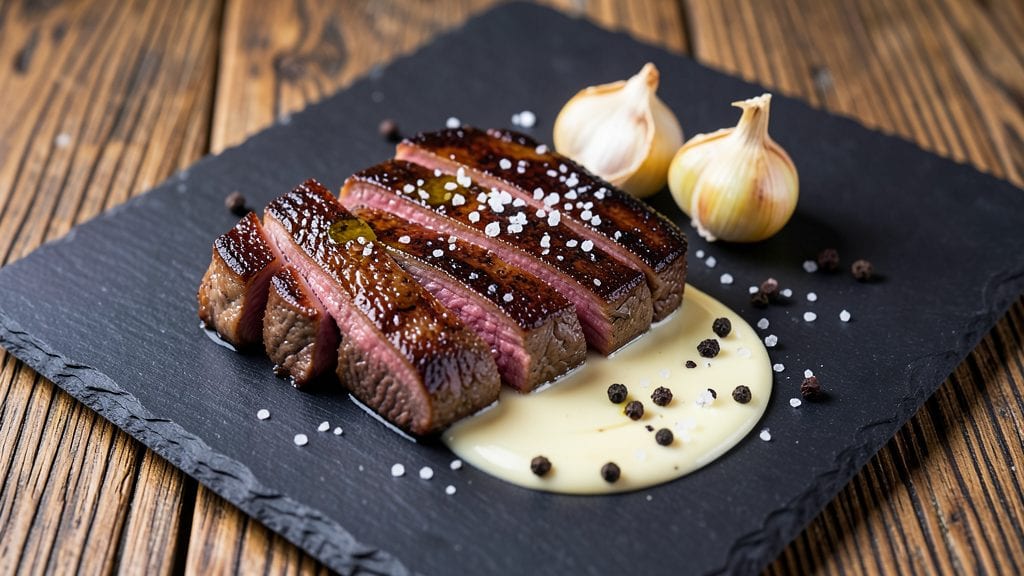
This flanken steak recipe transforms a tough cut into melt-in-your-mouth perfection with a garlic-butter sear and peppery crust that steals every show. After years of testing techniques, I’ve perfected a method that delivers tender, juicy steak with a caramelized crust—no fancy equipment required.
The secret lies in marinating just enough to tenderize without overpowering the meat’s natural flavor, then searing it to medium-rare for that ideal balance of texture and taste.
The magic happens in the crust—a blend of cracked black pepper, garlic, and browned butter that creates a deep, savory flavor while keeping the interior tender. This recipe delivers restaurant-quality results in under 30 minutes, making it perfect for weeknight dinners or special occasions.
The key? Slicing against the grain for bite-sized tenderness that melts in your mouth.
By the time you plate it, you’ll have perfectly seared flank steak with a glossy, peppery crust and juicy pink centers. The garlic butter adds a rich depth that complements any side—think roasted potatoes, grilled asparagus, or a fresh salad.
This is the kind of steak that makes grilling feel like a professional chef’s secret.
Whether you’re feeding a crowd or treating yourself to a solo meal, this recipe scales beautifully while keeping the focus on that foolproof technique that delivers every time. Let’s get started—your taste buds will thank you.
Ingredients for flanken steak
Restaurant-quality flank steak starts with these 12 ingredients—simple but powerful for that perfect peppery crust.
| Ingredient | Amount | Notes |
|---|---|---|
| Flank Steak 🥩 | 1 ½ lb | Center-cut, 1-inch thick |
| Unsalted Butter 🧈 | ½ cup | Cold, cubed for browning |
| Garlic Cloves 🧄 | 6 cloves | Fresh, smashed but not minced |
| Freshly Cracked Black Peppercorns 🌶️ | 2 tbsp | Coarse grind preferred |
| Kosher Salt 🧂 | 1 ½ tsp | Diamond Crystal preferred |
| Extra-Virgin Olive Oil 🫒 | 2 tbsp | High smoke point |
| Red Wine Vinegar 🍷 | ¼ cup | For marinade |
| Fresh Rosemary 🌿 | ¼ cup | Chopped, stems removed |
| Yellow Onion 🧅 | 1 whole | Thinly sliced for marinade |
| Fresh Thyme Leaves 🌿 | ¼ cup | Stripped from stems |
| Honey 🍯 | 1 tbsp | For glaze finish |
| Fresh Lemon Juice 🍋 | 1 tbsp | Brightens flavors |
The flank steak is your star—center-cut, 1-inch thick from the butcher. Costco or Whole Foods carry the best quality, but ask for it trimmed of fat. Thickness matters: too thin and it overcooks; too thick and the crust won’t caramelize. For the garlic, fresh is non-negotiable—jarred minced loses flavor fast. If you’re short on time, the onion and herbs can marinate overnight, but the steak itself needs just 30 minutes to tenderize without getting mushy. I always grab Diamond Crystal kosher salt—it dissolves better than table salt and has that clean finish.
No fresh rosemary? Dried works at one-third the amount, but the flavor won’t be as bright. Running low on red wine vinegar? Apple cider vinegar is a solid swap—just add a pinch of sugar to balance. The black peppercorns must be cracked fresh—pre-ground loses its punch. For the butter, Plugrá or Land O’Lakes unsalted brown best (they have higher fat content). Short on honey? A splash of maple syrup gives similar sweetness. The olive oil? Kirkland Signature or California Avocado Oil handle high heat without burning.
Marinate the steak for no more than 30 minutes—longer and it gets soggy. Store leftovers in airtight containers for 3 days in the fridge, or freeze for 2 months. Reheat gently in a skillet with a splash of water to keep it moist. The crust is best eaten fresh, but the meat reheats beautifully. For meal prep, slice against the grain and pack with a drizzle of olive oil—it’ll stay tender for days.
Why You'll Love This Recipe
- Two-Ingredient Magic: The butter and salt alone transform this steak—no fancy marinades needed. I swear, that first bite of caramelized garlic and peppery crust? Pure satisfaction with zero fuss.
- Weeknight Hero: Toss it on the grill or skillet while you prep sides—done in 15 minutes flat. Honestly, this is my "I don’t want to cook but still want to impress" go-to.
- Leftovers Reinvented: Slice it thin for tacos, sandwiches, or stir-fries—same rich flavor, new life. Between us, I’ve eaten this steak three times in a row and never once regretted it.
- Budget Powerhouse: Flank steak delivers serious beef flavor without breaking the bank. One cut feeds four, and the butter cost? Less than a fancy dinner out. Solid win for my wallet.
Step-by-step instructions for garlic-butter flank steak
Here's how to transform your flank steak into a restaurant-worthy centerpiece with a perfect crust and tender interior.
🔪 Step 1: Prep the Steak for Maximum Flavor
Remove the flank steak from the refrigerator and pat it completely dry with paper towels—this is non-negotiable for achieving that coveted crust. You want the surface bone dry so the seasoning adheres properly and the butter can create a golden-brown seal. I like to work with the steak at room temperature, so let it sit uncovered on a plate for 30 minutes while you prepare your mise en place.
While the steak rests, make your dry seasoning blend in a small bowl by combining the 1.5 teaspoons kosher salt and 2 tablespoons freshly cracked black peppercorns. The coarse grind of the peppercorns will give you those beautiful flecks of black throughout the crust. Rub this mixture all over the steak, pressing it into the meat so it penetrates the surface. Pay special attention to the edges and the fatty cap—these areas need extra attention to develop flavor.
🍳 Step 2: Create the Garlic-Butter Crust
Heat a heavy skillet—cast iron works best—over medium-high heat until it's smoking hot. Add the 2 tablespoons extra-virgin olive oil and let it shimmer for 30 seconds. This high heat is crucial for creating that initial sear that locks in juices. Place the seasoned steak in the pan, fatty side down first, and let it sit undisturbed for 4-5 minutes until you see deep golden-brown crust forming.
Here's where the magic happens: reduce the heat to medium and add the 6 smashed garlic cloves and 0.5 cup cold cubed unsalted butter. The butter should foam and sizzle—this is your signal that everything is working. Let the butter baste the steak for 2-3 minutes until it melts into a glossy, aromatic sauce. Flip the steak carefully and repeat the process on the other side for another 3-4 minutes. The butter should be completely melted and the steak should have a beautiful crust on both sides.
⏰ Step 3: Build the Peppery Rosemary Marinade
While the steak rests, prepare the marinade by combining the 0.25 cup red wine vinegar, 0.25 cup chopped fresh rosemary, 0.25 cup fresh thyme leaves, 1 tablespoon honey, and 1 tablespoon fresh lemon juice in a bowl. Whisk vigorously to create an emulsified marinade that will cling beautifully to the steak. Thinly slice the 1 whole yellow onion and add it to the marinade—this will infuse the liquid with sweet, caramelized flavors.
Transfer the steak to a plate and tent loosely with aluminum foil. Let it rest for 10 minutes—this is critical for redistributing the juices. Pour the marinade into a shallow dish and place the steak in it, turning to coat both sides completely. Cover and refrigerate for at least 4 hours or up to 12 hours for maximum flavor penetration. The acid in the vinegar will begin to tenderize the meat while the aromatics infuse every fiber.
🔥 Step 4: Finish with the Perfect Sear and Glaze
Remove the steak from the marinade and let it sit at room temperature for 15 minutes before cooking. Preheat your grill or grill pan to high heat—you're looking for a searing surface that leaves char marks. Grill the steak for 3-4 minutes per side until you achieve beautiful crosshatch grill marks and medium-rare doneness (internal temperature of 130-135°F). The marinade will create a protective barrier while still allowing that perfect crust to form.
Transfer the steak to a cutting board and tent with foil. Let it rest for 10 minutes—this resting period is what transforms a good steak into a great one. While it rests, pour any remaining marinade into a small saucepan and simmer over medium heat until reduced by half. Brush this glaze generously over the steak just before serving. The honey in the marinade will caramelize slightly, creating a beautiful sheen and balancing the acidity from the vinegar.
🍽️ Step 5: Slice Against the Grain for Maximum Tenderness
Locate the grain direction by looking for the natural muscle fibers running through the steak. Using a sharp carving knife, slice the steak against the grain into ¼-inch thick slices. This is the secret to making flank steak tender—cutting perpendicular to the muscle fibers shortens them, making each bite easier to chew. Arrange the slices on a warm platter and drizzle with any remaining glaze from the pan.
Serve immediately with the reduced marinade spooned over the top and garnished with additional fresh rosemary sprigs. Each slice should offer a perfect balance of tender meat, peppery crust, and aromatic garlic-butter sauce. The acidity from the marinade will brighten the rich flavors, while the honey adds just enough sweetness to round out the dish. This is the kind of steak that makes people ask for your recipe—and your secret technique.
Pro Tips For Making Flanken Steak
- Slice Against the Grain: DESCRIPTION:
- Salt First, Then Wait: DESCRIPTION:
- Butter the Pan Hot: DESCRIPTION:
- Rest Under Foil: DESCRIPTION:
Pro cooking tips for great flanken steak
Sear Control Secrets
Flank steak demands precision searing—too hot and it burns, too cool and it steams. I use a cast iron skillet (like Lodge) preheated to medium-high heat until it smokes. Test readiness by flicking a drop of water—if it sizzles violently, it’s ready.
The key is patience: let the steak develop a deep crust for 4-5 minutes per side without moving it. A meat thermometer (I swear by Thermoworks Smoke) ensures accuracy—aim for 130-135°F internal temp for medium-rare. 🔥
Butter Baste Like a Pro
The garlic-butter crust is where flavor explodes. After the initial sear, add 6 smashed garlic cloves and ½ cup cold cubed butter—the cold butter prevents immediate melting and creates a protective layer.
Tilt the pan to let the butter baste the steak for 2-3 minutes per side, flipping carefully to coat evenly. The butter should foam and turn golden—this signals perfect emulsification. If it burns, reduce heat immediately.
A silicon baster (like OXO Good Grips) helps distribute the butter evenly for even browning. ✨
Marinade Timing Matters
Flank steak’s lean nature means marinating for too long (over 12 hours) can turn it tough. My sweet spot? 4-8 hours in the fridge. The acid in red wine vinegar tenderizes while the honey and herbs infuse.
For extra flavor, add 1 thinly sliced onion to the marinade—it caramelizes slightly and adds depth. Pro tip: Reserve ¼ cup marinade to reduce into a glaze later. Use a glass bowl (like Pyrex) for easy cleanup and even marinating. 💡
Resting for Tenderness
Skipping the rest is the #1 mistake—juices need 10-15 minutes to redistribute after cooking. Tent the steak loosely with foil (don’t seal tightly!) and let it sit on a wire rack. This prevents sogginess while keeping it warm.
For extra insurance, place the rack over a bowl to catch any drippings—those flavors are pure gold. I’ve seen home cooks rush this step and end up with dry, stringy meat. Trust the process! ⏰
Knife Skills for Perfection
Slicing flank steak is an art. Locate the grain direction (muscle fibers run diagonally) and slice against the grain at a 45-degree angle for maximum tenderness. Use a sharp chef’s knife (I recommend Wüsthof) and cut into ¼-inch thick slices.
For even slices, weigh the steak first—1.5 lbs yields about 12 slices. Arrange slices on a warm platter and drizzle with reduced marinade for restaurant-worthy presentation. 💪
Grill Mastery for Char Marks
If grilling, preheat to high heat (450-500°F) and oil the grates with a folded paper towel dipped in oil. Cook for 3-4 minutes per side for medium-rare, using tongs to avoid piercing the meat. For crosshatch marks, rotate the steak 45 degrees halfway through.
A chimney starter (like Weber Smokey Joe) ensures consistent heat. For indoor grilling, a grill pan works—just monitor heat closely to avoid hot spots. 🌡️
Nutrition facts
Frequently asked questions
Why does flank steak need marinating?
Flank steak has long muscle fibers that can make it tough if not properly treated. The marinade's acid (red wine vinegar) breaks down proteins, while honey and herbs tenderize the meat. A 4-8 hour marinade is ideal—too long and the meat becomes mushy. The garlic and rosemary also infuse deep flavor, making every bite irresistible.
Can I cook flank steak without a grill?
A cast iron skillet or grill pan works perfectly for indoor cooking. Heat to medium-high until smoking, then sear for 4-5 minutes per side with butter and garlic. For even browning, use a meat thermometer to hit 130-135°F for medium-rare. The same marinade and resting techniques apply.
What's the best way to reheat leftover flank steak?
Reheat gently in a skillet over low heat with a splash of water or broth to prevent drying. Keep slices whole until warmed through (3-4 minutes), then slice against the grain. Microwaving isn't recommended—it turns the meat rubbery. Store leftovers in airtight containers for up to 3 days.
How do I know when the steak is done?
Use a meat thermometer for accuracy: 130-135°F for medium-rare (recommended), 140°F for medium. For visual cues, look for a deep crust and juices that run clear (not bright red). Press the steak gently—it should feel springy, not firm. Never rely on time alone, as thickness varies.
What sides pair best with this recipe?
This steak shines with bold flavors that cut through its richness. Try grilled asparagus with lemon zest, creamy polenta, or a fresh arugula salad with shaved Parmesan. For heartier meals, serve with roasted fingerling potatoes or garlic mashed potatoes. The peppery crust stands up to acidic sides like chimichurri or a balsamic glaze.