
Soups & Stews
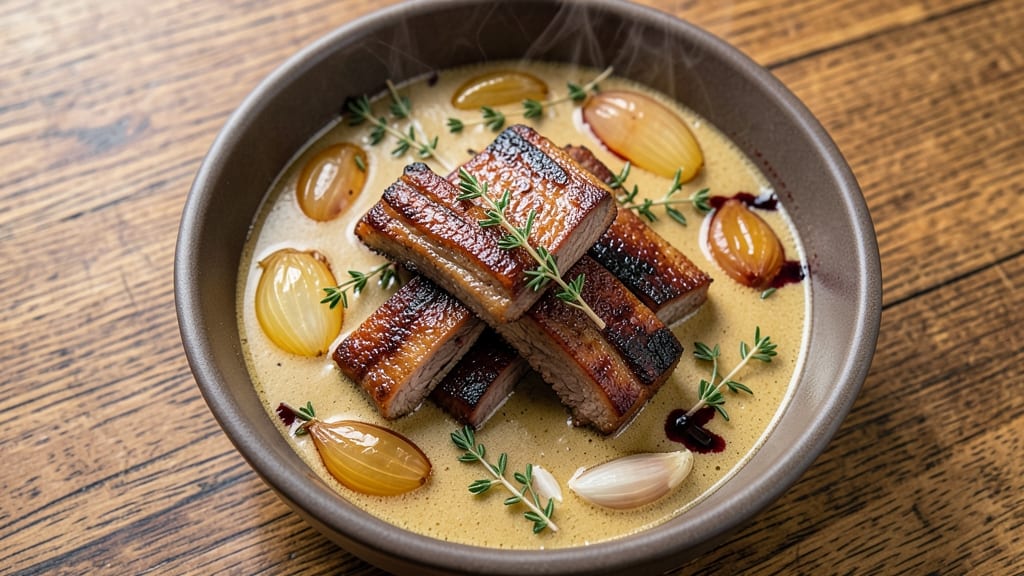
This French onion beef short rib soup brings Parisian bistro elegance to your kitchen with its signature deep caramelized onions and melt-in-your-mouth ribs. The secret lies in slow-braising the beef until it falls apart, then building layers of flavor through a rich, aromatic broth.
I developed this recipe after years of perfecting the balance between tender meat and perfectly caramelized onions—no shortcuts, just deep, savory satisfaction.
The process begins with caramelizing yellow onions for hours until they're deep amber and sweet, then searing beef short ribs to create a flavorful fond at the bottom of the pot. This technique transforms tough cuts into tender, fall-off-the-bone meat while developing a broth so rich it coats every spoonful.
The result is a soup that's hearty enough for a cold evening but refined enough for company.
By the time you're done, you'll have a bowl of soup where each bite delivers perfectly tender ribs, silky broth infused with caramelized onions, and a depth of flavor that comes from slow cooking and careful layering.
The aroma alone will have everyone gathering around the table—this is comfort food at its finest, with restaurant-quality results you can make at home.
Serve with a sprinkle of fresh thyme, crispy croutons, and a swirl of crème fraîche for that final touch of elegance. Pair with a bold red wine to enhance the beef's richness, or enjoy it as-is for a meal that feels special without requiring a fancy occasion.
Let's get cooking—this soup is worth every minute of effort.
Ingredients for french onion beef short rib soup
Short list of high-impact ingredients for a soup that tastes like a Parisian bistro.
| Ingredient | Amount | Notes |
|---|---|---|
| Beef Short Ribs 🥩 | 2 ½ lb | Bone-in, cut into 2-inch pieces |
| Yellow Onions 🧅 | 4 large | Peeled, quartered lengthwise |
| Garlic Cloves 🧄 | 8 cloves | Peeled, smashed |
| Fresh Thyme 🌿 | ¼ oz | Or 2 tbsp dried thyme |
| Beef Broth 💧 | 8 cups | Homemade or high-quality store-bought |
| Dry Red Wine 🍷 | 1 cup | Bold, like Cabernet Sauvignon |
| Tomato Paste 🍅 | 2 tbsp | No-sugar-added preferred |
| Olive Oil 🫒 | ½ cup | Extra-virgin for richness |
| Salt 🧂 | 1 ½ tsp | Kosher or sea salt |
| Black Peppercorns 🌶️ | 1 tsp | Freshly cracked |
| Bay Leaves 🌿 | 2 whole | Remove before serving |
| Crème Fraîche 🧈 | ½ cup | For garnish, optional |
| Fresh Parsley 🌿 | ¼ cup | Chopped, for garnish |
The beef short ribs are the star—look for bone-in cuts with good marbling at your butcher or grocery store's meat counter. Costco or Whole Foods usually have the best selection, but any well-stocked supermarket works. The onions need to be yellow, not sweet varieties—they caramelize better and add that classic French onion flavor. If you can't find fresh thyme, dried works fine, but it's worth grabbing a bunch at the store since it keeps for months. The beef broth should be homemade if possible—store-bought works in a pinch, but you'll taste the difference.
No red wine? Substitute with extra beef broth and a splash of balsamic vinegar—it mimics the acidity. The tomato paste is non-negotiable for depth, but if you're worried about sugar, no-sugar-added versions are available at most grocery stores. Fresh thyme is ideal, but dried at one-third the amount works if that's what you have. The bay leaves add subtle earthiness—don't skip them. For the olive oil, extra-virgin is key—it adds richness that regular olive oil can't match. If you're making this ahead, the ribs actually get more tender after a day in the fridge.
This soup tastes even better the next day—make a double batch if you can. Store in airtight containers in the fridge for 4-5 days, or freeze for up to 3 months. The crème fraîche and parsley are just for garnish, but they add that final touch of elegance. I always make extra broth to freeze—it's perfect for future soups or braises. The onions keep in the fridge for a week if you prep them ahead, so you can caramelize them a day early if you're short on time.
Why You'll Love This Recipe
- One-Pot Magic: I swear by this—just throw everything in one pot and walk away. The short ribs practically melt into the broth while the onions caramelize without babysitting. (Yes, even on a Tuesday night.)
- Deep Flavor Payoff: That first bite? Rich, savory, and layered—the short ribs fall apart like they’ve been slow-cooking for hours, but honestly, they’re foolproof. The thyme and garlic make the broth taste like it simmered all day.
- Leftovers That Shine: This soup begs for seconds, and the best part? It tastes even better the next day. I freeze half the batch—perfect for lazy Sundays or when I’m too tired to cook.
- Budget-Friendly Luxury: Short ribs might sound fancy, but they stretch across meals like nothing else. A few onions, a handful of garlic, and a bouquet of thyme turn cheap cuts into something restaurant-worthy. (My wallet thanks me.)
Step-by-step instructions for French onion beef short rib soup
Here's how to create a rich, deeply flavorful soup where tender ribs meet perfectly caramelized onions.
Sear the Beef Short Ribs for Maximum Flavor
Pat the 2.5 lb beef short ribs dry with paper towels—this ensures a good sear. Heat the 0.5 cup olive oil in a large Dutch oven over medium-high heat until shimmering. Working in batches if needed, add the ribs and sear for 4-5 minutes per side until deeply browned. You'll see that beautiful crust form, which will dissolve into the broth later, creating layers of flavor.
Once browned, remove the ribs and set them aside. Don't wipe out the Dutch oven—those browned bits are pure flavor gold. Here's where it gets important: reduce the heat to medium and add the 4 large yellow onions, sliced into ¼-inch pieces. Cook them for 15 minutes, stirring occasionally, until they begin to soften and release their sweetness. This initial cooking prevents them from burning later when we caramelize them properly.
Caramelize the Onions to Perfection
After the onions have softened, increase the heat to medium-high and let them cook undisturbed for 10 minutes. They'll start to bubble and brown around the edges—that's when you know they're developing that signature caramelized flavor. Stir occasionally, but don't rush this process. You're looking for onions that are deep golden brown with some crispy bits at the edges, which should take about 30 minutes total.
About halfway through this caramelization process, add the 8 smashed garlic cloves and the 0.25 oz fresh thyme. The garlic should sizzle gently and release its aroma, while the thyme will infuse the onions with its earthy notes. This is where the magic happens—patience is key. If the onions start to darken too quickly, reduce the heat slightly to prevent burning.
Deglaze and Build the Broth Base
Once the onions are beautifully caramelized, pour in the 1 cup dry red wine and scrape up all those delicious browned bits from the bottom of the pot. Let it simmer for 3-4 minutes until the wine has mostly evaporated. Then, stir in the 2 tbsp tomato paste and cook for another 2 minutes to deepen the flavor. This step creates a rich, velvety base for your soup.
Next, add the 8 cups beef broth, the 1.5 tsp salt, and the 1 tsp cracked black peppercorns. Bring everything to a gentle boil, then reduce the heat to low. Add the 2 whole bay leaves and the seared beef short ribs. Here's the thing—you want the broth to bubble gently but not vigorously. This ensures the ribs cook slowly and become fork-tender without falling apart.
Simmer Until Ribs Are Fork-Tender
Cover the Dutch oven and let the soup simmer gently for 2 to 2.5 hours. This long cooking time is crucial—it breaks down the collagen in the ribs, turning them into melt-in-your-mouth morsels. Check the broth level occasionally and add hot water if it reduces too much. You're aiming for a soup that's rich but not overly thick. The ribs are done when they easily slide off the bone with a fork.
About 30 minutes before the ribs are done, skim any foam or fat that rises to the surface. This keeps your soup clean and ensures the best texture. The aroma at this point will be incredible—deep, savory, and unmistakably rich. It's worth the wait, I promise.
Finish and Serve with Fresh Herbs
Once the ribs are fork-tender, remove them from the broth and let them rest on a plate. Strain the broth through a fine-mesh sieve into a clean pot to remove the bay leaves and any remaining onion bits. Return the ribs to the broth and let the soup simmer uncovered for 5-10 minutes to reduce slightly and intensify the flavors.
Ladle the soup into bowls and garnish each serving with a dollop of the 0.5 cup crème fraîche and the 0.25 cup chopped fresh parsley. The crème fraîche adds a touch of tangy creaminess that balances the richness, while the parsley brings a fresh, bright note. Serve immediately with crusty bread to soak up every last drop of that delicious broth.
Pro Tips For Making French Onion Beef Short Rib Soup
- Sear the Ribs Properly: High heat. Seriously, crank it up until the short ribs develop a deep brown crust—this isn’t just for looks, it’s where all the flavor lives. I used to rush this, and the soup tasted flat. Take your time, let them sit undisturbed for 3-4 minutes per side, and resist the urge to move them around.
- Char the Onions Slowly: After the initial sear, drop the heat to medium-low and let those onions caramelize for at least 45 minutes. Stir occasionally, but don’t rush—this is where the sweet, jammy base comes from. I’ve tried speeding it up with higher heat, and the onions just burn. Patience here makes a real difference.
- Deglaze with Broth, Not Water: After searing the ribs and onions, don’t grab the wine or even water—use a splash of the beef broth instead. It pulls up all those browned bits (fond) that hold onto flavor, and you’re already using it in the recipe. I learned this the hard way when I used water and the soup tasted dull.
- Simmer Ribs Covered First: Add the ribs to the pot with the caramelized onions and enough broth to barely cover them. Bring to a boil, then immediately reduce to a low simmer, cover, and let them cook for 1.5 hours. This locks in moisture and keeps them tender. I skipped this once and ended up with tough, stringy meat—don’t make that mistake.
Wine and beer pairings for this french onion beef short rib soup
Bold Red Wine Pairings
The rich, deep flavors of this soup demand a wine with equal intensity. I always reach for a bold Cabernet Sauvignon—its dark fruit notes and tannins complement the beef's richness. A Napa Valley Cabernet or Bordeaux blend works beautifully, offering structure to cut through the soup's creaminess. 🍷
For a lighter but still robust option, try a Syrah from the Northern Rhône. Its smoky, peppery profile pairs wonderfully with the caramelized onions and thyme. If you prefer Italian wines, a Barolo from Piedmont brings earthy complexity that enhances the dish's depth.
Crisp White Wine Options
If you prefer white wine, don't dismiss it entirely—a Chardonnay with good acidity can work surprisingly well. Look for one from Burgundy or California's Sonoma Coast, where bright citrus notes balance the soup's richness. A touch of oak adds a creamy texture that mirrors the crème fraîche garnish.
For something truly unique, try a Viognier from the Rhône Valley. Its floral and stone fruit flavors provide a refreshing contrast to the beef and caramelized onions, making each bite more vibrant. This pairing feels unexpected but incredibly refreshing.
Beer Pairings for the Bold
For beer lovers, a dark ale or stout is ideal. I recommend a Belgian Dubbel like Westmalle Trappist—its caramel and spice notes echo the caramelized onions and thyme. The malt sweetness also complements the beef's savory depth. 🍺
If you prefer something lighter, a German Helles Lager offers crisp, clean notes that cut through the soup's richness. The subtle maltiness lets the beef and onions shine without overpowering them. For a more adventurous choice, try a smoked porter—its smoky aroma pairs beautifully with the caramelized onions.
Non-Alcoholic Alternatives
Don't have wine or beer? No problem. A sparkling apple cider with a splash of lemon adds brightness and acidity that cleanses the palate between bites. The effervescence also enhances the soup's richness. 🍎
For a non-fizzy option, try a cold-brewed hibiscus tea—its tart, cranberry-like flavor balances the soup's depth. Serve it chilled to refresh your palate with every spoonful. This pairing is especially refreshing in warmer months.
Nutrition facts
Frequently asked questions
How long should I caramelize the onions for perfect flavor?
For deep, rich caramelization, plan for 30-45 minutes total. Start with 15 minutes at medium heat to soften them, then increase to medium-high and let them cook undisturbed until deep golden brown with crispy edges. Patience is key—rushing leads to burning, not caramelization.
Can I substitute beef short ribs with another cut of beef?
While short ribs are ideal for their marbling and tenderness, you can use chuck roast or beef shank in a pinch. Cut them into 2-inch chunks and increase cooking time by 30-45 minutes to ensure tenderness. The flavor will be slightly different but still delicious.
Why does my soup taste too salty after simmering?
This usually happens when the broth reduces too much. Add hot water gradually while tasting, or balance the salt with a splash of lemon juice or red wine vinegar (1-2 teaspoons). Skim excess fat from the surface to lighten the richness.
Can I make this soup in a slow cooker?
Sear the ribs and caramelize the onions in a skillet first, then transfer everything to the slow cooker. Cook on low for 7-8 hours or high for 4-5 hours. The ribs will be fork-tender, though the onions may lose some caramelization. Add a splash of beef broth before serving to restore richness.
How do I store and reheat leftovers?
Store in an airtight container in the fridge for 4-5 days or freeze for up to 3 months. Reheat gently on the stove over medium-low heat, stirring occasionally, until warmed through. Avoid microwaving—it can make the broth watery. The ribs actually taste better the next day!