Soups & Stews
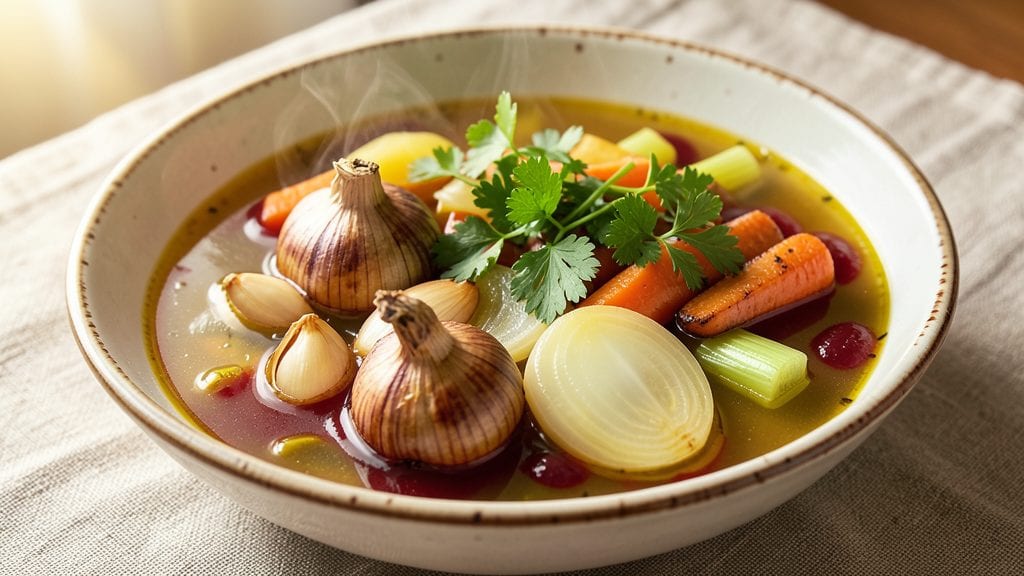
A garlic broth recipe that transforms ordinary meals into something extraordinary—this is the umami-packed foundation my grandmother swore by for everything from soups to braised dishes. The secret lies in slow-cooking garlic until it caramelizes, releasing layers of flavor that turn simple ingredients into something deeply satisfying.
I’ve refined her method over years of trial and error, ensuring every batch delivers that rich, golden depth without bitterness.
This isn’t just a base—it’s a complete dish when paired with crusty bread, grilled meats, or fresh vegetables. The process is straightforward: sauté whole garlic cloves until deep brown, then simmer with aromatics and water for hours.
No fancy equipment needed, just patience and a few simple ingredients. The result? A broth so flavorful, it elevates even the simplest meals into something restaurant-worthy.
What makes this recipe special is its versatility. Use it as a soup on its own, or reduce it to a glaze for roasted vegetables. The caramelized garlic adds a sweet, savory note that balances perfectly with acidity or heat.
My grandmother always said, "Good broth is the soul of any dish," and this is the version I return to time and time again.
Ready in under an hour but packed with depth, this garlic broth proves that homemade flavor doesn’t require complicated techniques—just attention to detail. Let’s get started on creating something that tastes like home.
Ingredients for garlic broth
Twelve ingredients, one transformative broth—where caramelized garlic meets aromatic precision for depth beyond store-bought.
| Ingredient | Amount | Notes |
|---|---|---|
| Whole Garlic Bulbs 🧄 | 2 whole | Cloves separated, unpeeled for caramelization |
| Yellow Onions 🧅 | 2 whole | Yellow or yellow-red for sweetness |
| Carrots 🥕 | 4 whole | Medium size, peeled and chopped |
| Celery Stalks 🌿 | 4 whole | Fresh, organic preferred for clean flavor |
| Tomato Paste 🍅 | 2 tbsp | High-quality, no added salt |
| Extra-Virgin Olive Oil 🫒 | ½ cup | Cold-pressed, fruity variety |
| Dry White Wine 🍷 | 1 cup | Sauvignon Blanc or Pinot Grigio |
| Water 💧 | 6 cups | Filtered or spring water preferred |
| Bay Leaves 🌿 | 2 whole | Fresh, organic preferred |
| Fresh Thyme Sprigs 🌿 | 4 whole | Stems intact for easy removal |
| Salt 🧂 | 1 ½ tsp | Diamond Crystal kosher salt |
| Black Peppercorns 🌶️ | ½ tsp | Freshly cracked for aroma |
| Fresh Parsley 🌿 | ¼ cup | Chopped, for finishing |
The garlic is the heart of this recipe—whole bulbs caramelize beautifully without burning. Whole Foods or local farmers' markets carry the largest bulbs with tight cloves, which yield the most flavor. For the onions, carrots, and celery, organic produce ensures cleaner flavor without bitterness. The tomato paste should be San Marzano canned if possible—its sweetness balances the umami perfectly. Fresh thyme and bay leaves elevate the broth's complexity; Penzeys Spices sells high-quality dried options if fresh isn't available, though fresh is ideal for this application. The wine adds brightness, so avoid oaky Chardonnays—stick to crisp whites like Sauvignon Blanc.
No white wine? Substitute additional water with 1 tbsp lemon juice for acidity. Fresh herbs unavailable? Dried thyme at one-third the amount works, but fresh is non-negotiable for parsley in the final garnish. The carrots and celery can be swapped for leeks or fennel for a different depth of flavor. For a vegetarian version, omit the wine entirely and increase water by 1 cup. The tomato paste is optional but recommended—it deepens the broth's color and adds a subtle sweetness that rounds out the garlic's intensity. If you're using pre-minced garlic, toast it in olive oil first to prevent bitterness.
This broth improves with time—48 hours in the fridge allows flavors to meld beautifully. Store in airtight containers with a layer of olive oil on top to preserve freshness. Freezes for up to 3 months without losing quality. For best results, strain before freezing to remove any solids. Portion into ice cube trays for convenient use in future recipes. The broth's versatility makes it a pantry staple—use within 5 days for peak freshness, or freeze immediately for long-term storage. The caramelized garlic cloves can be saved and used in other dishes like mashed potatoes or pasta.
Why You'll Love This Recipe
- No-Chop Necessary: I swear by this trick—just toss whole garlic bulbs (yes, unpeeled) and a roughly chopped onion into the pot. The flavor? Still insane. No knife skills required, just dump-and-go.
- Umami Bomb: That tomato paste isn’t just for color—it deepens the garlic’s punch while the carrots and celery sweeten the deal. Simmer it long enough, and you’ll get that rich, layered taste that makes you want to drink it straight from the spoon.
- Soup-to-Sauce Magic: Use it as a base for weeknight soups, toss it into pasta for a quick sauce, or even drizzle it over grilled chicken. Honestly, I’ve made it work for breakfast hash (yes, really) when I’m in a pinch.
- Budget-Friendly Stash: A big batch costs next to nothing—carrots, celery, and onions are pantry staples—and it keeps for days in the fridge. Freeze extras for when you’re too tired to cook, and you’ll still eat like you’re at a fancy restaurant.
Step-by-step instructions for garlic broth recipe
Transform simple ingredients into a deeply flavorful foundation that elevates every dish you make.
Sauté the Vegetables for Maximum Flavor
Heat the 0.5 cup extra-virgin olive oil in a large Dutch oven over medium heat. Add the 2 whole yellow onions, 4 whole carrots (chopped into ½-inch pieces), and 4 whole celery stalks (sliced into ¼-inch rounds). Cook for 8-10 minutes until the vegetables soften and the onions turn translucent.
Here's the thing—don't rush this step. You want the vegetables to develop a deep golden color and release their natural sugars, which will caramelize and form the base of your broth's rich flavor. Stir occasionally to prevent burning, especially the onions, which have a tendency to stick.
Once the vegetables are softened, add the 2 whole whole garlic bulbs (cloves separated and left unpeeled for caramelization) and cook for another 2 minutes. The garlic should turn golden without burning—this is where much of the umami depth comes from. Remove the garlic cloves and set them aside temporarily; you'll peel and add them back later.
Build Depth with Tomato Paste and Wine
Stir in the 2 tbsp tomato paste and cook for 1-2 minutes, stirring constantly to prevent burning. The paste will darken slightly, intensifying the savory notes in your broth. This step is crucial—it adds a subtle sweetness and complexity that balances the garlic's sharpness.
Pour in the 1 cup dry white wine and scrape up any browned bits from the bottom of the pot with a wooden spoon. These bits, known as fond, are packed with concentrated flavor. Let the wine simmer for 3-4 minutes until it reduces by half and the alcohol burns off. You'll notice the aroma become more intense and aromatic.
Return the peeled garlic cloves to the pot and add the 6 cups water, 2 whole bay leaves, and 4 whole fresh thyme sprigs. Bring the mixture to a gentle boil, then reduce heat to maintain a low simmer. This is where patience pays off—simmering allows the flavors to meld and deepen over time.
Simmer for Rich, Complex Flavor
Cover the pot and let the broth simmer for 45-60 minutes. This long, slow cook time extracts maximum flavor from the vegetables and herbs, creating a deeply aromatic liquid. Skim off any foam or impurities that rise to the surface with a ladle or spoon—this ensures a clear, clean broth.
I know it's tempting to rush, but resist the urge. The longer the broth simmers, the more complex and layered its flavor becomes. The carrots and celery will break down completely, releasing their sweetness and earthiness into the liquid. The bay leaves and thyme will infuse the broth with their aromatic essence, creating a harmonious balance.
After 45 minutes, taste the broth and adjust the seasoning with the 1.5 tsp salt and 0.5 tsp black peppercorns (cracked between your fingers). The seasoning should be balanced—salty enough to enhance the flavors but not overpower them. The broth should have a deep, savory taste with a hint of sweetness from the carrots and a subtle garlic aroma.
Finish and Strain for Clarity
Once the broth has reached your desired depth of flavor, remove it from the heat. Stir in the 0.25 cup fresh parsley and let it steep for 5 minutes. This final step brightens the broth and adds a fresh, herbaceous note that cuts through the richness of the garlic and vegetables.
Strain the broth through a fine-mesh sieve or cheesecloth into a clean pot or bowl. Press gently on the vegetables to extract as much liquid as possible, but avoid forcing the liquid through—this can make the broth cloudy. Discard the solids. The result should be a clear, golden liquid with a rich, umami-packed flavor that's perfect for soups, sauces, or as a base for risottos and grains.
For best results, let the broth cool to room temperature before refrigerating. It will keep in the refrigerator for up to 5 days or can be frozen for up to 3 months. This versatile broth is the secret weapon in any kitchen, transforming simple dishes into something extraordinary.
Pro Tips For Making Garlic Broth
- SMASH THE GARLIC FIRST: Don’t just peel those whole bulbs and toss them in—slam each clove with the flat side of your knife before mincing. This breaks down the allicin (the good stuff) faster, so your broth actually tastes like garlic, not just a faint ghost of it. I learned this the hard way after making broth that smelled amazing but tasted like it was missing its soul.
- CHAR THE ONIONS LOW AND SLOW: High heat turns onions bitter; resist the urge to rush. Cook them over medium-low for 10-12 minutes until deep golden brown, stirring occasionally. This caramelization builds flavor without burning—skip this, and your broth will taste flat, like it’s holding back.
- STIR THE TOMATO PASTE: Once you add tomato paste, don’t just dump it and walk away. Stir it into the oil first for 2-3 minutes before adding liquid. This prevents clumping and ensures it dissolves smoothly, giving your broth that rich, umami depth instead of weird paste chunks lurking at the bottom.
- SAVE THE GARLIC PEELS: Don’t toss those papery skins—they’re free flavor boosters. Tuck a few into the broth bag when straining, or toss them back in the pot for the last 5 minutes of simmering. They add subtle sweetness and depth without overpowering, like a secret ingredient your neighbors will beg for. (Yes, even if you’re impatient like me.)
Perfect pairings for this garlic broth
Bread Pairings
This rich, caramelized garlic broth is a match made in heaven with crusty sourdough or fresh baguettes.
I love serving it with a warm loaf from my local bakery—Breads Bakery—where the crust is just crisp enough to soak up the broth while the soft interior melts with every bite. For extra indulgence, spread a thin layer of garlic-herb butter on the bread before serving. 🥖
If you prefer something heartier, rustic ciabatta or focaccia work beautifully. The open crumb structure of ciabatta traps the broth like a sponge, while focaccia’s olive oil richness complements the garlic’s depth. Toast the bread lightly before serving to enhance its texture and prevent sogginess.
Protein Pairings
Garlic broth shines as a base for grilled or roasted meats, especially chicken thighs or pork chops. After cooking your protein, simply submerge it in the warm broth for 10-15 minutes to infuse it with flavor.
I often serve pan-seared chicken thighs with a side of the broth for dipping—it’s a weeknight dinner winner. 🍗
For a vegetarian twist, pair the broth with creamy polenta or mushroom risotto. The umami depth of the broth elevates these dishes, making them feel restaurant-quality. Add a sprinkle of Parmigiano-Reggiano and fresh parsley for a finishing touch that ties everything together.
Vegetable Sides
Roasted brussels sprouts or asparagus become even more flavorful when drizzled with this garlic broth. Toss them in a light olive oil and roast until tender, then finish with a splash of the warm broth and a pinch of flaky sea salt.
The caramelized garlic adds a sweet, savory note that balances the earthiness of the vegetables. 🥦
For a lighter option, serve the broth alongside steamed greens like spinach or kale. The warmth of the broth wilts the greens slightly, creating a comforting, one-pot meal. Add a squeeze of lemon juice to brighten the dish and cut through the richness.
Drink Pairings
A crisp Sauvignon Blanc or Pinot Grigio complements the garlic broth beautifully, with their bright acidity cutting through the richness. I often reach for a bottle of Kim Crawford Sauvignon Blanc—its citrus notes and herbal undertones mirror the broth’s complexity. 🍷
For a non-alcoholic option, sparkling water with a splash of lemon juice or iced hibiscus tea provides a refreshing contrast. The effervescence cleanses the palate, making each sip of the rich broth feel like a new experience.
If you prefer something warm, a chamomile tea with honey adds a soothing balance to the bold flavors.
Nutrition facts
Frequently asked questions
Can I make this garlic broth without wine?
The wine adds brightness and helps deglaze the pot, but you can substitute with 1 cup water + 1 tbsp lemon juice for acidity. The broth will still develop rich flavor—just skip the reduction step and add the water directly after the tomato paste. For a completely alcohol-free version, use apple cider vinegar (1 tbsp) instead.
How do I prevent the garlic from burning?
Keep the heat at medium-low and stir frequently. Whole unpeeled cloves caramelize better than minced garlic, so resist the urge to peel them until after sautéing. If the garlic starts to brown too quickly (after 2 minutes), remove it immediately and set aside—you can add it back later. The key is patience; let it develop color gradually.
What can I do with leftover garlic broth?
This versatile broth freezes beautifully for up to 3 months—portion into ice cube trays for easy use in future recipes. Use it as a base for soups, braises, or risottos. Reduce it by half for a rich garlic glaze, or blend with cream for a velvety sauce. My grandmother always used leftover broth to make garlic toast by mixing it with butter and spreading on bread.
Can I use powdered garlic instead of fresh?
Fresh garlic is ideal for caramelization, but if you must use powdered, add 1 tsp at the end of cooking (after simmering) to preserve its aroma. Powdered garlic lacks the depth of fresh cloves, so boost flavor with an extra ½ tsp onion powder and ¼ tsp smoked paprika. For best results, stick with fresh—it’s worth the effort for that authentic umami punch.
Why does my broth taste bitter?
Bitterness usually comes from overcooking the garlic or burning the vegetables. Ensure your garlic is golden (not blackened) and the vegetables are softened but not charred. Skim foam during simmering to remove impurities. If the broth tastes bitter, balance it with a splash of lemon juice (1 tbsp) or a pinch of sugar to round out the flavors.