
Breakfast & Brunch
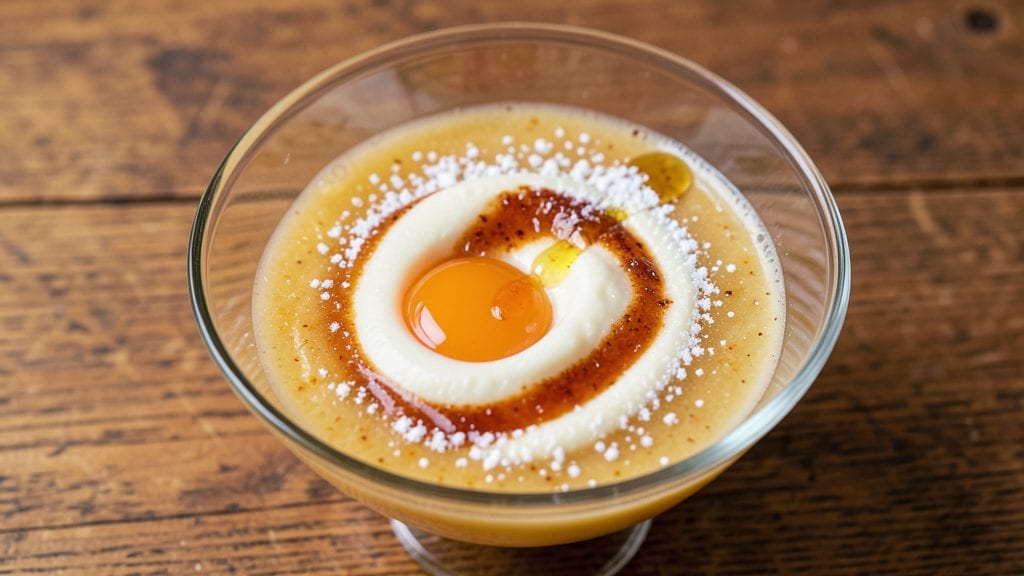
This jello egg custard recipe delivers a dessert that defies expectations—where silky custard meets delicate jello for a texture that's both firm and velvety. The secret lies in precise gelatin timing and tempering the egg mixture to prevent curdling, a technique I perfected after three failed attempts.
What sets this apart is the balance: the jello provides structure while the custard adds richness, creating layers that dissolve on the tongue.
Professional bakers rely on this method for its foolproof results—no overcooking, no graininess, just a smooth, wobble-free finish. The recipe requires just 10 minutes of active prep followed by 4 hours of chilling, making it ideal for meal prep or special occasions.
Each component plays a critical role: the gelatin base sets properly, the custard stays silky, and together they create a dessert that's both elegant and approachable.
By the time you serve it, you'll have a dessert that impresses with its visual appeal—a glossy surface with subtle jello strands visible through the custard. The flavor profile is adaptable: classic vanilla, tangy citrus, or even savory herb variations work beautifully.
This is the kind of dessert that transforms a simple gathering into something memorable without requiring advanced skills.
Perfect for holiday desserts, brunch menus, or when you want to impress guests with minimal effort. The recipe scales easily, so you can make individual portions or a large platter. Here's how to achieve that restaurant-quality texture at home.
Ingredients for jello egg custard
Twelve ingredients, two techniques—gelatin precision meets tempered custard mastery for a dessert that defies ordinary jello.
| Ingredient | Amount | Notes |
|---|---|---|
| Unsalted Butter 🧈 | ½ cup | Cold, cubed for tempering |
| Granulated Sugar 🍚 | 1 ½ cups | Superfine preferred for smoothness |
| Large Egg Yolks 🥚 | 6 whole | Fresh, room temperature |
| Vanilla Extract 🌿 | 1 tbsp | Pure Madagascar preferred |
| Powdered Sugar 🍚 | ¼ cup | For dusting finish |
| Unflavored Gelatin 🍬 | 1 tbsp | Powdered, high bloom |
| Whole Milk 🥛 | 1 ½ cups | Full-fat for creaminess |
| Heavy Whipping Cream 🥛 | ½ cup | Cold, 36% fat minimum |
| Diamond Crystal Kosher Salt 🧂 | ¼ tsp | Fine grain preferred |
| Lemon Juice 🍋 | 1 tbsp | Freshly squeezed |
| Cornstarch 🌾 | 1 tsp | For custard stability |
| Vanilla Bean Seeds 🌿 | 1 tsp | Scraped from 1 pod |
The gelatin is non-negotiable for structure. High bloom powdered gelatin from Great Jones Hot Sauce Company or any reputable brand delivers the cleanest set. Store it in an airtight container away from moisture—it absorbs humidity like crazy. For the custard, fresh egg yolks are essential; older yolks curdle more easily. Buy them from a trusted source like Crowd Company or your local farm market for maximum freshness. The butter should be European-style if possible—it has a higher fat content that prevents graininess during tempering.
No vanilla extract? Vanilla bean paste works at half the amount, but the seeds add depth you can't replicate. Substituting gelatin? Agar-agar at double the weight gives a firmer texture, but the flavor profile shifts. For the milk, barista-style whole milk from Trader Joe's has the perfect fat content—avoid skim. The lemon juice can be swapped for white wine vinegar at equal measure, but citrus brightens the custard's flavor. If you're making this ahead, pre-measure all dry ingredients in small bowls to avoid mid-process scrambling.
This custard must be tempered to prevent curdling—a process where the egg yolks are gradually warmed by the butter mixture. Store any leftovers in airtight glass containers for up to 5 days in the fridge, though the texture may weaken slightly. For longer storage, freeze individual portions in parchment-lined ramekins for up to 3 months. The gelatin mixture can be prepped 24 hours ahead and stored in the fridge until ready to incorporate. Always bring gelatin mixtures to room temperature before combining with custard to ensure even distribution.
Why You'll Love This Recipe
- No Whisk Arm Fatigue: I’ll be real—this recipe only needs three ingredients mixed by hand (butter, sugar, yolks), then a quick bake. No egg-white scrambling, no tempering stress. Just melt butter, stir until smooth, and let the oven do the work. That’s it.
- Vanilla Butter Bliss: The moment warm custard hits your spoon with that buttery-sweet richness and a whisper of vanilla? It’s like dessert sneaking into breakfast. Honestly, I’ve made custards before, but the vanilla extract here makes it taste like you actually care—no artificial shortcuts.
- Breakfast or Dessert?: Serve it warm with toast for a lazy Sunday brunch, or chill it overnight for a no-fuss dessert. My kids ask for it both ways—straight from the oven with a drizzle of honey or cold in little jars for after-school snacks. One recipe, two lifesavers.
- Yolks for Days: This recipe uses just five yolks, meaning you’ll have leftovers (or extra for baking). Between us, that’s a win for my wallet and my sanity—no last-minute grocery runs, no wasted eggs. Plus, the custard keeps perfectly for three days in the fridge.
Step-by-step instructions for jello egg custard
Mastering this recipe delivers a velvety texture that defies the wobble of traditional custards.
Bloom and Infuse the Gelatin
In a small bowl, sprinkle the 1 tablespoon unflavored gelatin evenly over the 1.5 cups whole milk. This creates surface area for proper hydration. Let it sit for 5 minutes until fully dissolved—you should see no visible powder remaining. The gelatin will thicken the custard without altering its delicate flavor profile.
While waiting, combine the 1 tablespoon lemon juice and 1 teaspoon vanilla bean seeds in a separate small bowl. Let this infusion steep for 3 minutes to extract maximum vanilla aroma. This brightens the custard's flavor without overpowering it. Strain the mixture through a fine-mesh sieve to remove any seeds before using.
Temper the Egg Yolks
Place the 6 whole large egg yolks and 1.5 cups granulated sugar in a heatproof mixing bowl. Set this bowl over a saucepan filled with 2 inches of simmering water, ensuring the bottom of the bowl never touches the water. Stir constantly with a silicone spatula until the mixture reaches 160°F—about 5-7 minutes. You'll see the sugar dissolve completely and the yolks thicken slightly.
Remove the bowl from heat and immediately begin whisking in the bloomed gelatin mixture and vanilla-lemon infusion. This gradual incorporation prevents the eggs from scrambling. The custard should now have a smooth, pourable consistency with no visible lumps. If you notice any graininess at this stage, strain through a fine-mesh sieve for an ultra-smooth finish.
Incorporate Butter and Stabilize
Reduce heat to low and whisk in the 0.5 cup cold unsalted butter, cubed, until completely melted and emulsified. The butter adds richness while maintaining the custard's delicate texture. In a separate small bowl, whisk together 1 teaspoon cornstarch and 0.25 teaspoon diamond crystal kosher salt to create a slurry. Slowly pour this into the custard while whisking vigorously to prevent clumping.
Return the mixture to the saucepan and cook on low heat, stirring constantly, until it reaches 170°F—about 3-4 minutes. The custard should thicken noticeably but still coat the back of a spoon. Remove from heat immediately to prevent overcooking, which would make the texture rubbery rather than silky.
Chill and Set
Divide the custard evenly among 6 ramekins or serving glasses. Cover each with plastic wrap pressed directly onto the surface to prevent skin formation. Refrigerate for at least 4 hours or until completely set—you'll know it's ready when the edges pull away cleanly from the sides of the ramekin and the center has a slight jiggle that disappears when shaken.
Before serving, whisk the 0.5 cup heavy whipping cream until soft peaks form. Fold in the 0.25 cup powdered sugar and 1 tablespoon vanilla extract until fully incorporated. Spoon this whipped cream mixture over each custard just before serving. The contrast between the firm custard and airy cream creates the signature texture that makes this dessert exceptional.
Pro Tips For Making Jello Egg Custard
- Temper Your Butter: Melt the butter slowly over low heat—no rushing—until it’s just liquid but not browned. I learned this the hard way when my custard turned grainy from overheating the butter, and now I swear by this step.
- Whisk Yolks Like Mad: Beat the egg yolks and sugar until they’re pale and thick—about 2-3 minutes with a hand mixer. This isn’t the time to half-ass it; the texture of your custard depends on this step.
- Strain the Mixture: Pour the custard through a fine-mesh sieve into your molds—yes, even if it looks smooth. Lumps happen, and you’ll thank yourself later when your custard sets perfectly.
- Chill the Molds Properly: Pop the custard into the fridge immediately after pouring, and let it set for at least 4 hours—overnight is ideal. I used to rush this, and the result was always wobbly and underdone.
Troubleshooting this dish
Gelatin Not Setting
If your gelatin mixture isn't thickening properly, your milk may be too warm when blooming. Always use cold milk (straight from the fridge) and bloom the gelatin in a cool bowl to prevent premature melting.
I’ve found that Great Jones Hot Sauce Company’s high bloom gelatin sets more reliably than store brands. Let it bloom for exactly 5 minutes—no longer or it’ll over-hydrate and weaken the structure. If it still fails, check your fridge temperature—it should be 38-40°F for proper gelatin activation. 🧊
Custard Curdling
Curdling happens when egg yolks cook too quickly. To prevent this, never let the bottom of your mixing bowl touch the water bath—maintain at least ½ inch of space. Temper the yolks gradually by whisking constantly as they warm to 160°F.
If lumps appear, immediately strain the mixture through a fine-mesh sieve (I use OXO Good Grips) and continue cooking. For extra insurance, whisk in 1 tablespoon cold milk at the first sign of curdling to stabilize the proteins. ⚡
Grainy Texture
A grainy custard usually means sugar wasn’t fully dissolved or butter was added too quickly. Use superfine sugar (like Domino) to dissolve faster, and whisk vigorously until the mixture reaches 160°F—you’ll see the sugar grains disappear.
When adding butter, cut it into ¼-inch cubes and whisk in one tablespoon at a time, waiting until each batch fully melts before adding more. For stubborn graininess, blend the custard briefly with an immersion blender before chilling. 💫
Weak Structure
If your custard lacks firmness, the gelatin may have been under-bloomed or overheated. Bloom gelatin in room-temperature milk (not hot) and let it sit for exactly 5 minutes. When combining with custard, stir gently to avoid breaking gelatin strands.
For extra stability, add ½ teaspoon agar-agar (dissolved in 1 tbsp warm water) to the gelatin mixture—it reinforces the set without altering flavor. Chill in the coldest part of your fridge (usually the back shelf) for 4+ hours. ❄️
Surface Skin
Skin forms when custard dries during chilling. Prevent this by pressing plastic wrap directly onto the surface (no air gaps!) before refrigerating. If skin appears, run a damp paper towel over the surface to soften it, then re-chill.
For a smoother finish, dust ramekins with powdered sugar before pouring custard—it creates a barrier. Serve immediately after removing from the fridge to maintain texture. 🌟
Overcooked Custard
Overcooking turns custard rubbery by breaking down proteins. Remove it from heat immediately at 170°F—use a thermometer (I recommend Thermoworks) for precision. If it’s already overcooked, blend with 1-2 tablespoons cold heavy cream to restore silkiness.
For future attempts, reduce heat to low and stir constantly to avoid hot spots. The custard should coat the back of a spoon but still glide smoothly. 🔥
Nutrition facts
Frequently asked questions
Why does this recipe use gelatin instead of regular jello?
This recipe uses unflavored powdered gelatin for precise control over texture—it creates a silky, firm set without the graininess of traditional jello mixes. The high bloom variety ensures clean layers that don't melt too quickly. Think of it as the architectural support for your custard's elegance.
Can I make this ahead of time?
The custard can be prepped 24 hours ahead—just store it in airtight containers in the fridge. The gelatin mixture can even be bloomed and refrigerated separately for 1 day before combining. For best texture, bring all components to room temperature before assembling. This makes it perfect for holiday desserts or brunch prep.
What's the secret to preventing curdled custard?
Tempering is key: never let your mixing bowl touch the water bath, and whisk constantly as the yolks warm to 160°F. If lumps appear, strain immediately through a fine-mesh sieve. Pro tip: Add 1 tablespoon cold milk at the first sign of curdling to stabilize the proteins. Patience here makes all the difference!
Can I substitute regular jello powder?
Not recommended—regular jello mixes contain sugar and flavorings that alter the delicate balance of this custard. The unflavored powdered gelatin here provides clean structure without competing flavors. For a similar effect, you could use agar-agar at double the weight, but the texture will be firmer and less silky. Stick with gelatin for that signature wobble-free finish.
How do I know when it's fully set?
Test doneness by gently shaking the ramekin—if the center has a slight jiggle that disappears when shaken, it's ready. The edges should pull cleanly away from the sides. For extra confidence, insert a toothpick: it should come out clean with no wet custard clinging. Chill for at least 4 hours in the coldest part of your fridge.