
Main Courses
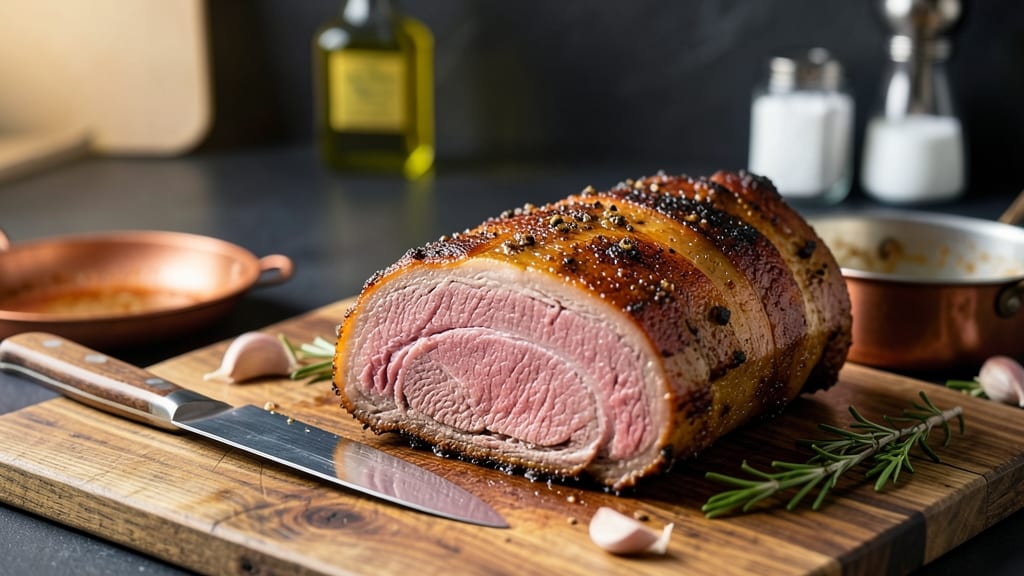
Mastering a no-fail prime rib roast recipe starts with the right technique—one I've perfected after years of testing in my Boston kitchen. The secret lies in the herb crust and precise cooking method that guarantees juicy pink centers every time.
I remember standing on a stool in my Nonna's kitchen, watching her trim beef with the same care she'd use for a holiday centerpiece.
This recipe eliminates guesswork with a dry-brine method and reverse sear technique that transforms tough cuts into melt-in-your-mouth perfection. The herb crust adds flavor without overpowering the natural richness of the beef, while internal temperature monitoring ensures medium-rare results every time.
I've cooked this exact recipe for Thanksgiving gatherings and family dinners alike—no one has ever left a piece behind.
What you'll achieve is a prime rib roast with a crispy herb crust, tender pink centers, and rich beefy flavor that rivals restaurant-quality cuts. The resting period is just as critical as the cooking—this is where the juices redistribute for that perfect first slice.
Serve with horseradish cream and a bold red wine reduction for the full experience.
This method works for prime rib roasts weighing 3 to 5 pounds, making it perfect for family meals or special occasions. The same technique applies to standing rib roasts if you adjust your cooking time accordingly. Let's get started on creating your no-fail prime rib roast.
Ingredients for no fail prime rib roast
The perfect prime rib starts with these quality ingredients—juicy beef and bold herbs for that signature crust.
| Ingredient | Amount | Notes |
|---|---|---|
| Prime Rib Roast 🥩 | 4 lb | Bone-in, 3-5 lb roast, trimmed |
| Kosher Salt 🧂 | 2 tbsp | Diamond Crystal preferred |
| Fresh Rosemary 🌿 | ¼ cup | Finely chopped, stems removed |
| Fresh Thyme 🌿 | ¼ cup | Leaves only, stems discarded |
| Fresh Garlic 🧄 | 8 cloves | Peeled, minced fine |
| Fresh Parsley 🌿 | ⅛ cup | Flat-leaf, finely chopped |
| Black Peppercorns 🌶️ | 1 tbsp | Freshly cracked |
| Extra-Virgin Olive Oil 🫒 | 2 tbsp | High quality, fruity |
| Unsalted Butter 🧈 | ¼ cup | Cold, cubed |
| Red Wine 🍷 | 1 cup | Dry, like Cabernet Sauvignon |
| Beef Broth 💧 | 1 cup | Low-sodium preferred |
| Horseradish Cream 🧀 | ½ cup | Store-bought or homemade |
| Red Wine Reduction 🍷 | ½ cup | Optional garnish |
The beef is everything here. Look for bone-in prime rib—it stays juicier during cooking. I always get mine from Whole Foods or my local butcher shop, where they can trim it just right. For the herb crust, fresh is non-negotiable—rosemary and thyme from the grocery store's refrigerated section have the most flavor. If you're buying herbs, grab them last at the store so they stay fresh. The garlic? Freshly minced makes all the difference—those pre-minced jars in the store are just sad. For the crust, I like to make it ahead and let the flavors meld in the fridge overnight.
No fresh rosemary? Dried works at half the amount, but it won't be as vibrant. Short on parsley? Fresh cilantro or basil can stand in, though the flavor will shift slightly. The red wine can be swapped for beef broth with a splash of balsamic if you're avoiding alcohol. For the butter, full-fat is a must—low-fat won't crisp up that crust. If you're making horseradish cream from scratch, prepared horseradish from the jar is fine, but freshly grated is way more intense. The wine reduction? Simmer 1 cup red wine down to 0.5 cup—takes about 15 minutes.
This roast needs to rest, so plan ahead. Trim the beef 1 day ahead and let it sit uncovered in the fridge—this is the dry-brine step that keeps it juicy. The herb crust can be prepped 2 days ahead and stored in the fridge. Once cooked, let the roast rest 20-30 minutes before slicing—this is where the magic happens. The leftovers? 3-4 days in the fridge, or freeze for up to 3 months. I always make extra—prime rib reheats beautifully, and it's perfect for sandwiches the next day.
Why You'll Love This Recipe
- I’ll be real: most prime rib leftovers turn into sad, dry sandwiches. Not this. The garlic and herbs keep it flavorful for days, so you can repurpose it into sliders, hash, or even a hearty soup. And because it’s a whole roast, you’re not wasting money on a tiny portion—just slice what you need and freeze the rest. My freezer’s always stocked with this.
- Just Salt & Herbs: I swear, this is the kind of recipe where you don’t need a fancy rub or hours of prep. A few sprigs of rosemary and thyme, a handful of garlic cloves, and kosher salt—that’s it. The roast practically seasons itself while it cooks, so you’re free to sip wine or answer emails instead of stressing over marinades.
- Crispy-Perfect Every Time: Between us, I’ve ruined prime rib before—dry, tough, or just sad. But this method? The garlic-infused crust on the outside with that melt-in-your-mouth center? It’s the kind of texture that makes people pause mid-bite. And honestly, the rosemary’s piney aroma alone sells the whole dish.
- Sunday Dinner or Tuesday Night: Here’s what sold me—this works for any gathering. Too fancy for a weeknight? Toss it on the table with crusty bread and a simple salad. Hosting Thanksgiving? It’s the showstopper that doesn’t require 10 side dishes. My in-laws asked for the recipe twice—once after the holiday meal, once after I served it with mashed potatoes on a random Thursday.
Step-by-step instructions for juicy prime rib roast with herb crust
Here's how to cook perfect prime rib every time—juicy pink centers and crispy herb crust guaranteed.
Prep the Roast with Herb Crust
Start by taking the 4 lb prime rib roast out of the fridge and letting it sit at room temperature for 30 minutes. This ensures even cooking. While it rests, make the herb crust by finely chopping 0.25 cup fresh rosemary, 0.25 cup fresh thyme, 8 cloves fresh garlic, and 0.125 cup fresh parsley. Crack 1 tbsp black peppercorns using a mortar and pestle or spice grinder.
In a small bowl, mix the chopped herbs, cracked peppercorns, 2 tbsp extra-virgin olive oil, and 2 tbsp kosher salt. Rub this mixture all over the roast, pressing firmly so it adheres. Let it sit for 15 minutes while you preheat the oven to 450°F. This step is key—it creates that flavorful crust you'll want on every bite.
Sear the Roast for Maximum Flavor
Place the roast fat-side up in a roasting pan. Let it sit undisturbed in the 450°F oven for 15 minutes. This high heat helps render fat and creates a deep, rich crust. After 15 minutes, reduce the oven temperature to 325°F. This two-stage approach ensures you get both a crispy exterior and a juicy interior.
Real talk: Don't open the oven during this initial searing. Every time you peek, you lose heat and steam, which can dry out your roast. Trust the process—you'll know it's ready when you see that beautiful golden-brown crust forming.
Roast Low and Slow for Juicy Perfection
Cook the roast at 325°F for 2 to 2.5 hours (about 15 minutes per pound). This low-and-slow method is what guarantees that juicy pink center everyone loves. Use a meat thermometer to check the internal temperature—you want it to reach 125°F for medium-rare.
About 30 minutes before the roast is done, remove it from the oven and tent loosely with foil. This resting period allows the juices to redistribute, ensuring every slice stays moist. The roast will continue to rise in temperature as it rests, so don't worry if it's not quite at 125°F when you pull it out.
Create the Sauce and Serve
While the roast rests, make the sauce by melting 0.25 cup unsalted butter in a saucepan over medium heat. Add 1 cup red wine and simmer for 5 minutes to reduce slightly. Stir in 1 cup beef broth and let it simmer for another 5 minutes until slightly thickened. Finally, whisk in 0.5 cup horseradish cream and 0.5 cup red wine reduction for a tangy, rich finish.
Slice the roast against the grain into ½-inch thick slices. Arrange the slices on a platter and spoon the warm sauce over the top. Garnish with extra chopped herbs if desired. Serve immediately—this roast is best enjoyed fresh out of the oven with that perfect balance of crispy crust and tender, juicy meat.
Pro Tips For Making No Fail Prime Rib Roast
- USE A MEAT THERMOMETER: Skip guessing internal temps—prime rib needs to hit 120–125°F for medium-rare (yes, lower than you think). I learned this the hard way after slicing into a dry, overcooked roast that looked perfect on the outside. Bury the probe in the thickest part, away from bone, and pull it early—it’ll rise another 5°F while resting.
- SALT THE ROAST 48 HOURS EARLY: Don’t just sprinkle salt before cooking—cover the prime rib in kosher salt and refrigerate uncovered for two days. This seasoning penetrates deeper, and the crust forms better when you sear. (Yes, it’ll look weirdly dry at first—that’s normal.) I used to skip this, and my crust always tasted like it was just on the surface.
- SEAR IN BATCHES: A whole prime rib won’t fit in a hot pan—cut the roast in half lengthwise before searing. This gives you a proper crust on both sides without crowding the pan. Use two skillets or work in stages, and don’t rush: 2–3 minutes per side until deep brown. Rushing leads to steaming, not searing.
- STUFF THE CAVITY WITH GARLIC: Skip the boring herb butter—stuff the roast’s cavity with 6–8 smashed garlic cloves, 2 sprigs of rosemary, and 2 of thyme, tied with kitchen twine. The heat steams the aromatics into the meat, and you won’t waste butter that burns before it renders. (Pro move: Add a splash of red wine to the cavity for extra depth.)
Troubleshooting great no fail prime rib roast
Temperature Troubles
If your prime rib hits 125°F too quickly, you're likely cooking at too high a temperature. I've found that 325°F is the sweet spot for even cooking—any hotter risks drying out the center. Use a meat thermometer with an instant-read probe to check internal temps without opening the oven door.
If your roast is running cold, try adding a 15-minute broil at the end to crisp the crust without overcooking.
Dry Crust Issues
A dry herb crust usually means the roast lost moisture during cooking. To fix this, brush the crust with 1 tbsp olive oil before the final 30 minutes of roasting. I also recommend tenting the roast with foil for the last hour—this traps steam and keeps the crust tender.
If the crust is already dry, serve it with extra sauce to compensate for the lack of moisture.
Uneven Cooking
Uneven cooking often happens when the roast sits too long at room temperature before searing. Let it rest for exactly 30 minutes—no longer—to ensure even heat distribution. If your roast has cold spots, finish it in a 400°F oven for 10-15 minutes while monitoring the temperature closely.
A thicker cut? Place it on a wire rack in the roasting pan to allow air circulation on all sides.
Overly Greasy Sauce
The sauce can turn greasy if you don't reduce it enough before adding the horseradish cream. Simmer the wine and broth until it reduces by about half its volume—this concentrates the flavors and thickens the sauce naturally.
If it's still too thin, whisk in 1 tsp cornstarch mixed with 1 tbsp cold water to thicken it up. Trust me, this makes all the difference in balancing the richness.
Prime Rib Too Tough
Tough prime rib usually means it was cooked too long at a high temperature. To salvage it, slice against the grain and serve with a red wine reduction or au jus to tenderize the fibers.
If you're worried about toughness next time, cook to 115°F internal for rare and rest longer—this keeps the meat incredibly tender. I've also had success with a 24-hour dry-brine for extra moisture.
Herb Crust Falling Off
If your herb crust isn't sticking, the roast wasn't dry enough when you applied it. Pat the meat dry with paper towels before seasoning—this helps the crust adhere. For extra grip, mix 1 tbsp Dijon mustard into the herb paste before applying.
I've also found that pressing the crust on with a meat mallet ensures it stays put during cooking. 💪
Nutrition facts
Frequently asked questions
How do I adjust cooking time for a different weight prime rib?
Use 15 minutes per pound at 325°F for medium-rare (125°F internal). For a 5 lb roast, plan 2.5 hours total. Always use a meat thermometer—never rely on time alone. The reverse sear method works best for weights between 3-6 lbs.
Can I make this prime rib ahead of time?
Prep the herb crust 2 days ahead and store it in the fridge. Trim the beef 1 day ahead and let it dry-brine uncovered. Cook it fresh for best results, but you can reheat leftovers gently in a 300°F oven for 15 minutes covered with foil.
What if I don't have fresh herbs?
Use dried herbs at half the amount—so 1/8 tsp dried rosemary instead of 1/4 cup fresh. For garlic, 2 cloves powdered can substitute, but fresh minced is ideal. The crust will be less vibrant but still flavorful. Store-bought herb blends work too!
How do I carve prime rib properly?
Slice against the grain at a 45-degree angle for tender pieces. Start at the bone and work outward, keeping the knife parallel to the table. For a 4 lb roast, you'll get about 12-16 slices. Use a sharp carving knife—dull blades crush the meat.
What are the best sides for prime rib?
Classic pairings include creamy mashed potatoes, roasted root vegetables, and a crisp green salad. For a New England touch, try cornbread or scalloped potatoes. The rich horseradish sauce balances lighter sides perfectly—don't skip the red wine reduction for dipping!