
Breakfast & Brunch
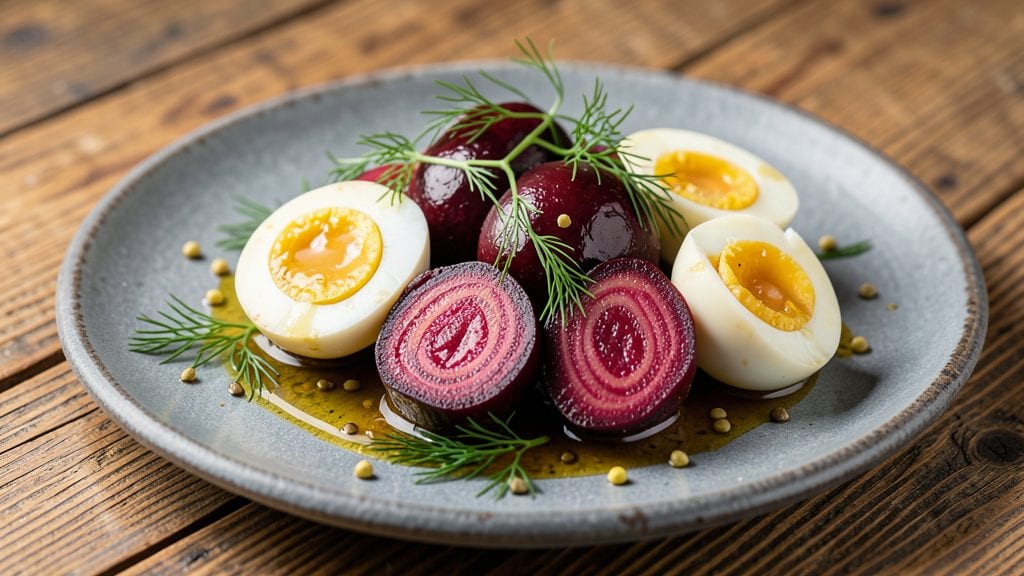
This pickled eggs and fresh beets recipe transforms a simple breakfast into a vibrant, flavor-packed experience that balances tangy crunch with earthy sweetness. The secret lies in the contrast—brightly pickled eggs with their crisp shells and sharp vinegar bite, paired against tender, caramelized beets that add natural sweetness and texture.
I developed this dish after realizing how often breakfast could use a bold, savory-sweet balance, and it’s become a staple in my morning rotation.
The process is straightforward but precise: the eggs are pickled in a simple vinegar brine with mustard seeds and dill, while the beets are roasted until tender with a hint of caramelization.
This method ensures the eggs stay crisp and the beets develop deep, concentrated flavor without losing their natural sweetness.
The result is a dish that’s as visually striking as it is delicious, with the deep red of the beets and the pale green of the pickled eggs creating a beautiful contrast.
What makes this recipe stand out is its versatility—it works as a light breakfast, a refreshing lunch, or even a sophisticated appetizer when plated with a sprinkle of fresh herbs and a drizzle of high-quality olive oil.
The tangy, crunchy eggs cut through the richness of the beets, creating a perfect harmony of textures and flavors. It’s the kind of dish that feels special but doesn’t require hours in the kitchen.
Serve it with a side of crusty bread to soak up the pickling liquid, or pair it with a simple green salad for a complete meal. The combination of pickled eggs and roasted beets is unexpected yet perfectly balanced, making it a dish that’s sure to impress.
Let’s get started on creating this bright, tangy, and earthy masterpiece.
Ingredients for pickled eggs and fresh beets
Eight eggs and two beets create a vibrant balance of tangy crunch and earthy sweetness.
| Ingredient | Amount | Notes |
|---|---|---|
| Large Eggs 🥚 | 8 whole | Fresh, unwashed for crisp shells |
| Medium Beets 🍠 | 2 whole | Organic, about 6 oz each |
| White Vinegar 💧 | 2 cups | Distilled, 5% acidity preferred |
| Water 💧 | 1 cup | Filtered or bottled |
| Yellow Mustard Seeds 🌶️ | 1 tbsp | Whole, not ground |
| Fresh Dill 🌿 | ¼ cup | Chopped, stems removed |
| Granulated Sugar 🍚 | ½ cup | Light brown preferred |
| Kosher Salt 🧂 | 1 ½ tbsp | Non-iodized preferred |
| Extra-Virgin Olive Oil 🫒 | 2 tbsp | For roasting beets |
| Black Peppercorns 🌶️ | 1 tsp | Freshly cracked |
| Fresh Thyme 🌿 | 2 sprigs | For garnish |
The beets are the foundation of this dish's earthy sweetness, so organic, medium-sized beets work best—their natural sugars caramelize beautifully during roasting. Most grocery stores carry them pre-washed, but scrubbing them yourself ensures no dirt remains. Whole Foods or local farmers markets often have the freshest selections, but regular supermarkets work fine. For the eggs, farm-fresh or pasture-raised eggs have richer yolks and firmer whites, which hold up better during pickling. Store them in the fridge until ready to use—they'll keep for up to 2 weeks unwashed.
No fresh dill? Dried dill at one-third the amount works in a pinch, but the flavor won't be as bright. Running short on vinegar? Apple cider vinegar adds a fruity note, though it may alter the color slightly. The mustard seeds can be swapped for whole black peppercorns if you prefer a different texture. For the beets, if you can't find medium ones, small beets roast faster—just check for doneness earlier. The olive oil matters here—use something with a fruity, peppery finish like California extra-virgin for best results.
The pickled eggs keep for up to 3 months in the fridge, though they're best within the first 2 weeks. Store them in their pickling liquid to maintain crispness. The roasted beets can be refrigerated for 5 days or frozen for 3 months—just reheat gently in a pan with a splash of water. For serving, let the eggs sit at room temperature for 10 minutes before plating to enhance their crispness. The beets can be reheated in the microwave for 20 seconds to restore their tender texture.
Why You'll Love This Recipe
- No Boiling Madness: I’ll be honest—hard-boiling eggs is a pain, but this method skips it entirely. The eggs soak right in the vinegar and water mix, so tender they practically melt in your mouth. No peeling hassles, no gray rings—just pure, creamy texture.
- Sweet-Savory Magic: That tangy vinegar kiss with the earthy beets? It’s a flavor combo that sneaks up on you. The mustard seeds add a tiny crunch, and the beets stay vibrant—like a fancy charcuterie board in your fridge, but way easier.
- Lunchbox Legend: Between us, this is my go-to for packed lunches. The eggs hold up for days, the beets stay crisp, and the pickled tang cuts through sandwiches like a dream. (Yes, even on a Tuesday night.)
- Pantry Stash Winner: You’ve got eggs? Vinegar? Done. No specialty ingredients, no last-minute grocery runs. It’s the kind of recipe that turns a sad fridge into a snack station—plus, the leftovers taste just as good cold as they do fresh.
Instructions for pickled eggs and fresh beets with tangy sweetness
Here's the precise method for balancing bright acidity with earthy sweetness in every bite.
Roast the Beets for Sweet Intensity
Preheat your oven to 400°F. Wrap each of the 2 whole medium beets tightly in aluminum foil, then place them on a baking sheet. Roast for 45-50 minutes until they yield easily when pierced with a knife and the flesh is tender with a deep ruby color.
While roasting, brush the beets with 2 tablespoons extra-virgin olive oil halfway through for even browning. The foil traps moisture while the oil enhances their natural sweetness. Let them cool completely before peeling - the skins will slip off effortlessly once roasted.
Prepare the Pickling Liquid
In a medium saucepan, combine 2 cups white vinegar, 1 cup water, 0.5 cup granulated sugar, and 1.5 tablespoons kosher salt. Bring to a boil over medium-high heat, stirring until the sugar and salt completely dissolve. You'll notice the liquid becomes clear and slightly syrupy.
Remove from heat and add 1 tablespoon yellow mustard seeds, 1 teaspoon freshly cracked black peppercorns, and 2 sprigs fresh thyme. Let the mixture steep for 10 minutes to infuse the flavors. This aromatic base will preserve both the eggs and beets while adding depth.
Hard-Boil the Eggs for Crisp Shells
Place the 8 whole large eggs in a saucepan and cover with cold water by about 1 inch. Bring to a boil over high heat, then immediately reduce to a gentle simmer for exactly 10 minutes. This precise timing ensures perfectly set whites while maintaining yolks that stay slightly runny.
Transfer the eggs to an ice bath for 10 minutes to stop the cooking process. The sudden temperature change helps prevent any grayish ring around the yolks. Once cooled, peel the eggs under running water - this makes the shells slide off more easily while keeping them intact.
Combine and Pack the Ingredients
In a large glass jar or airtight container, layer the peeled eggs and quartered roasted beets. Pour the warm pickling liquid over the top, ensuring all ingredients are completely submerged. The liquid should cover the eggs by at least 1 inch to prevent mold growth.
Add 0.25 cup chopped fresh dill to the jar, pressing it gently between the eggs and beets. The dill will release its bright flavor into the liquid over time. Seal the container and refrigerate for at least 24 hours before serving, allowing the flavors to fully meld.
Serve and Store for Maximum Freshness
Serve the pickled eggs and beets chilled, straight from the refrigerator. The contrast of crisp eggs, sweet roasted beets, and tangy liquid creates a perfect balance. Each bite delivers the bright acidity of the vinegar, earthy sweetness from the beets, and subtle warmth from the mustard seeds.
Store in the refrigerator for up to 2 weeks. The flavors will continue developing over time, becoming more complex with each day. For best texture, consume within 10 days - after that, the eggs may become slightly softer but remain safe to eat.
Pro Tips For Making Pickled Eggs And Fresh Beets
- Boil Eggs Until Cool: Once your eggs hit 160°F (about 9 minutes in simmering water), immediately transfer them to an ice bath. I learned this the hard way—eggs that cool too slowly in the pot turn rubbery when pickling, and no amount of vinegar fixes that. Crack one open to test: if the yolk stays firm and the white holds, you’re golden.
- Peel Beets While Warm: Roast your beets until fork-tender, then peel them right away while still warm. The skins slide off effortlessly—no scrubbing required. I used to wait, and the skins stuck like glue, forcing me to use a paring knife and risk cutting into the flesh. Skip the hassle and work fast.
- Use 1:1 Vinegar-to-Water Ratio: The classic 1:1 mix of white vinegar and water isn’t just tradition—it’s the sweet spot for flavor and preservation. Too much vinegar makes the eggs taste sharp; too little water dilutes the brine. Measure carefully, and if you’re short on time, use apple cider vinegar for a milder tang (but stick to the same ratio).
- Pack Eggs Tight, Seeds Loose: Stuff your jars with eggs snugly—leave just enough space to add the mustard seeds and brine. Loose eggs wobble and crack during storage, turning your jar into a science experiment. Sprinkle the mustard seeds after the eggs go in, then pour the hot brine to the rim. No seeds? A pinch of black pepper or dill works in a pinch.
Best sauces and condiments for this dish
Tangy Mustard-Dill Sauce
This bright, herby sauce enhances the dish's natural flavors by amplifying the pickling spices. Whisk together ¼ cup white vinegar, 2 tablespoons Dijon mustard, 1 tablespoon honey, 1 teaspoon chopped fresh dill, and ½ teaspoon black pepper.
Let it sit for 10 minutes before drizzling over the pickled eggs and beets—it adds a perfect balance of sweetness and acidity that complements the roasted vegetables. 💛
Creamy Garlic Yogurt Dip
For a cooling contrast, blend ½ cup Greek yogurt, 1 minced garlic clove, 1 tablespoon lemon juice, 1 teaspoon olive oil, and a pinch of salt. This dip pairs beautifully with the pickled eggs, especially when served alongside crusty bread.
The creamy texture softens the sharpness of the vinegar while adding a fresh, garlicky note. The yogurt also helps balance the earthy sweetness of the beets.
Spicy Harissa Aioli
Elevate the dish with a bold, smoky kick by mixing ½ cup mayonnaise, 1 tablespoon harissa paste, 1 teaspoon lemon zest, and ½ teaspoon smoked paprika. This sauce adds depth to the pickled eggs and beets, especially if you prefer a spicier profile.
Serve it as a side dip or drizzle it lightly over the top for a restaurant-worthy finish. The harissa’s heat contrasts beautifully with the beets' natural sweetness.
Honey-Balsamic Glaze
For a sweet and tangy drizzle, simmer 2 tablespoons balsamic vinegar and 1 tablespoon honey in a small saucepan until slightly thickened (3-4 minutes). Brush this glaze over the roasted beets just before serving to enhance their natural sweetness.
The caramelized edges add a gourmet touch that pairs perfectly with the crisp pickled eggs. This glaze also works as a finishing sauce for the entire dish.
Fresh Herb Oil
Infuse ½ cup extra-virgin olive oil with 1 tablespoon chopped fresh dill, 1 tablespoon chopped parsley, and 1 minced garlic clove. Let it steep for 15 minutes before straining.
Drizzle this fragrant oil over the pickled eggs and beets just before serving—it adds a bright, aromatic finish that ties all the flavors together. The herb oil also elevates the dish’s presentation with its vibrant green color.
Nutrition facts
Frequently asked questions
Can I use store-bought pickled eggs instead of making my own?
Store-bought pickled eggs work perfectly—just ensure they're fully submerged in the brine and have crisp shells. Drain them well before combining with the roasted beets to avoid making the dish too watery. The flavor will be slightly different (less fresh dill/mustard), but the tangy-sweet contrast remains.
How do I make the beets sweeter without adding extra sugar?
Roast the beets with their skins on in 400°F oven for 45-50 minutes—the natural sugars caramelize beautifully. For deeper sweetness, add 1 tsp honey or maple syrup when brushing with olive oil halfway through. The foil traps moisture, intensifying their flavor naturally.
What if I can't find fresh dill—what's the best substitute?
Use 1 tsp dried dill (one-third the fresh amount) or swap for ½ tsp dried tarragon for a similar anise-like note. For a citrusy alternative, add ½ tsp lemon zest to the pickling liquid. The dish will still taste bright, just with a slightly different herbal profile.
Can I make this recipe without vinegar?
Vinegar is essential for pickling, but if you're avoiding it, try lemon juice + apple cider vinegar (1:1 ratio) for a milder tang. For a non-acidic version, marinate the beets in 1 tbsp honey + 1 tbsp olive oil instead of pickling, then serve with a separate tangy dip like the creamy garlic yogurt from the sauces section.
How long can I store the pickled eggs and beets together?
The combination keeps for 10-14 days in the fridge when fully submerged in liquid. After that, the eggs may soften slightly but remain safe. For longer storage, keep the pickled eggs and beets separate—eggs last 3 months in brine, while beets stay fresh 5 days refrigerated or 3 months frozen.