
Breakfast & Brunch
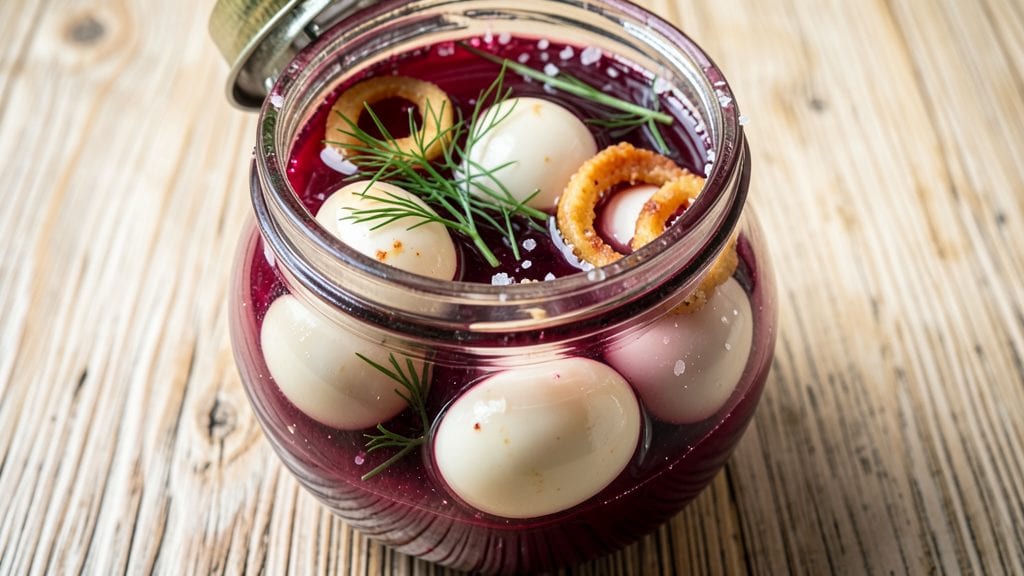
This pickled eggs with beet juice recipe transforms ordinary hard-boiled eggs into a vibrant pink, tangy-sweet crunch that’s ready in just 15 minutes of active prep.
The beet juice infusion adds a striking color and subtle earthy sweetness that balances the sharpness of vinegar, creating a flavor profile that’s both unexpected and addictive.
I first discovered this technique while exploring Eastern European preservation methods, where beets were traditionally used to add natural color and depth to preserved foods.
The beauty of this recipe lies in its simplicity—no special equipment or advanced skills required. You’ll need just a few pantry staples: hard-boiled eggs, beet juice (fresh or bottled), vinegar, sugar, and a handful of spices for depth.
The 15-minute prep includes boiling the eggs, preparing the beet brine, and packing everything into jars, while the real magic happens during the 24-hour marinating period in the refrigerator.
What you’ll end up with is a jar of crisp-tender eggs with a vibrant pink hue that looks as stunning as it tastes. The beet juice imparts a mild sweetness and earthy undertone, while the vinegar and spices create a bright, tangy contrast.
These pickled eggs make an impressive appetizer for gatherings, a unique addition to charcuterie boards, or a flavorful snack for busy weekdays.
Best of all, the flavors deepen over time, making them perfect for meal prep. Store them in the refrigerator for up to two weeks, and the taste only improves as the flavors meld together.
Whether you’re a seasoned foodie or a beginner in the kitchen, this recipe delivers restaurant-quality results with minimal effort.
Ingredients for pickled eggs with beet juice
Simple ingredients transform into a stunning pink crunch with vibrant earthy-sweet depth.
| Ingredient | Amount | Notes |
|---|---|---|
| Large Hard-Boiled Eggs 🥚 | 8 whole | Room temperature, peeled |
| Beet Juice 🍠 | 1 ½ cups | Freshly pressed or bottled |
| White Vinegar 💧 | ½ cup | Distilled preferred for clarity |
| Granulated Sugar 🍚 | ¼ cup | Light brown preferred for depth |
| Diamond Crystal Kosher Salt 🧂 | 1 tbsp | For proper brine balance |
| Fresh Dill Sprigs 🌿 | 4 whole | Stems removed, loosely packed |
| Black Peppercorns 🌶️ | 1 tsp | Crushed lightly for aroma |
| Garlic Cloves 🧄 | 3 cloves | Smashed for infusion |
| Mustard Seeds 🌽 | ½ tsp | Yellow preferred for color |
| Allspice Berries 🌶️ | ¼ tsp | Crushed for warmth |
| Bay Leaves 🍃 | 2 whole | Fresh preferred for aroma |
| Water 💧 | 1 cup | Filtered for clarity |
The beet juice is the star here—freshly pressed yields the most vibrant color, though bottled works fine for convenience. Trader Joe's carries excellent bottled beet juice, and many grocery stores now stock it in the produce section. For fresh juice, blend peeled, cooked beets with water and strain through a fine-mesh sieve. The sugar and vinegar ratio is critical: too much sugar dulls the tang, while too much vinegar overpowers the delicate beet sweetness. Light brown sugar adds subtle molasses notes that complement the earthiness. Always use Diamond Crystal kosher salt—it dissolves more evenly than table salt, ensuring proper brine balance.
No fresh dill? Dried dill at one-third the amount works, but fresh is ideal for bright flavor. Substitute apple cider vinegar for white vinegar if preferred, though it may slightly alter the color. Mustard seeds can be omitted if unavailable, but they add a pleasant crunch and subtle heat. For a more complex flavor profile, add a pinch of ground coriander alongside the allspice. The garlic cloves should be lightly smashed—not minced—to prevent bitterness. If using pre-peeled eggs, rinse them thoroughly to remove any sulfuric residue that could cloud the brine.
Store the pickled eggs in the refrigerator for up to two weeks, though they develop deeper flavor after 48 hours. The brine will keep indefinitely if refrigerated, though the eggs' texture softens after three weeks. For meal prep, divide into small jars—4-6 eggs per jar—to maintain crispness. The brine can be reused for up to two additional batches if strained and refrigerated between uses. When ready to serve, drain and pat eggs dry to enhance their vibrant pink hue.
Why You'll Love This Recipe
- No Beet Waste Ever: I always have leftover beet juice from roasting—this uses it up without a second thought. The deep, earthy sweetness from the beets turns ordinary hard-boiled eggs into something special, and honestly? It’s the best way to repurpose that vibrant purple liquid before it goes bad.
- Sweet-Tart Magic: That balance of sugar and vinegar with the beets? It’s ridiculously good. The eggs soak up just enough tang to cut through the richness, while the beet juice gives them this subtle, jammy depth that makes them taste like a gourmet bite—not just a boiled egg.
- Picnic Party Hero: Between us, these are my go-to for potlucks, lunches, or even just snacking straight from the jar. No reheating needed, no fuss—just grab and go. My kids actually ask for them in their lunches, and that’s saying something when they’d rather eat crackers.
- Pantry Staple Power: Five ingredients, zero specialty items. You’re probably already stocked for this—vinegar, sugar, salt, and eggs are basics, and if you’ve ever roasted beets, you’ve got the juice. It keeps for weeks in the fridge, so I make a big batch and forget about it until I need a quick protein boost.
Step-by-step instructions for vibrant beet-pickled eggs
A perfectly balanced brine delivers tender eggs with striking pink hues and complex flavor.
Prepare the Brine Components
In a medium saucepan, combine the 1 cup water, 1.5 cups beet juice, 0.5 cup white vinegar, 0.25 cup granulated sugar, and 1 tablespoon diamond crystal kosher salt. Bring to a gentle simmer over medium heat, stirring until the sugar and salt fully dissolve. This ensures even flavor distribution throughout the brine.
While heating, lightly crush the 1 teaspoon black peppercorns and 0.5 teaspoon mustard seeds with a mortar and pestle or rolling pin. Slice the 3 garlic cloves in half horizontally and gently smash them with the flat side of a knife blade. Remove the stems from the 4 fresh dill sprigs and crush the 0.25 teaspoon allspice berries lightly between your fingers. These aromatics will infuse the brine with layered complexity.
Simmer and Infuse the Brine
Once the brine reaches a simmer, reduce heat to low and add the crushed peppercorns, mustard seeds, smashed garlic, dill sprigs, allspice berries, and 2 whole bay leaves. Let the mixture steep for 5 minutes, allowing the flavors to meld. You'll notice the liquid becomes slightly cloudy and aromatic—this indicates proper infusion.
Remove the pan from heat and let the brine cool to room temperature for 15 minutes. This cooling step prevents thermal shock to the eggs when they're added later. The cooled brine should be slightly syrupy but still pourable—this consistency ensures proper preservation and vibrant color transfer.
Pack and Seal the Eggs
While the brine cools, arrange the 8 peeled hard-boiled eggs in a single layer in a clean, airtight quart-sized mason jar. I use a funnel to prevent breakage, gently tapping the jar to settle the eggs evenly. The eggs should fit snugly but not be forced—this ensures even pickling.
Carefully ladle the cooled brine over the eggs until completely submerged, leaving about ½ inch headspace at the top. The liquid should cover all surfaces of the eggs completely. If needed, use a small spoon to gently press down any floating herbs to ensure full submersion. This prevents mold growth and ensures even color development.
Refrigerate for Optimal Flavor Development
Seal the jar tightly with the lid and refrigerate for at least 12 hours before consuming. The eggs will develop their signature pink hue and tender texture within this time, with flavors becoming more pronounced after 24 hours. I recommend storing them in the refrigerator for up to 2 weeks for best results.
When ready to serve, remove one egg at a time and rinse briefly under cold water to remove excess brine. The eggs should have a vibrant pink tint from the beet juice and a delicate crunch when sliced. Serve chilled on crackers, in salads, or as a vibrant garnish for charcuterie boards—their striking color makes them a conversation piece.
Pro Tips For Making Pickled Eggs With Beet Juice
- Peel Eggs Cold: I learned this the hard way—peeling eggs straight out of boiling water is a nightmare. Run them under ice-cold water for 2-3 minutes first, then crack and peel. The shock stops the whites from turning to mush, and the shells slide off like they’re supposed to. (Yes, even if you’re impatient like me.)
- Use Fresh Beet Juice: Store-bought beet juice is fine, but fresh is where the flavor sings. Roast 1-2 beets at 400°F for 45 minutes, blend with water, then strain. The earthy depth lasts longer in the brine—no weird metallic aftertaste. Skip the bottled stuff if you want that restaurant-quality tang.
- Sterilize Jars Properly: I skipped this once, and mold grew in my fridge like a science experiment gone wrong. Run jars and lids through a dishwasher cycle (hot) or boil for 10 minutes before filling. The vinegar helps, but bacteria still hitches a ride if your containers aren’t clean. No shortcuts here.
- Balance Vinegar Ratio: Too much vinegar and your eggs taste sharp; too little and the brine goes flat. Aim for 1 part beet juice to 1 part vinegar, then adjust sugar to salt (1:1 ratio). Taste the liquid before adding eggs—it should be tart but not pucker-inducing. (Your future self will thank you.)
Troubleshooting perfect results
Moldy Brine Fix
If you notice fuzzy white mold on the eggs or brine after refrigeration, discard the entire batch immediately—mold can't be safely removed. To prevent this, always ensure eggs are fully submerged in the cooled brine before sealing.
I use a sterilized mason jar and clean tools to minimize contamination. If mold appears within 48 hours, check your storage temperature—it should stay at 40°F or below. 🧂
Bland Flavor Solution
If your pickled eggs taste flat, the brine likely didn't infuse properly. First, verify you used fresh beet juice—bottled juice works but may lack depth. Next, ensure the aromatics (garlic, dill, allspice) steeped for the full 5 minutes during simmering.
For extra punch, add ½ tsp smoked paprika to the brine during the cooling phase. I also recommend using apple cider vinegar instead of white vinegar for a more complex tang.
Eggs Too Soft
Overly soft eggs usually mean they weren't properly boiled before pickling. Start with 10-minute hard-boiled eggs (from cold water) and cool them in ice water immediately. If the texture is already compromised, try reheating the eggs in their brine at 160°F for 5 minutes—this can restore some firmness.
For future batches, use older eggs (1-2 weeks past their sell-by date) as they have thicker whites that hold up better during pickling. 🥚
Color Fading Issue
If your eggs lose their vibrant pink hue, the beet juice may have oxidized or been diluted. Always use freshly pressed beet juice for maximum color retention. For bottled juice, choose brands with minimal additives like Trader Joe's or Bolthouse Farms.
To revive faded eggs, soak them in a fresh beet juice mixture (equal parts beet juice and water) for 1-2 hours before serving. Store jars in a dark cabinet to prevent light exposure, which accelerates color loss.
Brine Too Weak
A weak brine (too watery or lacking tang) happens when vinegar or salt ratios are off. The ideal balance is 1:3 vinegar-to-water ratio with 1 tbsp salt per cup of liquid.
If your brine tastes flat, add 1 tbsp extra vinegar and ½ tsp extra salt, then reheat gently to dissolve. For future batches, taste the cooled brine before packing eggs—it should be pleasantly tart, not mild.
I keep a small jar of extra vinegar on hand specifically for brine adjustments. 💧
Eggs Floating Too High
When eggs float too high in the jar, they're not fully submerged and may develop uneven texture or color. This often happens when the brine cools too quickly or when eggs are packed too loosely.
To fix, gently press eggs down with a clean spoon or small weight (like a sterilized glass). For future batches, pack eggs slightly closer together in the jar to reduce air pockets.
If using a wide-mouth jar, consider adding a small piece of parchment paper to weigh them down naturally. 🌊
Nutrition facts
Frequently asked questions
Why do these pickled eggs turn such a vibrant pink?
The striking pink color comes from natural beet juice pigments called betalains, which bond with the egg proteins during the 24-hour marinating process. The vinegar and sugar help preserve this color while enhancing the beet's earthy sweetness. For maximum vibrancy, use freshly pressed beet juice or high-quality bottled brands like Trader Joe's.
Can I use store-bought pickled beet juice instead of fresh?
Yes! Bottled beet juice works perfectly for convenience, though fresh juice yields slightly deeper color. Look for brands with minimal additives—avoid those with preservatives or artificial colors. For best results, choose organic beet juice with no added sugar, as the recipe already balances sweetness with vinegar.
How long do these pickled eggs last, and can I extend their shelf life?
These eggs stay fresh for up to 2 weeks in the refrigerator when fully submerged in brine. For longer storage, transfer to an airtight container and refrigerate—some home cooks report keeping them for 3 weeks with no texture changes. The brine itself can be reused for 2 additional batches if strained and refrigerated between uses.
What's the best way to serve these colorful eggs?
These eggs shine as a garnish for charcuterie boards, a crunchy salad topping, or a bold appetizer with crackers and cheese. For a modern twist, slice them thinly and layer in avocado toast with a drizzle of crème fraîche. The vibrant pink makes them perfect for festive occasions too—imagine them at Easter brunches or summer picnics!
Can I make this recipe without vinegar?
While vinegar is traditional for preservation, you can substitute with lemon juice (use 1 cup instead of ½ cup vinegar) for a milder tang. However, vinegar's acidity helps set the pickling process and preserves the eggs longer. If using lemon juice, reduce marinating time to 12 hours maximum for best texture.