Side Dishes
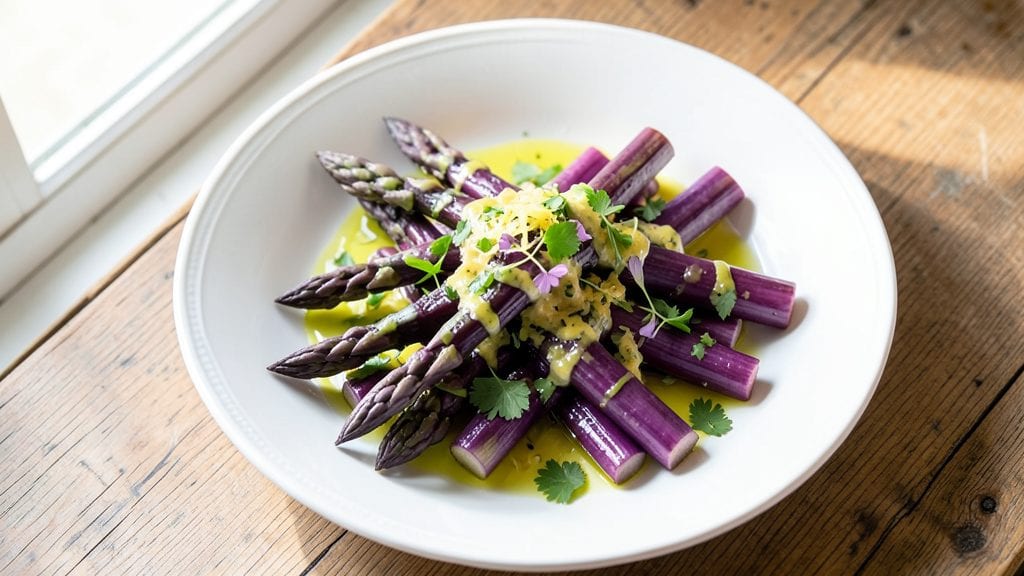
This purple asparagus recipe transforms a seasonal vegetable into a showstopping side dish that brings bold color and crisp texture to any table. I first discovered purple asparagus at a Boston farmers market—its deep violet hue and slightly sweeter flavor immediately set it apart from green varieties.
The key to highlighting its natural beauty lies in a quick roast with lemon and fresh herbs, which preserves its vibrant color while enhancing its earthy-sweet profile.
The method is simple yet precise: high-heat roasting for 3-4 minutes creates caramelized edges without overcooking the tender centers, while a bright lemon-herb dressing adds a zesty crunch. Unlike traditional asparagus preparations, this technique ensures the purple hue remains striking rather than fading to green.
The result is a dish that looks as impressive as it tastes—perfect for spring menus or as a vibrant contrast to rich main courses.
What makes this recipe stand out is how it balances texture and flavor—each spear delivers a satisfying crunch paired with a tender bite, all while maintaining that signature purple color.
The lemon-herb crunch adds a refreshing pop that cuts through heavier dishes, making it a versatile side for everything from grilled meats to seafood. Ready in just 15 minutes, it’s ideal for weeknight dinners or last-minute entertaining.
For those who love asparagus but want something more visually striking, this method elevates the vegetable into a centerpiece-worthy side. The secret? Roasting at high heat and finishing with fresh herbs ensures the color stays vibrant while the flavor shines.
Whether you’re serving it at a spring gathering or simply brightening up a home-cooked meal, this recipe delivers restaurant-quality results with minimal effort.
Ingredients for purple asparagus
This vibrant purple asparagus dish requires just twelve ingredients to create a restaurant-worthy side.
| Ingredient | Amount | Notes |
|---|---|---|
| Purple Asparagus Spears 🌱 | 1 lb | Thick stalks preferred, trimmed ends |
| Extra-Virgin Olive Oil 🫒 | 2 tbsp | High-quality, fruity variety |
| Fresh Lemon Zest 🍋 | 1 tbsp | From 1 large organic lemon |
| Fresh Lemon Juice 🍋 | 2 tbsp | Freshly squeezed, no pulp |
| Fresh Flat-Leaf Parsley 🌿 | ¼ cup | Finely chopped, stems removed |
| Fresh Tarragon 🌿 | 0.1 cup | Finely chopped, French preferred |
| Diamond Crystal Kosher Salt 🧂 | ½ tsp | Fine grain, not iodized |
| Freshly Ground Black Pepper 🌶️ | ¼ tsp | Coarse grind preferred |
| Toasted Pine Nuts 🥜 | ¼ cup | Lightly toasted, skin-on |
| Parmesan Cheese 🧀 | ¼ cup | Freshly grated, aged 24 months |
| Garlic Cloves 🧄 | 2 cloves | Minced, fresh preferred |
| Honey 🍯 | 1 tsp | Wildflower variety preferred |
The purple asparagus is the star, so prioritize quality. Boston-area farmers markets or specialty grocers like Whole Foods carry the best varieties—look for stalks with a deep violet hue and firm, crisp texture. Avoid asparagus with woody ends or dull coloring. The thickest stalks (1/4-inch diameter) roast best, holding their shape while developing caramelized edges. If using pre-trimmed asparagus, inspect for uniform thickness; thicker spears should be cut into 3-inch lengths to ensure even cooking. Fresh herbs like tarragon and parsley elevate the dish—Whole Foods or local herb farms often carry superior quality, but standard grocery store selections work if they're vibrant and free of wilting.
No tarragon? Fresh basil or chives add a similar brightness, though tarragon's anise-like note is ideal. Short on pine nuts? Toasted walnuts or slivered almonds provide a comparable crunch. The honey can be swapped for agave syrup, though wildflower honey adds subtle floral notes that complement the asparagus. For those avoiding dairy, nutritional yeast offers a cheesy alternative to Parmesan. The lemon should be organic when possible—conventional lemons often have a thicker, more bitter zest. If using bottled lemon juice, ReaLemon or Minute Maid Pure provide the freshest taste without added preservatives.
Store fresh asparagus upright in a glass of water, covered with a damp paper towel, for up to 5 days in the refrigerator. The roasted asparagus with dressing keeps for 3 days when refrigerated in an airtight container, though the texture softens slightly after the first day. For long-term storage, blanch the asparagus for 2 minutes, then freeze with the dressing in a sealed container for up to 3 months. The dressing alone can be refrigerated for 5 days—simply toss with fresh asparagus when ready to serve. To maintain the vibrant purple color, avoid overcooking and serve immediately after roasting.
Why You'll Love This Recipe
- Five-Ingredient Magic: Honestly, I swear by this recipe because it’s that simple—just asparagus, olive oil, lemon, and parsley. No chopping, no peeling, no fussing with extra sauces. The spears practically cook themselves while you zest the lemon and tear the herbs.
- Bright & Crispy: That lemon zest? It’s the secret weapon—tiny bursts of citrus cut through the earthy asparagus, while the olive oil keeps it tender-crisp. Serve it warm or at room temp, and the flavor just pops against the vibrant purple hue.
- Weeknight & Date Night: Between us, this is my go-to for when I’m too tired to overthink dinner. Toss it on the table with grilled chicken or crusty bread, and it’s effortlessly elegant. (Yes, even on a Tuesday night.)
- Leftovers? No Problem: Cook a big batch and store it in the fridge—it reheats beautifully for salads or wraps the next day. I’ll be real: the parsley stays bright, and the lemon keeps it from getting bland. Budget-friendly, too, since asparagus is cheaper than you’d think.
Step-by-step instructions for vibrant purple asparagus roast
This method transforms simple purple asparagus into a restaurant-worthy dish with perfect texture and bright, herby flavors.
Prepare the Asparagus for Optimal Texture
Trim the tough, woody ends from the 1 lb purple asparagus spears by bending each spear until you hear a slight snap. The break point indicates where to cut with a sharp chef's knife. This ensures you're working with tender, edible stalks only.
Pat the spears dry completely with paper towels to remove any surface moisture. Wet asparagus steams rather than roasts, resulting in a waterlogged texture. Arrange the spears on a rimmed baking sheet in a single layer, leaving about 1 inch between each spear for even air circulation.
Create the Lemon-Herb Marinade
In a small bowl, combine the 2 tbsp extra-virgin olive oil, 1 tbsp fresh lemon zest, 2 tbsp fresh lemon juice, 0.5 tsp diamond crystal kosher salt, and 0.25 tsp freshly ground black pepper. Whisk vigorously until the zest is fully incorporated and the mixture emulsifies slightly.
Add the 2 minced garlic cloves and stir to distribute. This bright, citrusy marinade not only enhances flavor but also helps tenderize the asparagus slightly during the roasting process. Pour the marinade evenly over the asparagus spears, making sure each stalk is fully coated.
Roast Until Tender-Crisp Perfection
Preheat your oven to 425°F. Place the baking sheet on the middle rack and roast the asparagus for 12-15 minutes until the spears are tender when pierced with a fork but still maintain a slight crispness. The edges should be slightly charred while the centers remain vibrant purple.
Rotate the baking sheet halfway through cooking to ensure even browning. The high heat caramelizes the natural sugars in the asparagus, creating those beautiful golden edges while keeping the interior tender. You'll know it's done when the spears easily slide off your fork but don't fall apart.
Assemble the Herb-Nut Crunch Topping
While the asparagus roasts, combine the 0.25 cup toasted pine nuts, 0.25 cup freshly grated parmesan cheese, 0.25 cup finely chopped fresh flat-leaf parsley, 0.1 cup finely chopped fresh tarragon, and 1 tsp honey in a small bowl. Mix gently to distribute the herbs and nuts evenly.
The honey acts as a binder here, helping the crunchy topping adhere to the asparagus while adding a subtle sweetness that balances the bright lemon flavors. This topping should be coarse rather than finely ground to maintain texture contrast with the tender asparagus.
Finish and Serve Immediately
Remove the roasted asparagus from the oven and immediately sprinkle the herb-nut mixture evenly over the top. The residual heat will lightly toast the pine nuts and melt the cheese slightly, creating a perfect textural contrast to the tender asparagus.
Transfer the asparagus to a serving platter and drizzle any remaining pan juices over the top. Serve immediately while the asparagus is still warm and the topping maintains its crisp texture. The vibrant purple color will make this dish visually stunning while delivering complex flavors of lemon, herbs, and nutty crunch in every bite.
Pro Tips For Making Purple Asparagus
- Trim the Tough Ends: Purple asparagus has tougher ends than green—cut about an inch below the natural break where the stalk starts to look less fibrous. I used to eyeball it and ended up with chewy bites; now I just snap them first, then trim the snapped end for perfect texture every time.
- Roast, Don’t Boil: Skip the steaming or boiling—roasting brings out the natural sweetness and keeps the spears crisp. Toss them in olive oil, salt, and a pinch of pepper, then roast at 425°F (220°C) for 12–15 minutes until tender but still bright green-purple. Boiling turns them soggy, and no one wants that.
- Zest First, Juice Last: Add the lemon zest to the oil while the asparagus roasts—it infuses faster and brightens the color. Save the juice for the final toss; too early, and the acid can make the spears limp. I learned this after a batch turned out bland and watery.
- Pulse the Parsley: Roughly chop the parsley (or pulse it in a mini food processor) instead of leaving it whole—it releases more flavor and distributes evenly. A sharp knife works, but I’m lazy and just use the pulse function for speed. The texture’s still fresh, just more integrated.
Common mistakes when making this dish
Overcooking the Asparagus
I learned this the hard way—purple asparagus turns mushy faster than green varieties when overcooked. The 12-15 minute roast window is critical; any longer and you'll lose that perfect tender-crisp texture.
I now set a timer and check at 12 minutes—if they're not fork-tender yet, I give them another minute max. The vibrant purple color fades quickly too, turning dull green. 🌱
Skipping the Drying Step
Wet asparagus spears steam instead of roast, resulting in soggy, flavorless bites. Always pat them completely dry with paper towels before roasting. I keep a stack of clean towels nearby when prepping asparagus—this small step makes all the difference in texture.
The dry spears also caramelize better, giving those beautiful golden edges we all crave.
Using Low-Quality Olive Oil
Cheap olive oil burns easily and lacks the fruity depth needed to complement purple asparagus. I always use extra-virgin olive oil from trusted brands like California Olive Ranch or Bertolli—their higher smoke points prevent burning and add subtle flavor complexity.
The lemon-herb marinade relies on this quality oil to carry the citrus notes perfectly.
Uneven Roasting
Crowding the baking sheet causes uneven cooking and steaming. Leave at least 1 inch between spears for proper air circulation. I arrange them in a single layer with ends pointing toward the center of the pan.
Rotate the sheet halfway through cooking to ensure all sides get equal heat exposure. This prevents some spears from overcooking while others stay underdone.
Wrong Temperature Settings
Roasting at 375°F instead of 425°F results in pale, bland asparagus. The higher heat is essential for developing those beautiful caramelized edges while keeping centers tender. I now preheat my oven for at least 15 minutes before roasting to ensure accurate temperature.
A thermometer probe in the oven helps verify the true heat level.
Adding Toppings Too Early
The herb-nut topping needs residual heat to lightly toast the pine nuts and melt the cheese. Adding it too soon makes the topping soggy. I wait until the asparagus comes out of the oven before sprinkling—this creates that perfect textural contrast between tender spears and crispy topping.
The timing is everything for that restaurant-quality finish. 💡
Nutrition facts
Frequently asked questions
Why does purple asparagus turn green when cooked?
Purple asparagus contains anthocyanins—natural pigments that fade when exposed to heat and acid. To preserve its vibrant color, avoid overcooking (stick to 12-15 minutes at 425°F) and use minimal lemon juice in the marinade. The purple hue will gradually return as it cools.
Can I substitute green asparagus in this recipe?
Yes, but you'll miss the visual drama and slightly sweeter flavor. Green asparagus works fine, though it may take 2-3 minutes longer to cook. For best results, use thicker spears and roast until tender-crisp. The lemon-herb topping still pairs beautifully with green varieties.
How do I make this dish nut-free?
Swap the pine nuts for toasted pumpkin seeds or crumbled feta cheese for a nut-free crunch. The honey-Parmesan mixture can stay as-is, or use maple syrup instead of honey for a vegan option. The texture contrast remains while keeping all flavors intact.
What's the best way to store leftovers?
Store in an airtight container for up to 3 days, but the texture softens after day one. For longer storage, blanch the asparagus for 2 minutes before freezing with the dressing. Reheat gently in a skillet with 1 tbsp olive oil for 3-4 minutes to restore crispness.
Can I grill purple asparagus instead of roasting?
Grilling works beautifully for a smoky twist. Thread spears onto skewers, brush with olive oil, and grill over medium-high heat for 4-5 minutes per side. Finish with the lemon-herb topping while still hot. The grill marks add visual appeal while keeping the vibrant purple color.