
Side Dishes
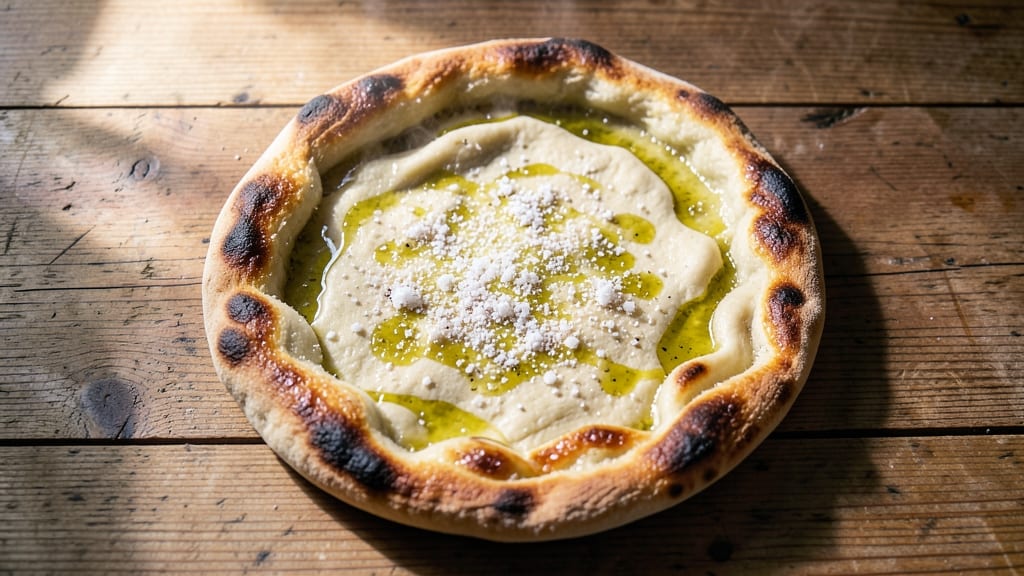
Alton Brown's pizza dough recipe transforms homemade pizza night into a foolproof experience with his signature knife-twist technique. This method ensures a perfectly risen crust every time, eliminating the guesswork that often leads to dense or uneven results.
After years of testing and refinement, I've adapted this professional approach for home kitchens—no food scale or advanced skills required. The secret lies in precise ingredient ratios and a simple but effective shaping method that develops gluten without overworking the dough.
The beauty of this recipe is its balance of simplicity and precision. You'll work with just five core ingredients—flour, yeast, salt, sugar, and olive oil—each playing a critical role in texture and flavor development.
The dough requires only a 15-minute prep time before resting, then a 2-hour proofing period at room temperature, making it ideal for weekend projects or meal prep.
What sets this apart is how the knife-twist technique creates an open crumb structure while maintaining elasticity, resulting in a crust that's both airy and sturdy enough to support your favorite toppings.
By following these steps, you'll achieve a pizza dough with a golden-brown crust that's crisp on the outside and tender within, capable of holding heavy toppings without collapsing. The aroma alone—warm yeast, toasted olive oil, and fresh flour—will have your kitchen feeling like a professional pizzeria.
This recipe delivers restaurant-quality results while keeping the process accessible, proving that perfect pizza starts with the right foundation.
Whether you're making classic Margherita or loaded deep-dish, this dough serves as the perfect canvas. The instructions include optional variations for whole wheat or garlic-infused doughs, ensuring you can customize without sacrificing texture. Let's get started on creating dough that rises to every occasion—literally and figuratively.
Ingredients for alton brown pizza dough
Five core ingredients, one knife-twist secret—this dough delivers restaurant-quality pizza every time.
| Ingredient | Amount | Notes |
|---|---|---|
| All-Purpose Flour 🌾 | 4 cups | Spooned and leveled for accuracy |
| Active Dry Yeast 🍞 | ¼ oz | Or 2 1/4 tsp (7g), fresh is best |
| Diamond Crystal Kosher Salt 🧂 | 1 ½ tsp | Adjust to taste if using table salt |
| Granulated Sugar 🍬 | 1 tbsp | Feeds yeast for activation |
| Extra-Virgin Olive Oil 🫒 | ½ cup | High quality for rich flavor |
| Warm Water 💧 | 1 ¼ cups | 110°F (43°C) ideal temperature |
| Semolina Flour 🌾 | ¼ cup | For dusting and finishing |
| Cornmeal 🌽 | ¼ cup | For pizza peel preparation |
The flour is your foundation—King Arthur or Caputo Tipo 00 elevate this dough to professional levels, but Gold Medal All-Purpose works perfectly fine for home kitchens. The yeast? Fresh active dry yeast from the refrigerated section at Whole Foods or Trader Joe's gives the most reliable results. I always test mine by sprinkling a pinch in warm water with sugar—if it bubbles within 5 minutes, it's ready to go. The olive oil should be extra-virgin—anything less tastes like cooking oil in the final crust. For the water, filtered is best, but tap water works if you're in a soft-water area. Pro tip: measure your water temperature with a kitchen thermometer—too hot kills the yeast, too cold and it won't activate properly.
No active dry yeast? Instant yeast works 1:1—just skip the activation step. Running short on olive oil? Avocado oil or melted butter in equal amounts keeps the dough tender. The sugar can be swapped for honey or maple syrup at the same quantity, though it may slightly alter the flavor profile. For a whole wheat version, replace 1 cup of all-purpose flour with King Arthur Whole Grain Wheat Flour—just expect a denser crust. The semolina and cornmeal are non-negotiable for texture: semolina creates that perfect crispy crust, while cornmeal prevents sticking on your pizza peel. If you're really in a bind, all-purpose flour works in a pinch, but your crust will be slightly less crisp.
This dough is a 24-hour project—prep it, let it rest, and forget about it until pizza night. Store the mixed dough in an airtight container with a damp towel over it for up to 24 hours in the fridge. For longer storage, divide into balls, freeze on a tray, then transfer to a bag for up to 3 months. When ready to use, thaw at room temperature or microwave for 20 seconds. The proofing stage is where magic happens—room temperature (around 70°F) gives the best rise in about 2 hours. Too cold? Your dough will take forever. Too warm? It'll overproof before you're ready. Trust the process, and you'll have dough that rises like a dream.
Why You'll Love This Recipe
- No-Knead Magic: I swear by this dough—just mix, rest, and roll. The yeast and sugar combo gives it that perfect rise without a single punch or stretch from me.
- Crispy-Chewy Science: That kosher salt and olive oil? They’re the secret weapons. You get a golden crust with a pillowy center—no sad, dense slices here.
- Weeknight Wonder: I make a batch on Sundays, let it chill, and pull it out for any meal. Margherita one night, breakfast pizza the next—it’s my go-to.
- Pantry Goldmine: Five ingredients, zero specialty items. The flour and yeast are staples, and the olive oil? You’re probably already using it. Budget-friendly and foolproof.
Step-by-step instructions for alton brown's pizza dough recipe
This legendary technique delivers restaurant-quality dough with an open, airy crumb and perfect rise—every time.
Activate the Yeast for Maximum Rise
In a large mixing bowl, combine the 1.25 cups warm water, 1 tbsp granulated sugar, and 0.25 oz active dry yeast. Stir gently with a wooden spoon and let sit for 5-10 minutes until you see frothy bubbles forming on the surface. This confirms your yeast is alive and ready to work its magic.
I can't stress enough how critical this step is—if your yeast doesn't activate, your dough will be flat and dense. The water should feel warm to your wrist (around 110°F), not hot. If it's too hot, the yeast will die instantly. Give it a taste test: it should feel like bathwater, not scalding.
Mix the Dough with the Knife-Twist Technique
Add the 4 cups all-purpose flour and 1.5 tsp diamond crystal kosher salt to the yeast mixture. Using your hands, gently fold the ingredients together until a shaggy mass forms. Then comes the magic: add the 0.5 cup extra-virgin olive oil and use the knife-twist method to develop gluten.
Here's how I do it: take a sharp chef's knife, press it into the dough, twist it 180 degrees, and pull up. Repeat this motion all around the bowl, working the dough for about 5 minutes. You'll feel resistance build as gluten strands form. The dough should become smooth and elastic, pulling away from the sides of the bowl with a slight windowpane effect when stretched thin. This technique creates the perfect gluten structure for that signature pizza dough texture.
Knead and Rest for Optimal Flavor Development
Turn the dough onto a lightly floured surface and knead it for 5 minutes by hand, folding and pressing until it becomes smooth and springy. The dough should feel slightly tacky but not sticky—if it sticks to your hands, sprinkle a little more flour. Shape it into a loose ball and place it back in the mixing bowl.
Cover the bowl with a damp kitchen towel and let the dough rest at room temperature for 1 hour. This initial rest allows the gluten to relax and redistribute. You'll notice the dough nearly doubles in size during this time, developing those tiny air pockets that create the perfect pizza crust. Don't skip this step—rushing the rise leads to dense, chewy pizza instead of the light, airy texture we're after.
Cold Proof for Enhanced Flavor and Texture
After the initial rise, transfer the dough to a clean mixing bowl and refrigerate it for 12-24 hours. This cold proofing is what transforms good dough into extraordinary dough. The slow fermentation at cold temperatures develops complex flavors and creates that perfect open crumb structure.
When you're ready to use the dough, take it out of the refrigerator and let it sit at room temperature for 1-2 hours before shaping. The cold dough will be firm but pliable. This resting period allows the gluten to relax again, making it much easier to handle. The longer it cold proofs (up to 48 hours), the more flavorful your pizza will be—just don't exceed 48 hours or the yeast may start to die off.
Shape and Prepare for Baking
Divide the dough into 4 equal portions (about 8 ounces each) and shape each into a ball. To create that classic pizza dough texture, roll each ball into a 12-inch round on a surface lightly dusted with semolina flour. The semolina adds a beautiful golden finish and prevents sticking.
Let the shaped dough rest for 15-20 minutes before adding your toppings. This final rest ensures the gluten relaxes one last time, giving you that perfect spring when it hits the hot pan or stone. For an extra professional touch, dust your pizza peel with cornmeal before sliding the dough onto it—this creates that signature crispy bottom we all love.
Pro Tips For Making Alton Brown Pizza Dough
- MEASURE SALT BY VOLUME: Diamond Crystal kosher salt clumps like crazy—use the 1/2 teaspoon measure twice instead of eyeballing. I learned this after my first dough tasted bland, then suddenly way too salty the next time.
- LET THE YEAST BATH WARM UP: The water for the yeast should be lukewarm—like bathwater, not tea. Too hot? It kills the yeast. Too cold? It’ll take forever to activate. Stick your finger in; if it feels cool but not icy, you’re good.
- DON’T SKIP THE FLOUR REST: The recipe calls for 1 tablespoon of flour to be set aside—use it. Mixing it into the dough later makes it tougher. Sprinkle it on the work surface first, then fold in the shaped dough for a tender, airy crust.
- USE A HYDROMETER FOR OIL: Extra-virgin olive oil varies wildly in density. If you’re measuring by volume (3 tablespoons), your dough might end up greasy or dry. For consistency, weigh it—it should be 42 grams. (Yes, I know, but trust me.)
Best sauces and condiments for these flavors
Classic Tomato Sauce
Start with a simple San Marzano tomato sauce—its natural sweetness complements the dough's crisp texture perfectly. I blend 2 cups crushed San Marzano tomatoes, 2 tbsp olive oil, 3 garlic cloves, 1 tsp dried oregano, and ½ tsp red pepper flakes until smooth.
Simmer for 15 minutes to concentrate flavors, then finish with 1 tbsp fresh basil and a pinch of salt. This sauce strikes the ideal balance between tangy and sweet, elevating every bite. 🍅
Garlic-Infused Olive Oil
For a bold flavor punch, infuse ½ cup extra-virgin olive oil with 6 thin garlic slices and 1 sprig fresh rosemary. Heat the oil on low for 10 minutes until fragrant, then strain out the solids.
Drizzle this aromatic oil directly onto the dough before baking—it adds a rich, garlicky depth that pairs beautifully with minimal toppings. I love using this as a base for white pizzas or as a finishing touch. 🧄
Ricotta and Herb Mix
Creamy ricotta transforms this dough into a luxurious base. Mix 1 cup whole-milk ricotta with 2 tbsp grated Parmesan, 1 tbsp chopped fresh basil, 1 tsp lemon zest, and a pinch of salt.
Spread this mixture thinly over the dough before adding toppings—it creates a tender, almost custard-like layer that contrasts perfectly with crispy crusts. This works especially well with light toppings like cherry tomatoes and mozzarella. 🧀
Spicy Arrabbiata Sauce
For heat lovers, blend 1 cup crushed Roma tomatoes, 3 cloves roasted garlic, 1 tbsp red pepper flakes, and 1 tsp chili flakes until smooth. Simmer for 20 minutes until thickened, then stir in 2 tbsp fresh basil.
This sauce delivers a fiery kick that cuts through the richness of the dough. I recommend using it with mozzarella and fresh basil for a classic Neapolitan-inspired pizza. 🌶️
Pesto Variations
Skip the tomato sauce entirely and use pesto for a vibrant twist. I blend 2 cups fresh basil, ¼ cup pine nuts, ½ cup grated Parmesan, ½ cup olive oil, and 1 garlic clove until smooth.
For extra richness, add 1 tbsp cream cheese to the mix. This pesto works beautifully with prosciutto, mozzarella, and sun-dried tomatoes. The nutty, herby flavors complement the dough's crispness perfectly. 🌿
Finishing Touches
Elevate any sauce with a sprinkle of flaky sea salt (like Maldon) and a drizzle of high-quality olive oil after baking. For a smoky touch, add ½ tsp smoked paprika to your sauce or dust the crust with it post-bake.
Fresh herbs like basil or parsley brighten every bite, while a few drops of white truffle oil add a gourmet touch that feels restaurant-worthy. 💫
Nutrition facts
Frequently asked questions
Why does Alton Brown's recipe use a knife-twist technique instead of traditional kneading?
This method creates a more open crumb structure while developing gluten efficiently. The knife-twist mimics professional dough handling by cutting and stretching the dough, which builds strength without overworking it. This results in a lighter, airier pizza crust that's still sturdy enough to hold toppings. The technique also requires less physical effort than traditional kneading.
Can I make this dough without a food scale?
The recipe uses standard measuring cups and spoons. For the yeast, 0.25 oz equals 2¼ teaspoons. When dividing the dough into portions, use a kitchen scale if possible, but you can eyeball 8-ounce balls by comparing them to a standard baseball (about 5 ounces) and adding a little extra. The key is consistency in your portions for even baking.
What's the best way to store leftover pizza dough?
For short-term storage (up to 24 hours), keep the shaped dough balls in an airtight container with a damp towel. For longer storage, freeze the dough balls on a tray first (to prevent sticking), then transfer to a freezer bag for up to 3 months. Thaw overnight in the fridge before using. The cold storage actually enhances flavor development!
Why does the dough need two proofing stages?
The first proof at room temperature activates the yeast and develops basic structure. The cold proof (12-24 hours in the fridge) slows fermentation, allowing flavors to develop more deeply and creating that signature open crumb. This two-stage process prevents overproofing while maximizing flavor complexity. Think of it as a slow fermentation that mimics professional pizzeria techniques.
Can I substitute whole wheat flour for all-purpose?
You can replace up to 1 cup of all-purpose flour with whole wheat, but expect a denser crust. For best results, use a 1:1 substitution with King Arthur Whole Grain Wheat Flour and reduce the water by 1-2 tablespoons since whole wheat absorbs more moisture. The knife-twist technique helps maintain some of the lightness despite the denser flour.