
Side Dishes
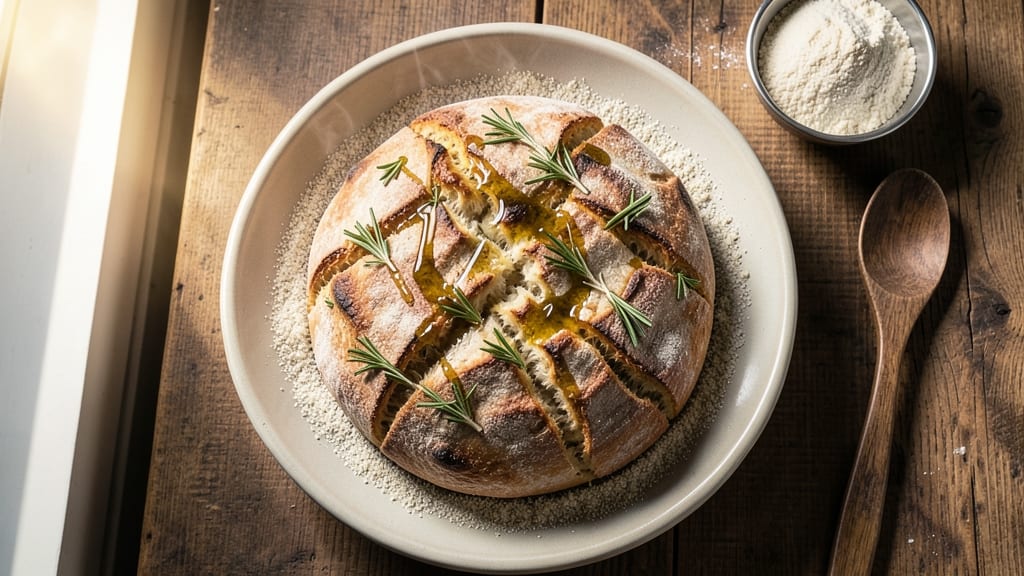
This authentic schiacciata bread recipe brings the rustic charm of Tuscany to your kitchen with its signature olive oil-drizzled crust and airy interior. I've perfected this traditional flatbread after years of testing, ensuring every bite delivers that perfect balance of crispy exterior and tender crumb.
The secret lies in a simple dough of flour, water, yeast, and olive oil—no fancy ingredients, just pure, authentic flavor.
The beauty of schiacciata lies in its simplicity: just five ingredients transform into a bread so versatile it can be served plain with olive oil or studded with rosemary for extra aroma.
Unlike other flatbreads, schiacciata relies on a long fermentation (up to 24 hours) to develop its signature texture—think of it as a cross between focaccia and pizza dough, but with a rustic soul. The result? A bread so good, it becomes the star of any meal.
What makes this recipe truly special is the olive oil-drizzled perfection—that golden, shimmering crust that cracks slightly as it bakes, revealing pockets of airy dough beneath. Whether you're serving it alongside a hearty stew or using it to soak up marinara, this bread delivers restaurant-quality results without the fuss.
The key? Patience during fermentation and a hot oven for that signature crisp.
For those seeking authenticity, I recommend using '00' flour and dusting the dough with semolina before baking—traditional touches that elevate this bread from good to extraordinary. Ready to bake like a Tuscan? Let's get started with this foolproof method that's been passed down through generations.
Ingredients for authentic schiacciata bread
Five essential ingredients transform into Tuscan rustic perfection—no shortcuts, just authentic schiacciata magic.
| Ingredient | Amount | Notes |
|---|---|---|
| Type '00' Flour 🌾 | 4 cups | High-protein for authentic texture |
| Active Dry Yeast 🍞 | ¼ tsp | Freshly activated in warm water |
| Extra-Virgin Olive Oil 🫒 | ½ cup | Fruity, Italian variety preferred |
| Granulated Sugar 🍚 | 1 tbsp | Enhances yeast activation |
| Diamond Crystal Kosher Salt 🧂 | 1 ½ tsp | Fine grain for even distribution |
| Semolina Flour 🌾 | 2 tbsp | For dusting and golden crust |
| Fresh Rosemary 🌿 | ¼ cup | Finely chopped, optional aroma |
| Warm Water 💧 | 1 ½ cups | 105°F for optimal yeast activation |
| Coarse Sea Salt 🧂 | 1 tsp | For final crust sprinkle |
The foundation starts with '00' flour—its high protein content gives schiacciata its signature airy crumb. King Arthur or Caputo are my go-tos for authentic results, but any high-gluten flour works in a pinch. The yeast should be freshly activated in warm water with sugar; if it doesn't foam within 5 minutes, discard and restart. Extra-virgin olive oil is non-negotiable here—look for Italian varieties like Bertolli or Filippo Berio, which provide that signature fruity depth. For rosemary, fresh is best but dried works at one-third the amount if you're short on time. The key to success lies in these quality staples—don't compromise on them.
No '00' flour? Bread flour plus 1 tbsp vital wheat gluten gets you close to the same protein structure. Running low on extra-virgin olive oil? Light olive oil works but lacks the fruity complexity—use it only if you're not serving immediately. Substituting rosemary? Thyme or oregano both work beautifully, though they'll change the aromatic profile slightly. For the semolina, fine cornmeal is a decent substitute if you can't find it, though it won't give that same golden sheen. The coarse sea salt for finishing should be flaky or Maldon-style—it melts dramatically during baking, creating those signature salt crystals on the crust.
This dough ferments best at room temperature for 12-24 hours—longer fermentation yields more complex flavors. Store the dough in an oiled bowl covered with a damp towel in a warm spot (75-80°F is ideal). The semolina should be kept in an airtight container away from light to prevent rancidity. Once baked, schiacciata stays fresh for 2-3 days at room temperature, though it's best enjoyed within the first 24 hours. For longer storage, wrap tightly in parchment paper and freeze for up to 3 months—thaw at room temperature before serving.
Why You'll Love This Recipe
- I’ll be real: this bread requires zero effort from me. Just mix the ‘00’ flour, yeast, and olive oil—no punchy kneading, no stress—then let the dough rise while I sip coffee. That’s it.
- No-Knead Magic: I’ll be real: this bread requires zero effort from me. Just mix the ‘00’ flour, yeast, and olive oil—no punchy kneading, no stress—then let the dough rise while I sip coffee. That’s it.
- Olive Oil Luxury: The moment it bakes, the crust glows golden while the crumb stays soft—all thanks to that rich extra-virgin olive oil. It tastes like a slice of Tuscany without the plane ticket.
- Weeknight Workhorse: This bread is my secret weapon for sandwiches, toast, or even a quick charcuterie board. Honestly, I’ve used leftover slices for croutons and garlic bread—it’s that versatile.
Step-by-step instructions for authentic schiacciata bread
Here's the method that delivers rustic, olive oil-drenched schiacciata with a crisp crust and tender crumb every time.
Activate the Yeast for Maximum Rise
In a small bowl, combine the 1.5 cups warm water (tested at 105°F) with the 1 tablespoon granulated sugar and 0.25 teaspoon active dry yeast. Let it sit for 5-10 minutes until the mixture becomes frothy and bubbles vigorously. This activation ensures your dough will develop proper gluten structure and rise beautifully.
I like to test the water temperature by placing a finger in it—it should feel pleasantly warm, like a warm bath. If it's too hot, you'll kill the yeast; if too cool, it won't activate properly. Once you see active bubbling, your yeast is ready to transform the flour into elastic dough.
Develop the Dough with Olive Oil and Rosemary
In the bowl of a stand mixer fitted with the dough hook attachment, combine the 4 cups type '00' flour with the 1.5 teaspoons diamond crystal kosher salt and the 0.25 cup finely chopped fresh rosemary. Mix on low speed just until combined, then add the yeast mixture and 0.5 cup extra-virgin olive oil.
Knead on medium speed for 8-10 minutes until the dough becomes smooth and elastic, pulling away from the sides of the bowl. The olive oil creates that signature tender crumb while the rosemary infuses subtle herbal notes. You'll know it's ready when you poke the dough and it springs back slowly rather than immediately.
First Rise for Optimal Flavor Development
Transfer the dough to a lightly oiled bowl, cover with plastic wrap, and let it rise at room temperature for 1-2 hours or until it has nearly doubled in size. The dough should feel light and airy when pressed gently with a finger—it should leave a slight indentation that doesn't immediately spring back.
This first rise is crucial for developing flavor and texture. I like to place the bowl in a slightly warm spot in my kitchen, away from drafts. The dough should rise slowly and evenly, developing a beautiful network of air bubbles that will translate to a light, open crumb in your final bread.
Shape and Second Rise for Rustic Texture
Punch down the risen dough and turn it out onto a lightly floured surface. Gently shape it into a rough oval about 1.5 inches thick, using your hands to create an irregular surface with dimples. This rustic shaping creates the characteristic schiacciata texture while allowing for even baking.
Place the shaped dough on a parchment-lined baking sheet, cover loosely with plastic wrap, and let it rise for another 30-45 minutes until it has expanded slightly. The dough should feel springy when pressed, but not overly tight. This second rise gives the bread its signature airy quality while maintaining that rustic, hand-shaped appearance.
Bake for Crisp Crust and Tender Crumb
Preheat your oven to 425°F with a baking stone or inverted baking sheet inside for 30 minutes. This creates steam that helps develop the bread's signature crisp crust. Brush the risen dough generously with additional olive oil, then sprinkle evenly with the 2 tablespoons semolina flour and 1 teaspoon coarse sea salt.
Bake for 20-25 minutes until the bread is deep golden brown and sounds hollow when tapped on the bottom. The interior should register 190-200°F on an instant-read thermometer. This high heat creates that perfect contrast between the crisp exterior and tender interior that defines authentic schiacciata.
Cool and Serve for Maximum Enjoyment
Transfer the bread to a wire rack and let it cool for at least 15 minutes before slicing. This resting period allows the internal steam to escape, preventing a gummy crumb. The bread will continue to develop flavor as it cools, with the rosemary aroma becoming more pronounced and the crust maintaining its crisp texture.
Serve schiacciata warm or at room temperature, sliced thickly to showcase its beautiful interior texture. The combination of crisp crust, tender crumb, and aromatic rosemary makes this bread perfect for breakfast with olive oil and jam, or as a rustic accompaniment to any meal. Each slice should reveal that perfect balance of textures and flavors that makes schiacciata so special.
Pro Tips For Making Authentic Schiacciata Bread
- Use Warm Olive Oil: Schiacciata’s signature flavor comes from that first brush of olive oil—don’t use cold. Heat about ¼ cup just until it shimmers (not smoking), then let it cool slightly before brushing. The warmth helps the crust crisp faster and seals in moisture without making the dough greasy. I learned this the hard way after a batch turned out soggy because I skipped it.
- Skip the Over-Kneading: Type ’00’ flour is delicate—overworking it turns schiacciata into dense, chewy bread. Mix until just combined, then let the dough rest while you shape it. A few gentle stretches and folds are enough; the yeast does the rest. I used to knead like I was punishing the dough, and it always backfired.
- Proof at Room Temp: Cold proofing slows things down, but schiacciata needs speed. Aim for a warm kitchen (75–80°F) and proof the dough for 1.5–2 hours until it’s puffed but still jiggly. If your kitchen’s chilly, pop the dough near the oven (turned off) for 10 minutes to wake up the yeast. I’ve wasted dough waiting too long in a drafty space—don’t let that be you.
- Salt the Dough Twice: Sprinkle half the kosher salt into the flour mix, then add the rest after the first rise. This balances flavor without overpowering the crust. The second sprinkle (on the shaped dough) also helps develop that crispy, salty exterior. Sounds weird, but it works—my bread finally tasted like the one from my nonna’s kitchen.
Essential equipment for this dish
Stand Mixer Essentials
Your stand mixer is the workhorse of schiacciata-making, and I recommend a KitchenAid Artisan Series for its power and durability. The dough hook attachment is non-negotiable—it develops gluten perfectly without overworking the dough.
For smaller batches, a Cuisinart Smart Multiprocessor works well, though you'll need to knead by hand for the final few minutes to ensure proper texture. 💪
Baking Stone Must-Have
Invest in a 12x16-inch baking stone—I use the Lodge Cast Iron Baking Stone—to replicate the wood-fired ovens of Tuscany. Place it on the middle rack and preheat for 30 minutes before baking.
The stone's even heat distribution creates that signature crisp crust while keeping the interior tender. For smaller ovens, a 10x14-inch stone works, but expect slightly longer bake times.
Semolina for Golden Crust
Semolina flour is your secret weapon for that golden, shimmering crust. I keep a 1-pound bag of Caputo semolina on hand for authentic results. The coarse texture creates a beautiful pattern while adding a subtle nutty flavor. Store it in an airtight container away from light to prevent rancidity. For a quick substitute, fine cornmeal works in a pinch, though it won't give the same golden sheen.
Thermometer for Precision
A Thermoworks SousVide Thermometer ensures your dough and oven reach the perfect temperatures. Test water temperature at 105°F for yeast activation and monitor the oven's 425°F heat. For baking, an instant-read thermometer checks the bread's internal temp at 190-200°F—this guarantees a tender crumb without overbaking. 🌡️
Olive Oil Dispenser
Use a glass olive oil dispenser with a pour spout to generously coat your dough before baking. I love the Orioli Olive Oil Cruet—it holds 16 ounces of extra-virgin olive oil and dispenses precisely.
The oil should be Italian, fruity, and unrefined for that authentic Tuscan flavor. Avoid cheap oils; they lack the depth schiacciata deserves.
Parchment Paper Rolls
Keep a roll of parchment paper handy for easy transfer and cleanup. I prefer unbleached, 12x15-inch sheets from If You Care—they're sturdy enough to handle the dough's weight and prevent sticking.
Line your baking sheet before shaping, then use the parchment to slide the bread into the oven effortlessly. This also makes slicing and serving a breeze. ✨
Nutrition facts
Frequently asked questions
What's the difference between schiacciata and focaccia?
Schiacciata is Tuscany's rustic flatbread with a thicker, 1.5-inch profile and fewer dimples than focaccia. It relies on olive oil and semolina for its signature crisp crust, while focaccia has more olive oil pockets and herbs. Schiacciata also uses '00' flour for a lighter texture, whereas focaccia often incorporates bread flour for chewiness.
Can I make schiacciata without a stand mixer?
By hand, knead the dough on a floured surface for 10-12 minutes until smooth and elastic. Work in stages to avoid overworking—rest the dough for 1 minute every 2 minutes. The texture will be slightly less uniform but still delicious. Use your knuckles for pressure rather than palms to develop gluten properly.
Why did my schiacciata turn out dense instead of airy?
Dense schiacciata usually means underproofed dough or insufficient gluten development. Ensure your yeast is active (test with sugar/warm water) and knead until the dough springs back slowly when poked. For extra airiness, let the dough rise 24 hours in the fridge for deeper flavor and better texture. Also verify your oven reaches 425°F—lower temps prevent proper steam development.
How should I store leftover schiacciata?
Wrap cooled bread tightly in parchment paper and store at room temperature for 2-3 days. For longer storage, freeze in slices wrapped individually—thaw at room temperature before serving. Reheat in a 350°F oven for 5 minutes to restore crispness. Avoid plastic bags as they trap moisture and make the crust soggy.
Can I add other herbs besides rosemary?
Yes! Try thyme, oregano, or basil for Mediterranean variations. For a Tuscan twist, add fresh sage or crushed fennel seeds. Just reduce salt slightly if using salty herbs like oregano. The key is 1-2 tablespoons total of fresh herbs or 1 teaspoon dried—too much can overpower the dough's delicate flavor.