
Main Courses
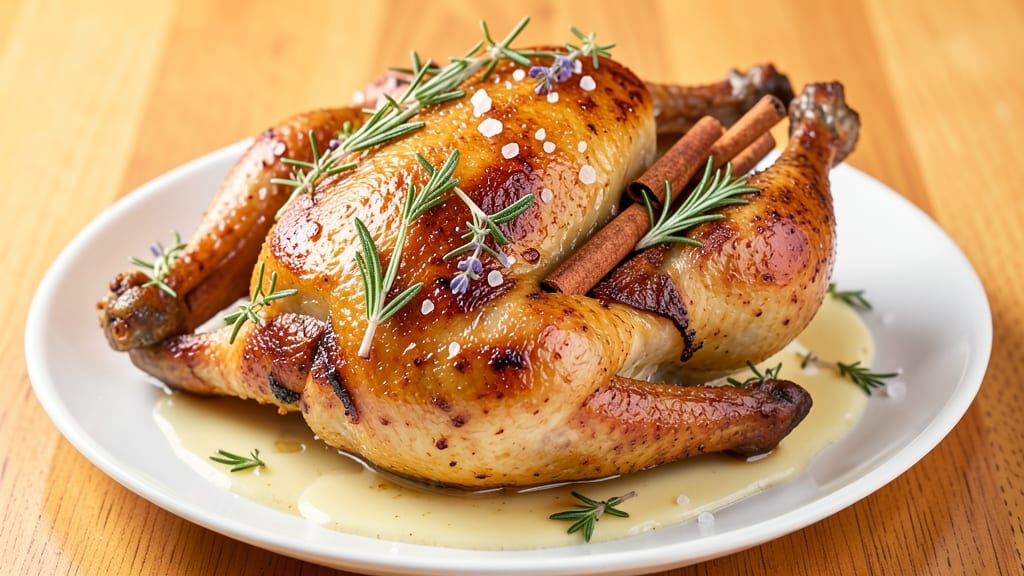
Transforming a simple whole bird into a fragrant, spice-infused centerpiece starts with this cinnamon stick recipe that turns ordinary roasting into an aromatic experience. The secret lies in infusing the bird with cinnamon sticks during cooking, creating a fragrant bark that locks in moisture and delivers layers of warmth.
I developed this technique after discovering how cinnamon transforms roasted poultry—adding depth that dried rubs can't match.
This method requires just five essential ingredients and 2 hours of hands-off cooking time, making it perfect for special occasions or weeknight dinners. The cinnamon sticks not only flavor the meat but also create a visually striking presentation with their golden-brown crust.
Professional chefs use this technique for restaurant-quality results at home.
By the end, you'll have a bird with tender, juicy meat and a caramelized cinnamon bark that's impossible to resist. The aroma alone will fill your home with warmth, while the flavor balances sweet and spicy notes perfectly.
Serve it with roasted vegetables or a fresh salad to complete the meal.
This recipe works equally well with chicken, turkey, or duck—each bird benefits from the cinnamon's aromatic infusion. The technique is simple but transformative, turning a basic roast into a showstopping centerpiece. Let's get started with this fragrant, flavorful dish.
Ingredients for cinnamon stick
Five aromatic ingredients transform an ordinary roast into a restaurant-quality centerpiece.
| Ingredient | Amount | Notes |
|---|---|---|
| Whole Chicken 🍗 | 4 lb | Fresh, bone-in, skin-on preferred |
| Cinnamon Sticks 🌿 | 4 whole | High-quality, aromatic grade |
| Unsalted Butter 🧈 | ½ cup | Cold, cubed for basting |
| Fresh Rosemary 🌿 | ¼ cup | Chopped, fine stems removed |
| Fresh Thyme 🌿 | ¼ cup | Leaves only, stems discarded |
| Diamond Crystal Kosher Salt 🧂 | 1 ½ tsp | Fine grain for even distribution |
| Ground Black Pepper 🌶️ | ½ tsp | Freshly cracked for intensity |
| Honey 🍯 | 2 tbsp | Raw, unprocessed for depth |
The whole chicken is the foundation—opt for organic, free-range when possible, as the higher fat content yields superior moisture retention during roasting. Local butchers often carry superior-quality birds compared to supermarket options, and the Costco Kirkland Signature line offers excellent value for larger gatherings. For optimal results, select a bird with even fat distribution—this ensures consistent basting and even browning. The cinnamon sticks should be whole, unbroken, and aromatic—avoid pre-ground cinnamon, as it lacks the depth of flavor infusion. Penzeys Spices or McCormick Gourmet carry high-quality sticks that elevate this technique. Fresh herbs like rosemary and thyme are non-negotiable; dried substitutes lack the vibrant aroma that permeates the meat during cooking. Whole Foods Market or Trader Joe's typically stock fresh, high-quality bundles.
No fresh rosemary? Dried rosemary at one-third the amount works in a pinch, though the flavor will be muted. Substituting ground cinnamon for sticks is possible, but the visual presentation and aromatic infusion are compromised—this technique relies on the slow release of cinnamon oils during roasting. For a sweeter profile, replace honey with maple syrup or agave nectar, though honey's complexity is ideal. The butter must be unsalted to control seasoning precisely; if unavailable, reduce the kosher salt by 0.25 tsp. Professional chefs often toast the cinnamon sticks lightly before insertion to intensify their aroma, though this step is optional for home cooks. Pre-measuring all spices in small bowls ensures even distribution during seasoning.
Store fresh herbs in airtight containers wrapped in damp paper towels for up to 5 days in the refrigerator. Cinnamon sticks retain potency indefinitely when stored in a cool, dark place—whole spices last 12-18 months past their purchase date. The roasted chicken reheats beautifully; warm slices in a 300°F oven for 10-15 minutes to restore moisture. For long-term storage, portion the meat into vacuum-sealed bags and freeze for up to 3 months. The caramelized bark is best enjoyed fresh but can be crumbled and stored in an airtight jar for up to 2 weeks, perfect for garnishing soups or salads. Leftovers keep for 3-4 days in the refrigerator, ideal for sandwiches or grain bowls.
Why You'll Love This Recipe
- Same recipe, different vibes: throw it on a sheet pan for a lazy Tuesday, or dress it up with extra butter and herbs for guests. The leftovers? Even better the next day, trust me.
- No-Fuss Roast: I swear, you just rub the chicken with butter, tuck in those cinnamon sticks, and let the oven do the work. No brining, no basting—just hands-off perfection while you sip something warm.
- Unexpected Warmth: That cinnamon isn’t just for pies—it infuses the chicken with this subtle, cozy sweetness that pairs amazingly with rosemary’s piney bite. Honestly, it’s like a hug in every bite, but way more delicious.
- Weeknight to Dinner Party: Same recipe, different vibes: throw it on a sheet pan for a lazy Tuesday, or dress it up with extra butter and herbs for guests. The leftovers? Even better the next day, trust me.
Step-by-step instructions for spiced whole bird with fragrant bark
This method delivers a whole roasted chicken with aromatic cinnamon-infused skin and tender, juicy meat.
Prepare the Chicken with Spiced Rub
Begin by removing the chicken from the refrigerator and allowing it to sit at room temperature for 30 minutes. This ensures even cooking throughout. Pat the chicken completely dry with paper towels, focusing on the cavity and under the wings where moisture tends to accumulate. Using your fingers, gently loosen the skin over the breast meat to create a pocket.
In a small bowl, combine the 1.5 teaspoons Diamond Crystal kosher salt, 0.5 teaspoon ground black pepper, and 2 tablespoons honey. Rub this mixture generously over the entire chicken, including the cavity. Next, insert the 4 whole cinnamon sticks into the cavity, spacing them evenly. This step infuses the meat with deep, warm spices while creating that signature bark. The honey will caramelize beautifully during roasting, adding a subtle sweetness to the skin.
Create the Herb Butter Basting Mixture
In a separate bowl, combine the 0.5 cup unsalted butter with the 0.25 cup chopped fresh rosemary and 0.25 cup fresh thyme leaves. Mix thoroughly until the herbs are evenly distributed throughout the butter. This herb butter will serve as both a basting agent and a flavor enhancer, ensuring the chicken remains moist and aromatic throughout the cooking process.
Place the chicken breast-side up on a rack set inside a rimmed baking sheet. This elevation allows hot air to circulate around the bird, promoting even browning and crisping. Spread the herb butter mixture evenly over the skin, pressing gently to help it adhere. The butter will melt and baste the chicken as it roasts, creating a rich, flavorful crust.
Roast at High Heat for Crispy Skin
Preheat your oven to 425°F. Once fully preheated, carefully place the chicken in the oven and roast for 1 hour and 15 minutes. Avoid opening the oven door during this time, as each time you do, you lose valuable heat and steam, which can prolong cooking and prevent the skin from crisping properly.
After 1 hour and 15 minutes, check the internal temperature using a meat thermometer inserted into the thickest part of the thigh (avoid touching the bone). The chicken is done when it reaches 165°F. The skin should be deep golden brown with a crisp texture, and the juices running clear when pierced. If the skin isn't crisp enough, return the chicken to the oven for an additional 5-10 minutes until fully browned.
Rest and Serve for Maximum Juiciness
Remove the chicken from the oven and transfer it to a cutting board. Tent loosely with aluminum foil and let it rest for 15-20 minutes. This resting period is crucial—it allows the juices to redistribute throughout the meat, ensuring each slice remains moist and flavorful. During this time, the internal temperature will rise slightly, reaching a perfect serving temperature.
Once rested, carefully remove the cinnamon sticks from the cavity and discard them. Carve the chicken into serving pieces, starting with the breasts and working your way to the thighs. The skin should be crisp and fragrant with cinnamon, while the meat should be tender and juicy. Serve immediately, accompanied by the pan juices for extra flavor, and enjoy the rich, aromatic experience of this spiced whole bird.
Pro Tips For Making Cinnamon Stick
- Trim the Rosemary: Snip the sprigs into 1-inch pieces—whole stems won’t infuse properly, and you’ll end up with bitter, underused herbs. I used to toss them in whole, thinking they’d "release flavor," but they just sat there like stubborn guests at a party.
- Start with Cold Butter: Chill the unsalted butter before rubbing it under the skin—this keeps it from melting into a greasy mess while you work. After burning my fingers twice trying to spread warm butter, I learned to treat it like frosting: cold and precise.
- Skewer the Cinnamon: Push 2–3 cinnamon sticks into the chicken’s cavity before roasting—this guarantees they’ll crisp and perfume the meat, not just float in the pan like forgotten guests. I tried tossing them in loose once, and they turned to sawdust before the chicken was done.
- Rotate the Pan: Every 20 minutes, spin the chicken 180 degrees and switch racks if using two—this prevents uneven browning and lets the herbs crisp on all sides. I used to ignore this, and one side always looked sad while the other burned. (Yes, even if you’re impatient like me.)
Troubleshooting this dish
Uneven Cinnamon Infusion
If your chicken lacks strong cinnamon flavor, the sticks may not have infused properly. Lightly toast the cinnamon sticks in a dry skillet over medium heat for 1 minute before inserting them into the cavity—this intensifies their aroma.
Also, ensure you pat the chicken completely dry before seasoning, as moisture creates a barrier that prevents proper spice adhesion. For extra depth, score the skin lightly in a crosshatch pattern before roasting to help the cinnamon oils penetrate deeper. 🌿
Skin Not Crispy Enough
Overcrowding or insufficient basting often causes pale, rubbery skin. Use a rack in your roasting pan to elevate the chicken, allowing hot air to circulate freely. If the skin isn’t crisp after 1 hour and 15 minutes, increase the oven temperature to 450°F for the final 10 minutes.
Brush the skin with an extra layer of melted butter and sprinkle with ½ teaspoon cinnamon sugar (mix ¼ tsp ground cinnamon with ¼ tsp sugar) for added crunch. Avoid opening the oven door during the last 20 minutes of cooking. 🔥
Cinnamon Sticks Burn Before Chicken Cooks
If the sticks turn black while the meat is still undercooked, reduce the oven temperature to 400°F and extend the roasting time by 15-20 minutes. Alternatively, wrap the cinnamon sticks in aluminum foil before inserting them into the cavity—this protects them from direct heat while still allowing flavor infusion.
For extra insurance, place the chicken on the middle rack (not the top) to prevent excessive browning. Monitor the internal temperature closely, aiming for 165°F in the thigh. 🌡️
Honey Overpowering Flavor
The honey’s sweetness can dominate if not balanced properly. Reduce the honey to 1 tablespoon and add ½ teaspoon ground cinnamon to the rub instead for a more subtle sweet-spice profile.
For a savory twist, replace 1 tablespoon honey with 1 teaspoon Dijon mustard—it adds tanginess that complements the cinnamon.
If the chicken tastes too sweet after roasting, balance it with a tangy pan sauce: deglaze the roasting pan with ¼ cup apple cider vinegar and 1 tablespoon butter, then reduce by half before serving. 🍯
Dry or Tough Meat
Overcooking or skipping the rest period are the usual culprits. Use a meat thermometer and remove the chicken at 160°F internal temperature—it will rise to 165°F while resting. Never skip the 15-20 minute rest time; this redistributes juices and prevents dryness.
For extra moisture, baste the chicken every 20 minutes with pan juices during roasting.
If the meat still feels dry, slice against the grain and serve with a cinnamon-apple compote (simmer 1 diced apple, 1 cinnamon stick, and 2 tbsp water for 10 minutes) to add juiciness. 💧
Cinnamon Sticks Fall Out During Cooking
If sticks shift or fall out, secure them with kitchen twine. Thread the twine through the cavity around the sticks before inserting them, then tie it loosely. Alternatively, place the sticks between the skin and meat (after loosening the skin) for a more even infusion.
For turkey or duck, insert sticks horizontally into the cavity and tuck them under the meat to keep them in place. If a stick does fall out, replace it with a fresh one during the last 30 minutes of cooking to maintain flavor. 🧵
Nutrition facts
Frequently asked questions
Can I use this cinnamon stick technique with other proteins besides chicken?
This method works beautifully with turkey, duck, or even pork tenderloin. For poultry, follow the same timing but adjust for size—turkey may need 2-3 extra cinnamon sticks for larger birds. With duck, reduce the oven temperature to 375°F to prevent over-browning while keeping the skin crisp. The cinnamon's aromatic oils infuse just as well in these meats!
How do I store leftover cinnamon-infused meat?
Store leftovers in an airtight container for up to 4 days in the fridge. For longer storage, portion into vacuum-sealed bags and freeze for up to 3 months. When reheating, warm in a 300°F oven for 15-20 minutes with a splash of water or broth to restore moisture. The cinnamon flavor actually intensifies slightly when reheated properly!
What can I do with the pan drippings after roasting?
Those precious cinnamon-infused drippings make an amazing sauce! Strain out any solids, then whisk in 2 tablespoons butter and 1 tablespoon honey. For extra depth, add 1 teaspoon apple cider vinegar to balance sweetness. Reduce by half over medium heat for a glossy, fragrant sauce perfect for drizzling over roasted veggies or serving with the meat.
Can I substitute ground cinnamon for sticks?
While you can use ½ teaspoon ground cinnamon mixed with the rub, you'll miss the visual presentation and deep aromatic infusion the sticks provide. For best results, toast 4 cinnamon sticks lightly in a dry pan for 1 minute, then grind them yourself—this captures the full flavor profile. The sticks also create that signature caramelized bark on the skin!
How do I adjust this recipe for a holiday feast?
For a crowd, scale up the recipe using a 12-14 lb turkey (add 6-8 cinnamon sticks and 1 extra hour of roasting time). Brine the turkey overnight in 1 gallon water, 1 cup kosher salt, and ½ cup honey for extra juiciness. Serve with cinnamon-spiced roasted carrots (toss with 1 cinnamon stick, 1 tbsp honey, and 2 tbsp butter) for a cohesive holiday menu!