
Breakfast & Brunch
Julia Child's French bread recipe transforms a simple flour-water-yeast mixture into golden, crisp-edged loaves with a light, airy interior—just like the ones she made famous in her Parisian kitchen. The key lies in precise kneading, patient proofing, and baking in a Dutch oven to trap steam for that signature crust.
I've recreated her method after years of studying her techniques, and the results are nothing short of spectacular.
This recipe demands attention to detail but rewards you with restaurant-quality bread that's far superior to anything store-bought. The dough requires just five basic ingredients—flour, water, yeast, salt, and a touch of sugar—but the technique transforms them into artisanal perfection.
We're talking crispy, caramelized crusts that shatter when broken and a tender, open crumb structure that melts in your mouth.
What makes this bread truly special is its versatility—serve it fresh from the oven with butter, toast it for breakfast, or use it to elevate soups and salads. The Dutch oven method creates steam that develops that coveted oven spring, while the high baking temperature ensures a deep golden crust.
Once you master this technique, you'll never buy bread again.
For those short on time, I've included a quick proofing adaptation that still delivers excellent results. The original method requires overnight cold proofing for maximum flavor development, but we'll cover both approaches so you can choose what works best for your schedule.
Let's get started on baking bread like Julia Child herself.
Ingredients for julia child french bread
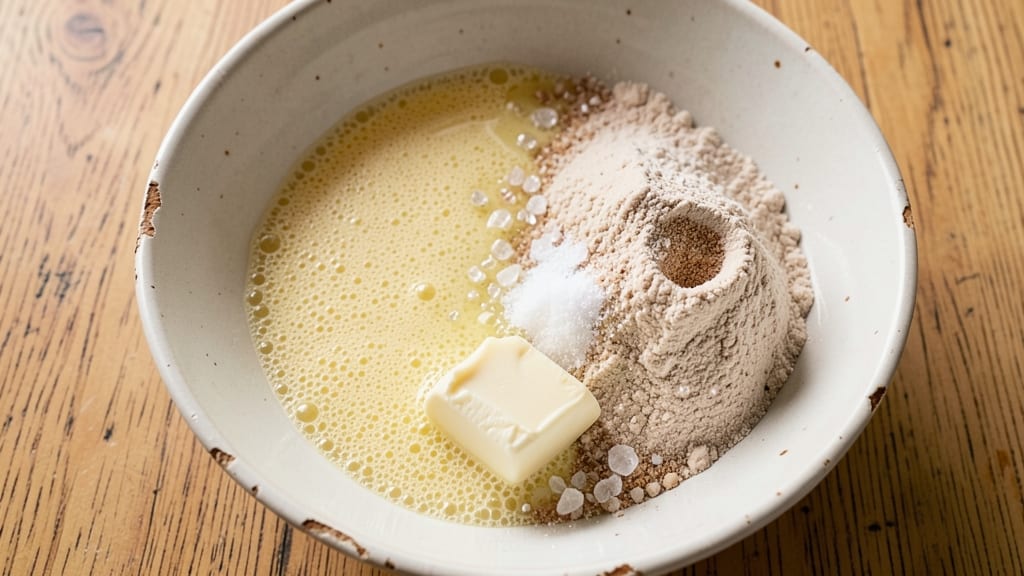
Five simple ingredients transform into Julia's legendary golden crust and airy interior.
| Ingredient | Amount | Notes |
|---|---|---|
| All-Purpose Flour 🌾 | 5 cups | Bread flour preferred for better structure |
| Active Dry Yeast 🍞 | ¼ oz | Or 2.25 tsp (1 packet) |
| Granulated Sugar 🍚 | ½ tbsp | Feeds yeast for activation |
| Kosher Salt 🧂 | 1 ½ tsp | Fine grain preferred |
| Warm Water 💧 | 1 ½ cups | 110°F (43°C) ideal temperature |
| Unsalted Butter 🧈 | ¼ cup | Cold, cubed for crust |
| Cornmeal 🌽 | ½ cup | For dusting Dutch oven |
| Coarse Sea Salt 🧂 | 1 tbsp | For final crust sprinkle |
| Ice Water ❄️ | ¼ cup | For final dough adjustment |
Flour is where the magic happens—King Arthur Bread Flour or Caputo Tipo 00 if you want to splurge, but all-purpose works in a pinch. The yeast? Fresh is best—check the expiration date, and if it's been sitting on the shelf for months, toss it. Warm water should feel like bathwater, not hot enough to kill the yeast. Too cold and it won't activate; too hot and you'll end up with a sad, flat loaf. For the butter, European-style brands like Plugrá or Kerrygold melt beautifully for that signature crust, but regular unsalted butter works too. Just keep it cold until the very end.
No bread flour? Add 1 tbsp vital wheat gluten to your all-purpose for better structure. Out of yeast? Instant yeast works 1:1, but active dry needs to be dissolved first. The sugar can be swapped for honey (reduce by 25%) if you prefer. For the butter, if you're avoiding dairy, olive oil or vegan butter gives a similar richness. The cornmeal is non-negotiable for that crispy bottom crust—don't skip it. And that final sprinkle of coarse salt? Maldon or Jacobsen flakes are ideal, but any sea salt will do.
This dough is a beast—it needs time. The overnight cold proof gives maximum flavor, but 2-3 hours at room temp works in a hurry. Store dough in the fridge for up to 24 hours before baking. Once baked, bread stays fresh 3 days wrapped in a towel at room temperature, or 1 week frozen. For reheating, wrap in foil and warm in a 350°F (175°C) oven for 10 minutes—nothing like fresh bread.
Why You'll Love This Recipe
- No-Knead Magic: I swear by this dough—just mix the flour, yeast, sugar, and salt with warm water, let it rest, then shape it. No stand mixer, no arm workout, just pure simplicity.
- Crust So Good: That crispy exterior with a tender crumb? It’s all in the slow rise and the kosher salt’s magic. One bite, and you’ll understand why Julia made it famous.
- Weeknight Hero: Toss it in the oven while you prep dinner—it’s ready by the time everything else is on the table. (Yes, even on a Tuesday night.)
- Pantry Staple: Five ingredients, endless possibilities. Use it for sandwiches, toast, or even garlic bread. Honestly, it’s the only bread I keep on hand.
Step-by-step instructions for Julia Child's French bread
Let's bring Julia Child's iconic French bread to life with this foolproof method.
Activate the Yeast and Mix the Dough
In a large bowl, combine the 1.5 cups warm water, 0.5 tbsp granulated sugar, and 0.25 oz active dry yeast. Let this sit for 5-10 minutes until the mixture becomes frothy and bubbly—this confirms your yeast is alive and ready to work. If it doesn't bubble, your yeast might be dead, and you'll need to start over.
Once bubbly, add the 5 cups all-purpose flour and 1.5 tsp kosher salt to the bowl. Using a wooden spoon or your hands, stir until a shaggy dough forms. The dough will be sticky, but don't worry—this is normal. Knead the dough on a lightly floured surface for 8-10 minutes until smooth and elastic. You'll know it's ready when it springs back slowly when poked.
First Rise and Shape the Dough
Lightly oil a large bowl, place the dough inside, and cover it with a damp kitchen towel. Let it rise in a warm spot for 1-2 hours, or until it has doubled in size. You'll see bubbles forming on the surface and the dough will feel light and airy when pressed gently. This rise develops the gluten and creates that signature French bread texture.
Once doubled, punch down the dough to release any air bubbles. Divide it into 4 equal pieces and shape each into a 12-inch log. Roll each log under your palms to tighten the surface and create a smooth, taut skin. This shaping step is crucial for that classic French bread shape and chewy texture.
Second Rise and Prepare for Baking
Place the shaped dough logs on a floured baking sheet, cover them with a damp towel, and let them rise again for 30-45 minutes. They should puff up slightly but not double in size. While they're rising, preheat your oven to 450°F and place a Dutch oven with the 0.5 cup cornmeal inside. The cornmeal creates a barrier between the dough and the pot, preventing sticking.
Just before baking, sprinkle each dough log generously with coarse sea salt. The salt will create those beautiful crusty pockets and add a wonderful contrast to the soft interior. This is where Julia Child's signature buttery crust begins to form—don't skip this step!
Bake for a Crispy, Golden Crust
Carefully transfer one dough log to the hot Dutch oven. Immediately add 0.25 cup cold, cubed unsalted butter to the pot. The steam from the butter will create that signature crust while keeping the interior tender. Close the lid and bake for 20 minutes. Then remove the lid and bake for another 10-15 minutes until the bread is deep golden brown and sounds hollow when tapped on the bottom.
Repeat with the remaining dough logs, adding butter to the pot each time. The butter will melt and baste the bread, creating that irresistible buttery flavor and crispy exterior. Let the bread cool on a wire rack for 10 minutes before slicing—this prevents the bottom from becoming soggy.
Add the Finishing Touch
While the bread is still warm, brush the tops with a little ice water using a pastry brush. This creates a beautiful sheen and helps set the crust. Serve immediately while still warm, sliced into thick pieces. The contrast of the crispy, buttery crust and the soft, airy interior is what makes this bread truly special.
Julia Child's method is all about patience and attention to detail. The dough needs time to rise properly, and the butter basting is what gives this bread its signature flavor. Enjoy your homemade French bread with butter, cheese, or your favorite jam—just like in Julia's kitchen!
Pro Tips For Making Julia Child French Bread
- Dissolve the Yeast First: Julia wouldn’t skip this—sprinkle the yeast into the warm water with sugar first, then wait exactly 5 minutes for it to get frothy and bubbly. I used to toss it straight into the flour mix, and my dough always took twice as long to rise. That little pause guarantees your yeast is active and ready to work.
- Knead Until Silky: Stop when the dough pulls cleanly away from the bowl and springs back slowly when poked—about 8-10 minutes by hand. I learned this the hard way: over-kneading makes bread dense, but under-kneading leaves it gummy. A food processor? Sure, but pulse it in 30-second bursts to avoid overdoing it.
- Salt the Water: Yes, even the water—dissolve half the kosher salt into the warm yeast mixture. It’s not just for flavor; it helps regulate yeast activity and strengthens the gluten structure. I skipped this once, and my loaves turned out flat and underproofed. Trust the process.
- Proof in a Draft-Free Spot: Place your shaped loaves in a bowl lined with a damp towel, then cover with a kitchen towel or plastic wrap. Let them rise in a warm (75°F) spot—like the oven with the light on—until they’ve doubled in size, about 1-1.5 hours. I used to rush this, and my bread collapsed. Patience here makes all the difference for that iconic crust.
Creative variations of this julia child french bread
Classic Baguette Twist
For a longer, thinner loaf inspired by Parisian bakeries, shape your dough into a 24-inch log instead of four separate pieces. Place it seam-side down in your Dutch oven and bake as directed, but increase the uncovered baking time to 20-25 minutes for a deeper color.
Brush with melted butter mixed with 1 tsp garlic powder while warm for that iconic French bistro flavor. 🥖
Rosemary & Olive Oil
Add 1 tbsp finely chopped fresh rosemary and 2 tbsp olive oil to your dough during the final kneading stage. Shape into a round boules instead of logs, then bake in the Dutch oven with 1 tbsp olive oil sprinkled on top before baking.
The Mediterranean herbs add an aromatic depth that pairs perfectly with soups or grilled meats.
Sweet Brioche Adaptation
Transform this into a sweet brioche-style bread by adding ¼ cup granulated sugar and 2 large egg yolks to your dough. Replace ½ cup of the water with ½ cup whole milk for extra richness.
Shape into a round loaf and bake as usual, but brush the warm bread with melted butter mixed with 1 tbsp honey for a decadent breakfast treat.
Savory Herb Focaccia
For an Italian-inspired variation, flatten your dough into a 12x16-inch rectangle on a baking sheet lined with parchment. Dimple the surface with your fingers, then bake at 425°F for 20 minutes uncovered.
Finish with 2 tbsp olive oil, 1 tsp dried thyme, and ½ cup cherry tomatoes halved on top. The open crumb structure makes it perfect for dipping in olive oil.
Whole Wheat Version
Replace 2 cups of all-purpose flour with 2 cups whole wheat flour for a heartier, nuttier bread. The dough will be denser, so reduce the water by 2 tbsp and increase kneading time to 12 minutes.
Bake as directed, but expect a slightly shorter rise time due to the whole grains. This version pairs beautifully with hearty stews and chili.
Quick Proofing Hack
Short on time? Place your shaped dough in the fridge for 1 hour before baking to mimic cold proofing's flavor development. For even faster results, proof directly in the preheated Dutch oven for 15 minutes before adding butter and baking.
The bread will be slightly less flavorful but still delicious with a perfect crust. ⏱️
Nutrition facts
Frequently asked questions
Why does Julia Child's French bread need a Dutch oven?
The Dutch oven traps steam during baking, creating that signature crispy, caramelized crust while keeping the interior light and airy. Without it, your bread might bake too quickly on the outside while staying dense inside. The cornmeal coating also prevents sticking for an even golden color all around.
Can I make this bread without a Dutch oven?
Yes! Use a heavy oven-safe pot with a tight-fitting lid or even a baking stone. For best results, place a metal bowl filled with boiling water on the lower rack to create steam. Expect slightly less dramatic crust development, but the bread will still be delicious. The key is maintaining moisture during the first 20 minutes of baking.
How do I know when the dough is properly kneaded?
The dough is ready when it springs back slowly when poked (not immediately) and feels smooth and elastic. For a quick test, stretch a small piece—if it thins without tearing, you're good! Julia Child's method requires 8-10 minutes of vigorous kneading by hand. If using a stand mixer, 5-6 minutes on medium speed works well.
What if my bread turns out dense instead of light and airy?
Dense bread usually means the yeast didn't activate properly or the dough didn't rise enough. Double-check that your water was 110°F (43°C) and the yeast was fresh. Also ensure you gave the dough enough time to rise—both the first and second rises are crucial. For next time, try cold proofing overnight in the fridge for better flavor development.
Can I make this bread without butter?
The butter adds richness, but you can substitute with 2 tbsp olive oil or even 1 tbsp melted shortening for a neutral flavor. For a vegan version, use vegan butter or extra olive oil. The crust will be slightly less buttery but still achieve that crispy texture through proper baking technique. The interior will remain tender regardless of fat choice.