Sauces & Condiments
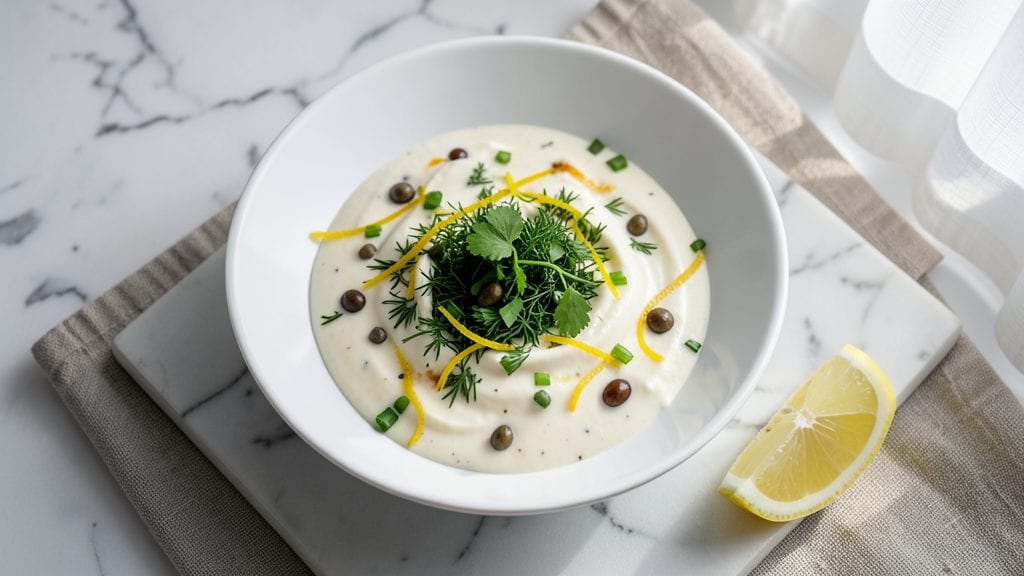
This tartar sauce recipe without pickles delivers the same creamy, zesty punch you love—but with fresh herbs and capers for bright, herbaceous depth. The secret lies in balancing mayo with lemon juice and Dijon mustard, creating a sauce that clings perfectly to fish, fries, or sandwiches without overpowering flavors.
I developed this version after craving tartar sauce that felt lighter yet still packed with character.
What makes this sauce stand out is the herb blend—fresh dill, chives, and parsley infuse every spoonful with vibrant, garden-fresh notes. The capers add a briny tang that cuts through the richness of the mayo, while a touch of Worcestershire sauce deepens the umami.
Unlike traditional recipes, this version skips pickles entirely, making it more versatile for those who prefer a cleaner, herb-forward profile.
The result is a velvety, slightly thickened sauce with a bright, tangy finish that enhances rather than competes with your main dish. It stays fresh in the refrigerator for up to 5 days, making it perfect for meal prep.
Whether you're serving it with flaky fish, crispy fries, or a classic Reuben sandwich, this tartar sauce elevates every bite with professional-level flavor.
For extra richness, stir in a spoonful of sour cream before serving, or add a pinch of smoked paprika for a subtle smoky twist. The possibilities are endless, but the base recipe remains foolproof—just mix, taste, and adjust to your preference. Let’s make it!
Ingredients for tartar sauce recipe without pickles
Fresh herbs and briny capers transform simple mayo into vibrant, herb-forward tartar sauce.
| Ingredient | Amount | Notes |
|---|---|---|
| Mayonnaise 🥫 | 1 cup | High-quality, not low-fat |
| Fresh Dill 🌿 | ¼ cup | Finely chopped, stems removed |
| Fresh Chives 🌱 | 2 tbsp | Finely chopped, mild onion flavor |
| Fresh Parsley 🍃 | ¼ cup | Finely chopped, flat-leaf preferred |
| Capers 🫒 | 2 tbsp | Chopped, not packed |
| Lemon Juice 🍋 | 2 tbsp | Freshly squeezed, zesty |
| Dijon Mustard 🍯 | 1 tbsp | Mild, not spicy |
| Worcestershire Sauce 🍶 | 1 tbsp | For umami depth |
| Extra-Virgin Olive Oil 🫒 | 1 tbsp | Light, fruity variety |
| Salt 🧂 | ½ tsp | Kosher or sea salt |
| Black Pepper 🌶️ | ¼ tsp | Freshly ground, mild heat |
The herbs are non-negotiable for that bright, garden-fresh flavor. Trader Joe's and Whole Foods have the freshest dill and parsley—look for vibrant green leaves, not wilted ones. Chives are easy to find at any grocery store, but if yours are sad, swap in green onion tops. Capers? Penzeys sells them in a jar that lasts forever, or grab them from the olive bar section. The mayo matters too—skip the low-fat stuff; it won’t emulsify right.
No fresh dill? Dried dill at one-third the amount works, but it’s not the same. Short on chives? Green onions or extra parsley add a similar mild onion note. Capers too salty? Rinse them first. The Worcestershire sauce can be swapped for soy sauce or fish sauce if you’re avoiding it, but you’ll lose that classic umami kick. For extra richness, stir in 1 tbsp sour cream at the end—trust me on this.
This sauce keeps beautifully in the fridge for up to 5 days, sealed in an airtight container. For longer storage, freeze it in 1-tbsp portions—perfect for single servings. If it gets too thick, thin it with a splash of water or extra lemon juice. The flavors actually improve after sitting for an hour, so make it ahead if you can.
Why You'll Love This Recipe
- No-Chop Chaos Allowed: I’ll be real—this sauce survives even when I forget to chop the herbs. A quick whiz in the food processor or even a knife-and-fork mash gets you there. That bright, herby punch from dill, chives, and parsley still shines, no fancy prep required.
- Capers Add Magic: Honestly, those little capers are the secret weapon. They bring this tangy, briny kick that cuts through the mayo’s richness—like a tiny burst of the sea in every bite. The balance is spot-on, and you’ll reach for this sauce long after your fish tacos are gone.
- Weeknight Superhero: Between us, this is my go-to when I’m staring at a half-empty fridge and a hungry family. Slather it on grilled chicken, toss it with pasta, or serve it with veggies—it’s the kind of sauce that turns "what’s for dinner?" into "oh, thank goodness."
- Make-Ahead MVP: I double the batch every time because it keeps like a dream. Store it in the fridge for up to a week, and it’s always ready to rescue a last-minute appetizer spread or a lazy Sunday brunch. No waste, no stress—just flavor waiting to happen.
Step-by-step instructions for herb-infused tartar sauce
Here's how to make a bright, herb-forward tartar sauce that's perfect for fish, chips, or veggie dips.
Finely Chop All Fresh Herbs
In a medium bowl, combine the 0.25 cup fresh dill, 2 tablespoons fresh chives, and 0.25 cup fresh parsley. Use a sharp chef's knife to chop them as finely as possible—you want tiny, almost paste-like pieces that will blend seamlessly into the sauce. I like to work in batches, folding the herbs into the bowl as I go to keep them contained. This ensures even distribution and prevents any large herb pieces from making the sauce look uneven.
Here's the thing—don't skip the stems removal. While parsley stems are edible, they add bitterness and texture that disrupts the smooth consistency we're aiming for. For dill and chives, simply trim the woody stems before chopping. The fresher your herbs, the more vibrant your sauce will taste, so if possible, use herbs you've just purchased or grown yourself.
Whisk Together Wet Ingredients
In a separate bowl, whisk together the 1 cup mayonnaise, 2 tablespoons lemon juice, 1 tablespoon Dijon mustard, 1 tablespoon Worcestershire sauce, and 1 tablespoon extra-virgin olive oil. Start with the mayonnaise as your base, then gradually incorporate the other ingredients while whisking continuously. This prevents the mayonnaise from breaking and ensures everything blends smoothly.
The lemon juice and Worcestershire sauce are where the real flavor magic happens. The acidity brightens the mayonnaise while the Worcestershire adds that savory umami depth. I like to taste the mixture at this stage—it should be tangy, slightly sweet from the mustard, and just starting to come together. If you're using freshly squeezed lemon juice, you might want to strain it first to remove any pulp that could make the sauce grainy.
Combine Herbs and Seasonings
Add the finely chopped herbs to the wet mixture and gently fold everything together using a silicone spatula. Be careful not to overmix—just combine until the herbs are evenly distributed. Then, add the 2 tablespoons chopped capers, 0.5 teaspoon salt, and 0.25 teaspoon black pepper. The capers will add a briny, slightly fishy note that's characteristic of traditional tartar sauce, even without pickles.
Taste the sauce at this point and adjust the seasoning if needed. You might want to add a touch more lemon juice for brightness or a pinch more salt to enhance the flavors. The sauce should be well-seasoned but still balanced—none of the individual components should overpower. I find that the herbs need to marry with the other flavors for about 5 minutes at room temperature before the sauce reaches its full potential.
Chill and Rest for Best Texture
Transfer the tartar sauce to an airtight container and refrigerate for at least 1 hour before serving. This chilling time allows all the flavors to meld together perfectly and gives the sauce a smoother, more refined texture. The longer it chills, the better it gets—up to 24 hours if you're making it ahead of time.
Here's why this step matters: The cold temperature helps the mayonnaise set properly, preventing it from becoming too soft or runny. When you're ready to serve, give the sauce a quick stir to redistribute any settled ingredients. The final texture should be thick but spreadable, with a vibrant green color from the herbs and a glossy sheen from the olive oil. This is the moment when all your hard work pays off—you'll have a sauce that's creamy, tangy, and packed with herbaceous flavor.
Pro Tips For Making Tartar Sauce Recipe Without Pickles
- CHOP HERBS FINE: I learned this the hard way—big chunks of dill or parsley look sloppy and taste like you didn’t try. Use a sharp knife and chop the herbs into tiny, even pieces—think "almost a paste" for the parsley and chives, and "tiny confetti" for the dill. The sauce will look professional and the flavor will distribute evenly.
- MIX CAPERS LAST: Capers pack a punch, and adding them too early can turn your sauce bitter. Start with just the mayo, herbs, and a pinch of salt—let that blend smooth first. Then fold in the capers and a splash of lemon (if using) right before serving. This keeps their briny kick balanced and bright.
- USE COLD MAYO: Room-temperature mayo gets greasy fast, and nobody wants a sad, oily tartar sauce. Scoop the mayo straight from the fridge, give it a quick stir to soften slightly (but don’t let it warm up), and mix in the cold herbs. The cold base keeps everything stable—no separation or gloopy texture.
- SALT IN STAGES: Taste as you go. Start with half the salt you think you’ll need, mix, then taste again. The capers and herbs already bring saltiness, so you’ll need less than you’d think. Resist the urge to overdo it—oversalting tartar sauce is a fast track to regret. A little at a time is the only way.
Troubleshooting perfect results
Mayonnaise Breaks
If your tartar sauce separates or looks grainy, it's usually the mayo breaking. This happens when ingredients are added too quickly or the sauce gets too warm.
To fix it, whisk in 1 teaspoon of Dijon mustard or 1 tablespoon of lemon juice while slowly drizzling in 1 tablespoon of cold water. The acidity and emulsifiers in these ingredients will help rebuild the sauce's structure.
For prevention, always add wet ingredients to mayo gradually while whisking continuously. 💡
Herb Overload
Too many herbs can make your sauce taste bitter or overly grassy. If your tartar sauce tastes harsh, reduce the amount of fresh herbs by 1 tablespoon total and add 1 teaspoon of extra-virgin olive oil to balance the flavors.
For future batches, start with 0.2 cup herbs instead of 0.25 cup and adjust to taste. Fresh herbs are vibrant but can easily overpower the delicate mayo base. 🌿
Capers Too Salty
If your capers taste overwhelmingly salty, rinse them thoroughly under cold water before chopping. For an extra insurance, soak them in 1 cup of cold water for 10 minutes, then drain before adding to the sauce.
If the sauce is already made, balance the saltiness with 1 tablespoon of lemon juice or 1 teaspoon of honey to mellow the flavors. Always taste your capers before adding them to the mix. 🫒
Sauce Too Thick
A thick tartar sauce can be difficult to spread or pipe. To thin it out, stir in 1 teaspoon of cold water or 1 teaspoon of lemon juice at a time until you reach the desired consistency.
Avoid adding too much liquid at once, as it can dilute the flavors. For a smoother texture, chill the sauce for an additional 30 minutes after thinning—cold temperatures help stabilize the mayo. 🥄
Lacking Depth
If your tartar sauce tastes flat or lacks complexity, it might need more umami or acidity. Boost the flavor by adding ½ teaspoon of Worcestershire sauce or ½ teaspoon of fish sauce for extra depth.
For brightness, increase the lemon juice by ½ teaspoon. A pinch of smoked paprika or garlic powder can also add an unexpected layer of flavor. 💫
Storage Issues
If your tartar sauce develops an off smell or mold after refrigeration, it’s no longer safe to eat. Always store it in an airtight container and use it within 5 days for best quality. For longer storage, freeze the sauce in 1-tablespoon portions in a freezer-safe container.
Thaw it in the refrigerator overnight before using. Never refreeze thawed tartar sauce, as this can compromise its texture and safety. ❄️
Nutrition facts
Frequently asked questions
Can I make this tartar sauce without fresh herbs?
You can substitute fresh herbs with dried versions, but reduce the amount by one-third (e.g., 1 teaspoon dried dill instead of 1 tablespoon fresh). For chives, swap in 1 teaspoon green onion powder. The texture won't be as vibrant, but the flavor will still shine. Fresh herbs are ideal for that bright, garden-fresh taste!
How do I adjust the thickness of the sauce?
If your sauce is too thick, thin it with 1 teaspoon of cold water or lemon juice at a time. For extra thickness, chill it longer (up to 24 hours)—cold temperatures help stabilize the mayo. Avoid over-thinning, as it can dilute the flavors. Stir gently to maintain a smooth, spreadable consistency.
What are the best ways to serve this herb-forward tartar sauce?
This sauce pairs perfectly with grilled or fried fish, crispy fries, Reuben sandwiches, or veggie sticks. For a gourmet touch, pipe it onto oysters or use it as a dip for seafood platters. The herbaceous notes complement rich, salty, or fried foods beautifully.
Can I make this sauce ahead of time?
Yes! This tartar sauce tastes even better after 1-24 hours of chilling. Store it in an airtight container in the fridge for up to 5 days. For longer storage, freeze it in 1-tablespoon portions—thaw overnight in the fridge before using. The flavors meld beautifully over time!
What if my sauce tastes too salty?
If capers or Worcestershire sauce overpower the flavor, balance it with 1 tablespoon of lemon juice or 1 teaspoon of honey. For future batches, rinse capers before chopping or reduce the salt by ¼ teaspoon. Taste as you go—this sauce should be bright, not briny!